
What Happens When a Texas Lawsuit Goes to Trial?

A trial may last days, but the road to the courtroom can take much longer. In Texas, what happens when a lawsuit goes to trial typically unfolds over 3 to 10 days in court for most personal injury cases, while the full case may take several months to over a year from filing to verdict. The evidence, witnesses, and complexity of the dispute all shape the timeline.
If your case is heading toward trial, it’s understandable to want a clear picture of what comes next and how long it may take. Discovery and pretrial hearings help define the issues and evidence, but they don’t always resolve the dispute. A case may still settle before trial or proceed to a judge or jury for a decision.
This article explains how discovery, pretrial motions, and trial work in Texas, including what to expect from witness testimony, self-representation, closing arguments, and verdicts. You’ll also learn what can affect a personal injury trial’s length and how the court reaches its decision.
Table of Contents
What Happens During the Pre-Trial Discovery Phase?
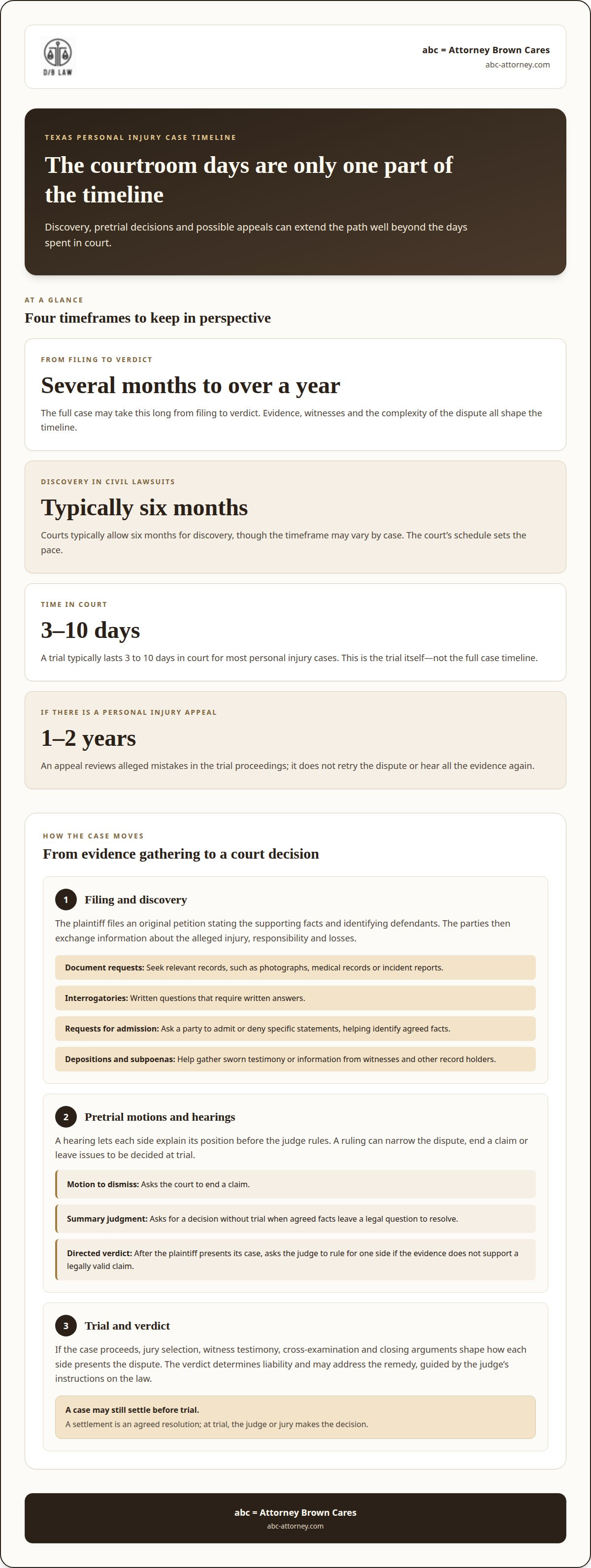
After a plaintiff files a Texas lawsuit, discovery helps both sides gather evidence and understand the claims. The initial state-court filing is called an original petition. It states the facts supporting the lawsuit and identifies the defendants. Discovery follows as the parties exchange information about the alleged injury, responsibility, and losses. The court’s schedule sets the pace.
Discovery requests can require a party to produce relevant records, answer written questions, or confirm whether a fact is admitted or disputed. For example, in an injury case, a request may seek medical records or incident reports. Interrogatories are written questions answered in writing. Requests for admission ask a party to admit or deny specific statements, narrowing the facts that remain contested.
Depositions add spoken testimony. Attorneys ask a witness questions under oath, and a court reporter records the answers. A deposition can help clarify what a driver saw, when a symptom began, or how an event unfolded. Lawyers may also use subpoenas or deposition notices to seek testimony or records from people or organizations involved in the case.
Document requests: Seek records that may support or challenge a claim, such as photographs or treatment records.
Interrogatories: Require written answers about the parties’ positions and relevant events.
Requests for admission: Identify facts the parties agree on, so trial can focus on disputed issues.
Depositions and subpoenas: Gather testimony or information from witnesses and other record holders.
Discovery is an exchange, not just an investigation by the plaintiff. Each side can assess the other’s evidence, identify missing details, and prepare challenges. The parties may also disclose expert opinions and supporting materials when required by the case schedule. A record that contradicts a witness’s account, for instance, may become important during later hearings or testimony.
Courts typically allow six months for discovery in civil lawsuits, though the timeframe may vary by case. The Administrative Office of the U.S. Courts states that the U.S. federal court system has 13 federal courts of appeals. Those courts hear appeals, while discovery builds the record for proceedings in the trial court.
What are the risks of going to trial versus settling a lawsuit? A settlement provides an agreed resolution without a trial verdict, while a trial leaves the decision to the judge or jury. Trial also requires presenting evidence and witnesses in court, and the outcome may differ from either side’s preferred result.
Discovery can inform settlement discussions, but it doesn’t end the case automatically. Parties may negotiate while evidence is exchanged or continue toward pretrial motions and trial. Documents, written answers, and deposition testimony help define which facts remain disputed and what each side must prove.
Pretrial motions and hearings
After the parties develop the record, motions ask the judge to decide specific legal or procedural issues. At a hearing, each side can explain its position before the court rules.
Motions to Dismiss and Summary Judgment
A motion to dismiss asks the court to end a claim, while summary judgment asks for a decision without trial when agreed facts leave a legal question to resolve. These motions matter because a ruling can narrow the dispute or end it before witnesses testify. For example, a judge may decide whether an undisputed set of facts supports a claim under the law.
The defendant’s answer responds to the complaint’s allegations. It can deny them, admit some, and raise affirmative defenses that explain why the defendant disputes responsibility or legal liability. The answer helps identify contested issues, but it doesn’t establish which side is right. At a hearing, the judge considers the motion, the response, and the record presented by both sides.
A motion to dismiss and a motion for summary judgment address different grounds or stages. A dismissal request challenges whether a claim should proceed; summary judgment focuses on whether a trial is needed to decide disputed facts. If the judge grants a motion only in part, the remaining claims can continue. A ruling may also shape which witnesses or issues matter at trial.
Directed Verdict Motions
A directed verdict motion asks the judge to rule for one side after the plaintiff presents its case, on the ground that the evidence doesn’t support a legally valid claim. It matters because the judge can end a claim before the defendant presents a full response. If the motion is denied, the defendant may continue with witnesses and evidence, and the jury can decide the disputed facts.
Hearings also address disputes about what evidence or claims may proceed. The judge evaluates the parties’ arguments and decides whether the case moves forward, changes scope, or ends. Each ruling can influence trial preparation: a dismissed claim no longer requires proof at trial, while a surviving claim still needs evidence and witness testimony.
After a verdict, a party may file a post-trial motion asking the trial judge to address an alleged legal or procedural error. An appeal is different: an appellate court reviews alleged mistakes in the trial proceedings, rather than retrying the dispute or hearing all the evidence again. A personal injury appeal typically takes 1 to 2 years.
If a judgment requires payment, post-judgment discovery can help locate a person’s income sources or assets. That process concerns collection after judgment, not the trial decision itself. The verdict and judgment establish what the court ordered; collection steps address whether and how that order is carried out.
If a pending motion could change the claims or evidence in your case, discuss the case’s next steps with a lawyer.
What Happens When a Case Goes To Trial?
Understanding what happens when a lawsuit goes to trial starts with determining whether a judge or jury will hear the case. Procedures differ by state and court, including jury selection and scheduling, so the rules of the Texas court handling the case matter.
Jury Selection and Voir Dire
Voir dire is the process of questioning potential jurors to identify bias or connections that could affect their judgment. The judge and attorneys use answers to assess whether prospective jurors can consider the evidence fairly. A person who knows a witness, for example, may have a connection that requires further discussion before selection. Jury selection determines who will decide disputed facts.
Personal injury juries may have 6 to 12 members, depending on jurisdiction. Some civil cases instead proceed as a bench trial, where the judge hears testimony and decides the facts. The court’s process and the parties’ choices determine whether a jury or judge will hear the case.
Opening Statements and Trial Stages
Opening statements give each side a chance to outline the claims, evidence, and account of events it expects to present. They are not evidence. They help jurors follow the case as witnesses testify and documents are introduced. A clear opening can connect a disputed event, such as a collision, to the evidence expected during trial.
The plaintiff generally presents its case first through witnesses, documents, and other admissible evidence. The defendant then presents its response and may challenge the plaintiff’s account through cross-examination. The judge rules on whether evidence may be admitted and whether questions to witnesses are proper. Those rulings shape what the jury may consider.
Jury Selection and Trial Preparation
Trial preparation connects evidence gathered before trial with the order and presentation of witnesses. Attorneys organize exhibits, plan witness testimony, and prepare to address expected objections. For example, a timeline can help jurors understand how an incident unfolded and when an injury was reported.
Jury selection also affects how attorneys present evidence. During voir dire, questions can reveal whether a prospective juror has experience or beliefs relevant to a claim. An attorney can then explain the case in a way that addresses the facts without assuming every juror will interpret them alike. That preparation helps keep the presentation focused.
Courts schedule trials based on the dispute and the court’s calendar. The trial itself typically lasts 3 to 10 days for most personal injury cases, though the evidence and witness list affect its length. A straightforward case may require fewer witnesses than a case involving complex medical records or expert testimony. For readers asking what happens when a lawsuit goes to trial, these stages show how the dispute moves from jury selection to evidence and testimony.
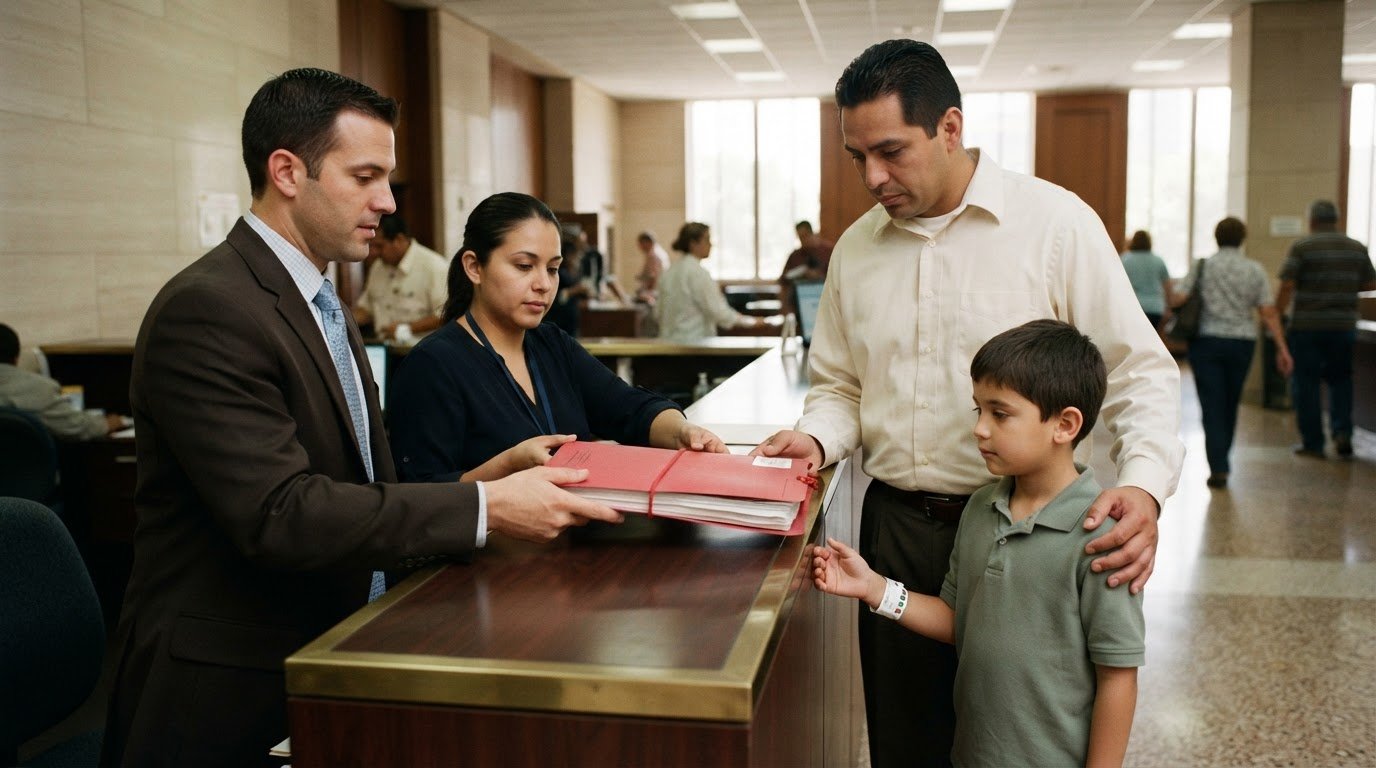
Can I represent myself at trial?
A person can appear without an attorney, but must still present evidence, follow courtroom procedures, and respond to the other side’s arguments. After the verdict, an appeal is a separate process focused on alleged legal errors, not a second chance to present the entire case.
Self-representation means managing each stage personally. A party must organize exhibits, question witnesses, make objections, and explain how the evidence supports the claims. For example, if a medical record is disputed, the party must address its relevance and explain clearly why the judge should consider it. A missed objection or unclear question can affect what the court considers.
Trial also requires responding to rulings as they happen. The judge decides whether evidence may be admitted and whether questions are proper. A self-represented party must understand the issue, make a focused argument, and preserve relevant objections in the court record. That record matters later because an appellate court reviews what happened in the trial court, rather than hearing new witnesses or receiving new evidence.
Mediation can give the parties a chance to resolve a dispute before a verdict. If negotiations do not lead to an agreement, the case may continue toward trial. Choosing to represent yourself does not change the need to evaluate the evidence, prepare witnesses, and present the claims clearly. It does mean handling those tasks without an attorney’s courtroom advocacy and procedural guidance.
An appeal argues that a legal error affected the trial or its outcome. Examples may include a challenged evidentiary ruling or a court decision about the law. The appeal is not a do-over: the reviewing court examines the record and the claimed errors. If it finds an error that warrants relief, it can reverse the decision and send the case back for further proceedings.
Appeal procedures depend on which court heard the case and which court reviews it. In the federal system, appeals are generally heard by a panel of three judges, according to the Administrative Office of the U.S. Courts. A Texas state-court appeal follows the applicable state appellate process, so the federal structure should not be assumed to govern every lawsuit.
Filing an appeal requires identifying the challenged ruling and explaining why it was legally wrong. The appellate court does not decide the case by simply rehearing testimony. Instead, it considers the trial record and the parties’ legal arguments. A party who represented themselves at trial must also identify specific errors and support them through the required appellate process.
A verdict can therefore stand, be reversed, or lead to further proceedings if an appellate court grants relief. The appeal focuses on the trial court’s decisions, not whether a party prefers a different result. Understanding that distinction helps set realistic expectations before deciding how to handle a trial or its aftermath.
Closing arguments and verdicts
After the evidence is presented, closing arguments connect testimony and exhibits to each side’s position. The judge or jury then applies the law and decides the issues still in dispute.
Closing Arguments
Closing arguments are each side’s final explanation of how the evidence supports its claims or defenses. They help the factfinder connect witness testimony, documents, and disputed events into a clear account.
Opening statements come before evidence and preview what each side expects to prove; they aren’t evidence themselves. During trial, parties present evidence through witnesses and exhibits, subject to the judge’s rulings. In closing, attorneys can point to a witness’s testimony or a document and explain why it supports their account.
Jury Instructions and Verdicts
Jury instructions explain the legal standards jurors must apply to the facts they find. In a jury trial, jurors decide the facts and use the judge’s instructions to reach a verdict. In a bench trial, the judge hears the evidence, determines the facts, and applies the law without a jury.
In most civil cases, the plaintiff must prove liability by a preponderance of the evidence, according to the Administrative Office of the U.S. Courts. That means the jury considers whether the plaintiff’s account is more likely true than not. Instructions help focus deliberations on the claims and required legal elements, rather than sympathy or speculation.
After closing arguments and instructions, the jury deliberates before deciding liability and any remedy. A verdict states the decision at the end of trial. The judge or jury’s role depends on whether the case is tried to a jury or as a bench trial.
Verdicts and Comparative Fault
Comparative-fault arguments address whether the plaintiff and another party each contributed to the injury. The parties may point to testimony, records, or other evidence to support their positions about responsibility. If the issue is part of the case, the factfinder considers it alongside the other disputed facts and applicable instructions.
This analysis can affect the verdict because responsibility is part of deciding liability. For example, parties in a collision case may disagree about each person’s actions before impact. Their closing arguments identify the evidence they believe supports their account, while the judge’s instructions guide the factfinder’s decision.
Verdicts and Damages
Damages are the relief a plaintiff seeks for harm connected to the defendant’s conduct. Evidence may address the injury, its effects, and losses the plaintiff attributes to it. The parties use testimony and records to argue what the evidence supports, and the factfinder evaluates those arguments under the court’s instructions.
A verdict may find that the plaintiff proved a claim and is entitled to relief. In some civil cases, damages may be calculated in a later, final stage after a verdict for the plaintiff. The sequence matters: the liability decision establishes whether the plaintiff succeeded, while the damages stage addresses the remedy.
If you’re preparing to present evidence about an injury, discuss your trial questions with an attorney.
The Dedric Brown Law Firm
The Dedric Brown Law Firm represents people pursuing complex injury claims, including traumatic brain injuries, birth injuries, and truck wrecks. If your case may go to trial, understanding the process can help you discuss the evidence, witness testimony, and next steps with your attorney.
The firm handles personal injury litigation, focusing on the facts and issues that shape a claim. A case involving a serious brain injury, for example, may require careful presentation of how the injury occurred and affected the person. Seek legal guidance when you need help understanding your claim or preparing for litigation.
Contact The Dedric Brown Law Firm to discuss your situation.
Take the Next Step With a Clear Plan
Knowing what happens when a lawsuit goes to trial can make the next decision feel more manageable. The important question is how the evidence and legal issues in your own case fit together. Before deciding how to proceed, consider what you need to understand about your claims, the risks, and the choices ahead.
The Dedric Brown Law Firm handles serious injury matters, including Traumatic Brain Injuries, Hypoxic & Anoxic Brain Injury, and Birth Injuries. Its approach reflects the idea behind abc: Attorney Brown Cares. That means treating the person behind the case with care while pursuing a clear, evidence-based path through litigation.
You don’t have to sort through the process alone. A conversation can help you consider your situation and what questions to address next. Contact The Dedric Brown Law Firm to discuss your case and take a thoughtful next step.
Frequently Asked Questions
How Long Does a Personal Injury Trial Take?
A straightforward auto accident trial might last 2 to 3 days, while a more complex case can require more courtroom time. The number of witnesses, expert testimony, and disputes over evidence can affect the schedule. That estimate covers the trial itself, not the lawsuit from filing through verdict. In Texas, each case’s evidence and court schedule shape the timeline.
What are the stages of a civil lawsuit trial in the United States?
A civil trial generally moves through jury selection, opening statements, evidence presentation, closing arguments, instructions, and a decision. The plaintiff presents evidence first, and the defendant may then offer a response. The judge rules on courtroom issues as they arise. In a bench trial, the judge decides the facts and law; in a jury trial, jurors determine the facts under the judge’s legal instructions.
What happens during jury selection in a civil trial?
Potential jurors answer questions designed to reveal whether they can assess the dispute fairly. The court and attorneys may ask about relevant experiences, relationships, or opinions. For example, a prospective juror who knows a party or witness may need further questioning. Selection forms the group that will evaluate the evidence, so the process focuses on impartiality, not on choosing jurors expected to favor one side.
What are the rules for witness testimony and cross-examination at trial?
Witnesses answer questions under oath, and the judge controls whether evidence and questions are proper. The party presenting a witness asks questions first; opposing counsel can then cross-examine to test the witness’s account. For example, an attorney may compare a witness’s trial testimony with an earlier statement or document. The judge’s evidentiary rulings determine what the jury may consider.
What happens during closing arguments and jury deliberations?
Each side uses closing arguments to explain how the evidence supports its position and responds to the opposing account. Jurors then deliberate using the judge’s instructions to decide disputed facts and reach a verdict. They may review admitted exhibits while discussing the evidence. The jury’s decision must follow the legal questions in the case, not outside information or personal assumptions.
How long does a civil lawsuit trial usually take, and what does it cost?
The courtroom portion may last days or longer, depending on the dispute’s complexity, witness list, and expert evidence. Trial expenses can involve preparing exhibits, obtaining records, and presenting witnesses. There is no single cost that applies to every case; the work required and trial length influence expenses. Legal fees and case expenses are distinct, so review the agreement explaining each before proceeding.
What possible outcomes and damages can a civil trial produce?
A factfinder may decide the defendant is liable or find that the plaintiff did not prove the claim. If the plaintiff succeeds, the verdict may award relief, including damages supported by the evidence. In some cases, the amount of damages is determined in a later stage. The outcome depends on the claims, evidence, and instructions applied by the judge or jury.
What happens after a trial verdict, including appeals and enforcement?
After a verdict, the court enters judgment reflecting the result and any relief ordered. A party may challenge alleged legal errors through an appeal, which reviews the trial record rather than repeating the trial. If a judgment requires payment, post-judgment discovery may help locate income or assets. Enforcement follows the judgment and applicable court process; it does not change what the jury decided.


Comments