
Houston Medical Malpractice Lawyer for Texas Injury Claims

In Texas, medical malpractice generally means a healthcare provider failed to meet the applicable standard of care and that failure caused harm. A claim must establish a duty of care, a breach, and resulting damages; the Texas Legislature says a lawsuit generally must be filed within two years under Texas Civil Practice and Remedies Code § 74.251. A medical malpractice lawyer in Houston can assess how those requirements apply to the care and injury involved.
When an injury follows medical treatment, it can be difficult to tell whether it was a poor outcome or a legally actionable mistake. That distinction matters, particularly when anesthesia errors or injuries to children and other vulnerable patients are involved. This guide explains the key elements of a Texas medical malpractice claim, how these cases may be evaluated, and what to consider when choosing a medical malpractice lawyer in Houston. The aim is to help you understand the process and make an informed decision about protecting your rights.
Table of Contents
Claims for injured children and incapacitated adults
A birth injury can affect a child’s health, development, and need for care long after delivery. In Texas, the child’s age and the evidence connecting medical negligence to the injury are central to evaluating a claim.
Delivery-Room Negligence
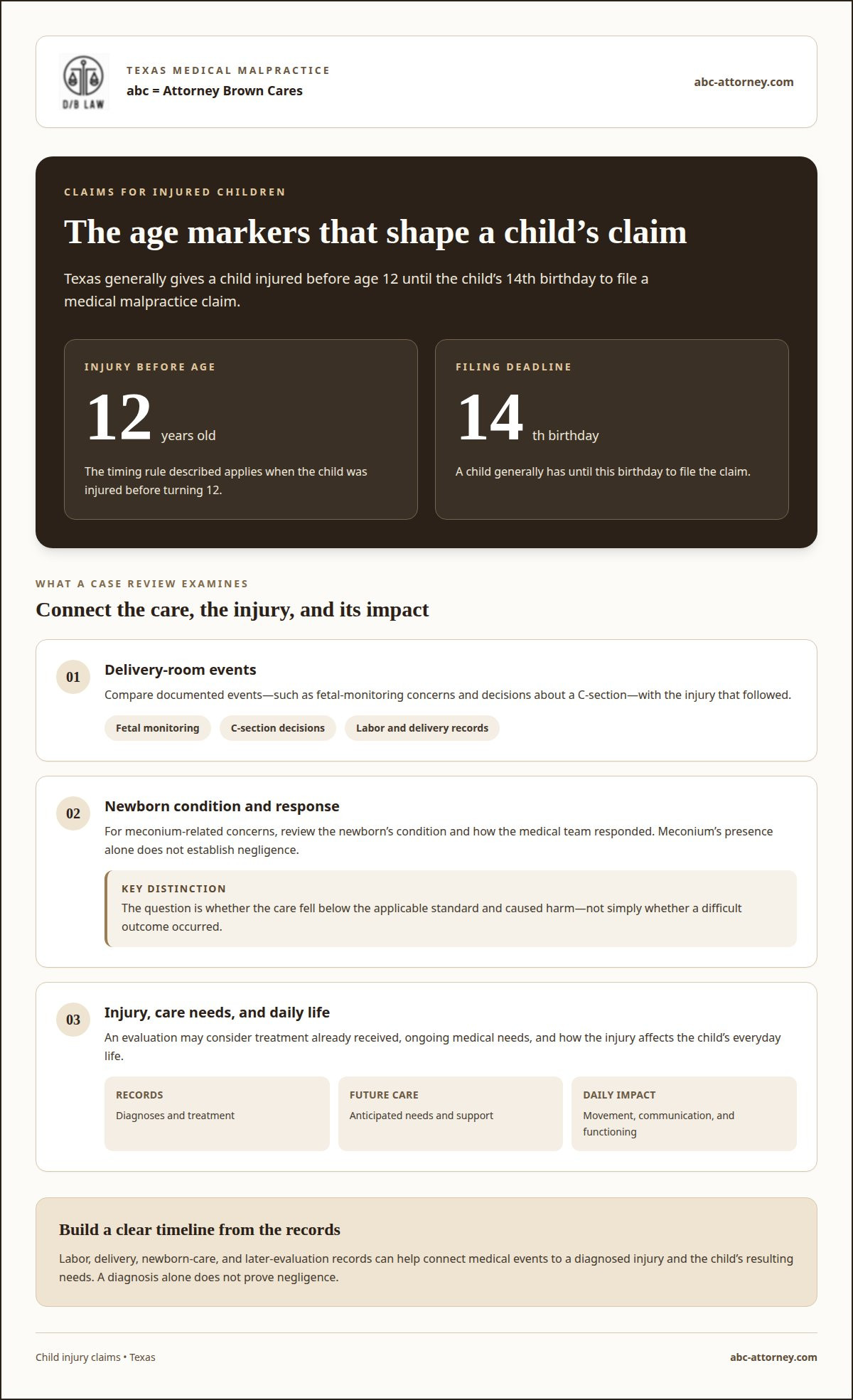
Delivery-room negligence may involve how providers respond to complications during labor or birth. A case review can compare documented events, such as fetal monitoring concerns or decisions about a C-section, with the injury that followed. Meconium in the amniotic fluid may also be relevant when a newborn develops meconium aspiration syndrome. Its presence alone does not establish negligence. The key question is how the medical team responded and whether that response caused harm.
Birth-Injury Compensation and Future Care
Compensation in a birth-injury claim depends on the harm and its practical effects. An evaluation may consider treatment already received, ongoing medical needs, and the injury’s effect on the child’s daily life. For instance, a child who needs continuing support with movement or communication may have different care needs from a child whose injury resolves. Records of diagnoses, treatment, and anticipated care help explain how the injury may affect the child’s future.
Birth-Related Brain Injuries
Some birth injuries involve hypoxic or anoxic brain injury, which can affect a child’s development and functioning. A case review must connect the medical events around birth to the diagnosed injury and resulting needs. Records of labor, delivery, newborn care, and later evaluations can help establish that timeline. Cerebral palsy or another developmental condition may raise questions about whether delivery-room care contributed, but a diagnosis alone does not prove negligence.
Meconium-related cases require attention to both the delivery record and the newborn’s condition. Meconium aspiration syndrome occurs when a newborn inhales meconium-stained fluid, and the resulting injury must be considered alongside the care provided. A legal review examines whether a provider’s actions fell below the applicable standard of care and caused harm. That distinction separates a difficult medical outcome from a claim supported by evidence of negligence.
Texas generally gives a child injured before age 12 until the child’s 14th birthday to file a medical malpractice claim. For an incapacitated adult, the person’s injury, treatment history, and ability to participate in the claim require careful evaluation. A family member or representative can help organize records and document changes in care needs. Because deadlines and evidence matter, an early review can help preserve the facts needed to assess the claim and pursue justice.
Anesthesia errors
Anesthesia errors can cause serious injury during surgery, childbirth, or another medical procedure. Evaluating a claim means examining what happened before, during, and after anesthesia, then connecting the records to the harm. A missed change in a patient’s condition, a medication error, or a failure to respond may raise questions about providers’ decisions. The details matter more than the label given to the event.
Anesthesia and Surgical Errors
For a surgical injury, a review can compare the procedure record, anesthesia notes, and recovery documentation. If a patient experiences a serious complication under anesthesia, for example, the timeline can help show when the condition changed and what the team did next. A law firm assessing medical malpractice litigation examines the actions of each provider involved rather than assuming one person caused every error.
Hospital, Emergency Room, and Nursing Home Errors
Errors can also occur outside an operating room. In a hospital or emergency room, a missed test result or delayed response may affect diagnosis and treatment. In a nursing home, records of a resident’s condition and the response to a reported change can help clarify what happened. Each setting has its own sequence of care, so investigators organize the timeline around the patient’s symptoms, treatment, and resulting injury.
Medication errors call for close review of the drug, dose, timing, and instructions in the healthcare chart. A harmful interaction may become relevant when the patient’s medication list is compared with the drugs administered. For example, records may show whether a new prescription was added while another medication remained active. The investigation considers whether a provider’s failure caused a specific injury, rather than treating every adverse reaction as negligence.
Cosmetic Surgery and Lidocaine Errors
Cosmetic procedures may involve anesthesia or local anesthetics such as lidocaine. A claim may focus on how the medication was selected and administered, what instructions were documented, and how providers responded to symptoms. Procedure and follow-up records help establish the sequence of events. The central question is whether the care fell below the applicable standard and caused harm, not simply whether the result disappointed the patient.
To prepare a focused review, organize the procedure date, names of facilities, discharge papers, medication records, and follow-up notes. Include a short account of when symptoms began and how they changed. This helps identify which records and providers may need closer examination. If anesthesia or another medical error caused an injury, discussing the medical records and timeline can help clarify the next legal steps.
Free consultations for Houston malpractice claims
A consultation can help organize the facts, identify deadlines, and assess whether negligence caused legally recognized harm. Texas claims require evidence, not merely an unexpected or disappointing medical outcome.
Evaluating a Potential Claim
Attorneys assess whether care providers owed a duty, breached the applicable standard of care, and caused damages through that breach. A delayed diagnosis matters legally, for example, when evidence connects the delay to an injury. A medical malpractice case also requires proof of causation, meaning a link between the provider’s conduct and the harm. Medical records, expert analysis, and the treatment timeline help evaluate each element.
Texas caps non-economic damages under Section 74.301 at $250,000 against an individual physician and $250,000 per healthcare institution, with a $500,000 cap for claims against hospitals and a $750,000 combined cap against multiple defendants; economic damages have no cap. The limits apply to non-economic losses, such as pain and suffering, rather than documented economic damages.
Filing in Houston generally involves sending each defendant provider written notice by certified mail at least 60 days before filing, with the medical authorization required by law under Section 74.052. That notice pauses the filing deadline for 75 days. After a defendant files an original answer, the claimant generally must serve an expert report within 120 days. According to the Texas Legislature, a lawsuit generally must be filed within two years of the injury under Texas Civil Practice and Remedies Code § 74.251.
Medical malpractice cases in Texas typically take one to three years. The timeline depends on factors such as the number of providers, the medical questions in dispute, and whether the parties settle or proceed to trial. Filing may involve expenses for records and expert review, while a catastrophic injury may call for detailed evidence of long-term damages. These practical considerations belong in an early case assessment.
Records and Evidence to Gather
Before speaking with an attorney, gather the names of facilities and providers, treatment dates, discharge papers, test results, prescriptions, and follow-up records. Create a dated timeline of symptoms, conversations, and changes in condition. For a surgical injury, include procedure and recovery documents. For a medication injury, include the medication list and instructions. These records can help connect the alleged failure to the injury and resulting damages.
To win a Texas medical malpractice case, a claimant must prove a duty of care, a breach of the standard of care, and damages caused by that breach. A focused consultation can examine those elements, filing steps, and the evidence needed to support them. Discuss the claim’s timeline and records to identify the next steps.
What Is Medical Malpractice in Texas?
In Texas, medical malpractice occurs when a healthcare provider breaches the applicable standard of care and causes injury. A bad result alone does not establish negligence. The claim must connect a specific mistake, such as a missed diagnosis or surgical error, to identifiable damages. This distinction matters: a dangerous outcome can occur without a legally actionable failure, while a preventable error may support a claim when evidence proves harm.
Standard of Care and Proof
In a Texas lawsuit, the claimant must establish duty, breach, causation, and damages. The standard of care concerns whether the provider’s actions met the required level of care. A case may examine what the doctor knew, what the records showed, and what action followed. For example, a claim involving a delayed response to a documented change in a patient’s condition requires evidence linking that delay to the injury.
Expert evidence has an early role in Texas medical malpractice cases. Generally, a claimant must serve an expert report within 120 days after each defendant’s original answer. The report must address the applicable standard of care, how the provider allegedly failed to meet it, and how that failure caused injury. This step helps test whether the lawsuit has support beyond the patient’s account or an unfavorable medical result.
Filing Deadlines and Required Steps
Timing can affect the right to sue. According to the Texas Legislature, a medical malpractice lawsuit generally must be filed within two years of the injury under Texas Civil Practice and Remedies Code § 74.251. Texas also has a separate ten-year statute of repose. Because the applicable dates depend on the claim’s circumstances, identifying the injury date and treatment timeline is an early legal step.
Before filing, Texas law generally requires written notice to each provider being sued, sent by certified mail at least 60 days in advance. The notice must include the medical authorization required by law under Section 74.052. Notice given as the statute provides pauses the filing deadline for 75 days. Attorneys then assess the records, identify potential defendants, and prepare the required supporting evidence before a lawsuit proceeds.
Medical malpractice representation involves more than filing paperwork. Attorneys organize treatment records, evaluate expert evidence, and establish how the alleged mistake caused specific losses. A settlement may resolve a case, while disputed evidence may lead to litigation. A claim involving a delayed diagnosis, for example, must address both the provider’s decision and the resulting injury. Each step depends on the evidence and deadlines that apply to the Texas claim.
Choosing a Houston medical malpractice lawyer
Medical negligence claims require more than a compelling account of what went wrong. The lawyer must connect provider decisions to the patient’s injury, build supporting evidence, and meet Texas deadlines. When choosing counsel, look for a careful approach to medical records, expert analysis, and the practical effects of the harm.
Look for a Clear Case Strategy
A focused attorney should explain how the claim’s elements relate to the available evidence. Ask how the investigation will examine the standard of care, causation, damages, and potentially responsible providers. A delayed-diagnosis claim, for example, requires more than showing that a condition was discovered later. The evidence must explain how the delay caused additional harm. Clear answers help you understand the strengths and challenges of your case.
Medical malpractice claims can involve several providers, facilities, and stages of treatment. Counsel should be ready to organize records into a timeline, identify unanswered questions, and evaluate expert support. Texas law also imposes procedural requirements, including a deadline for an expert report after a defendant answers. The lawyer should explain how these steps apply to your case, rather than making broad promises about the result.
Assess Experience With Similar Injuries
Relevant experience means understanding the medical issues and the types of damages an injury may cause. A claim involving a surgical complication calls for different records and questions than one involving a delayed emergency-room diagnosis. Ask how counsel would review your treatment history and explain complex medical evidence. A sound strategy accounts for both the alleged mistake and the patient’s needs after the injury.
Public verdicts can show why careful case analysis matters, but they don’t predict another claim’s value. A Dallas emergency-room malpractice case resulted in a verdict exceeding $10 million. That result does not establish what a Houston case may recover. The facts, evidence, injuries, and applicable limits differ. A responsible lawyer explains those distinctions instead of treating a headline result as a likely outcome.
Evaluate Communication and Case Costs
During an initial discussion, notice whether the attorney listens carefully, explains legal terms clearly, and identifies next steps. Ask how you will receive updates and what case expenses may arise, including medical-record collection or expert review. Understand how legal fees and expenses are handled before proceeding. Clear communication helps families make informed decisions while managing treatment and other responsibilities.
Choose a medical malpractice lawyer in Houston who can explain the evidence plan, legal deadlines, and risks without minimizing difficult issues. Before deciding, organize a concise treatment timeline and the records already available. Then discuss your malpractice claim and legal options with an attorney who can assess the specific injury and providers involved.
The Dedric Brown Law Firm: Hypoxic & Anoxic Brain Injury
The Dedric Brown Law Firm represents people in medical malpractice litigation involving hypoxic and anoxic brain injuries. These cases may require careful review of treatment records, the events surrounding the injury, and its effects on a person’s life. The firm also handles traumatic brain injury and birth injury claims, including cases in which a child’s brain injury may be connected to complications during birth.
Consider legal guidance when medical care may have caused a brain injury and your family needs to understand its options. A focused case review can examine the medical timeline and questions about provider conduct. The name abc-attorney reflects “Attorney Brown Cares,” a commitment to personal attention and care throughout the legal process.
Contact The Dedric Brown Law Firm to discuss a possible brain injury or birth injury claim.
Take the Next Step With Clarity
After a serious injury, your family may need to protect its interests while care continues. Keep a clear record of changing needs, questions for providers, and decisions that may affect future support. This can help your family stay organized as you consider legal options.
The Dedric Brown Law Firm handles claims involving traumatic brain injuries, hypoxic and anoxic brain injuries, and birth injuries. If you’re weighing whether to pursue a claim, a medical malpractice lawyer in Houston can review the circumstances and explain the legal path ahead. No family should have to sort through difficult questions alone.
Contact The Dedric Brown Law Firm to discuss your concerns and possible next steps. Attorney Brown Cares, and your family can move forward with greater clarity.
Frequently Asked Questions
How Can Surgical Errors Lead to Malpractice?
Surgical errors may support a malpractice claim when a provider’s negligent care causes injury. Examples include operating on the wrong site, leaving an object behind, or failing to respond to a complication. The key issue is how the provider’s conduct relates to the patient’s harm. An injury during surgery alone does not establish negligence; records and medical evidence must connect the error to the resulting damage.
What Are My Options?
You can continue necessary medical care, preserve relevant records, and seek a legal review of the treatment and resulting injury. If the evidence supports a claim, the process may involve pursuing a settlement or filing a lawsuit. Keep a dated account of symptoms, treatment, and missed work or caregiving responsibilities. These details can help explain how the injury affects daily life while the claim is evaluated.
How do I find a qualified medical malpractice lawyer in Houston, Texas?
Look for an attorney who handles medical malpractice litigation and can explain how the facts, medical evidence, and Texas procedures apply to your situation. Ask how the attorney evaluates causation, identifies potentially responsible providers, and communicates about progress. A medical malpractice lawyer in Houston should discuss the specific injury and records involved, rather than rely on broad assurances or treat every poor outcome as malpractice.
What are the Texas medical malpractice statute of limitations and filing deadlines?
According to the Texas Legislature, a medical malpractice lawsuit generally must be filed within two years of the injury under Texas Civil Practice and Remedies Code § 74.251. Texas law also generally requires written notice to each provider at least 60 days before filing, and a supporting expert report is generally due 120 days after each defendant’s original answer. The timeline may involve additional rules, so promptly organizing treatment dates is useful.
What types of medical errors and injuries qualify for a malpractice claim?
A claim may involve a failure to diagnose, medication or anesthesia errors, surgical mistakes, or negligent birth care when a provider’s conduct caused injury. Examples of injuries include brain damage, birth injuries, or harm following a delayed response to a patient’s changing condition. The category of error alone does not establish a claim. Evidence must connect the provider’s actions to the injury and resulting damages.
How much does a Houston medical malpractice lawyer charge, and are consultations free?
The Dedric Brown Law Firm offers a free case review and states, “You Pay Nothing Unless I Win Your Case!” The firm uses a contingency fee arrangement. Ask how case expenses are handled and what the agreement says about fees and costs, so you understand the terms before proceeding. A case review can help clarify the potential claim and next steps without an upfront consultation charge.
How do I compare Houston medical malpractice law firms, experience, and case results?
Compare how each attorney approaches medical evidence, expert review, communication, and the type of injury involved. Ask how similar claims are investigated and how developments will be explained. Case results can provide context, but they do not predict what another patient’s claim may achieve because injuries, evidence, and providers differ. Focus on whether the attorney gives a clear, fact-based explanation of your claim and its challenges.



I like this Blog