
Hypoxic-Ischemic Encephalopathy Birth Injury: Causes, Treatment, and Malpractice

Updated: 18 hours ago
Hypoxic-ischemic encephalopathy affects an estimated 1 to 6 infants per 1,000 births. In a hypoxic ischemic encephalopathy birth injury, a baby’s brain is damaged when it doesn’t receive enough oxygen before or shortly after birth. The effects can range from mild to severe, and they may become clearer as a child grows.
It’s understandable to want clear answers when your newborn has suffered a serious brain injury. HIE can follow complications during pregnancy or delivery, but the diagnosis alone doesn’t show that anyone made a mistake. The medical timeline and records matter.
This article explains what HIE can mean for a child, how therapeutic cooling may help, and what families can do to reduce risk. It also covers how clinicians assess HIE and what a careful review of pregnancy, labor, and delivery records may reveal about whether medical care contributed. Understanding these details can help you make sense of what happened and consider your next steps.
Table of Contents
What is hypoxic-ischemic encephalopathy (HIE)?
Neonatal HIE is brain damage caused by insufficient oxygen before or shortly after birth. It affects an estimated 1 to 6 infants per 1,000 births, and identifying its cause requires understanding the events around delivery.
HIE Definition and Causes
Hypoxic-ischemic encephalopathy occurs when reduced oxygen or blood flow injures a newborn’s brain. “Hypoxic” means too little oxygen; “ischemic” means reduced blood flow. The injury can begin before birth, during labor, or shortly afterward. Its timing and cause matter because they help explain what happened and guide the newborn’s care.
Possible contributing factors include problems involving the uterus or placenta, as well as complications during labor and delivery. A high-risk pregnancy can increase the likelihood of HIE, but risk alone doesn’t show that an injury was unavoidable or caused by negligence. A hypoxic ischemic encephalopathy birth injury describes the medical harm, not why it happened.
Birth asphyxia describes a lack of oxygen around birth that may lead to HIE. It can occur when oxygen delivery or blood flow to the brain is reduced or stopped. The distinction matters: asphyxia describes the oxygen deprivation, while HIE describes the resulting brain injury. A newborn’s diagnosis and medical records help clarify how the two relate.
Birth Complications and HIE
Birth complications can interrupt the oxygen supply to a baby’s brain. Problems with the placenta or uterus may affect oxygen delivery before labor. During birth, an umbilical cord tangled around the baby’s neck is one possible cause of oxygen deprivation. Preeclampsia may also contribute, and an anesthesia overdose during a C-section can affect a baby’s breathing.
These examples describe possible causes, not proof that a particular complication caused HIE. The clinical sequence matters: what happened, when it happened, and how the team responded. Fetal heart rate monitoring, for example, can help the medical team assess whether a baby is receiving enough oxygen during birth. Monitoring information must be considered alongside the other delivery records.
High-risk pregnancies are more likely to result in HIE, but risk factors don’t establish the cause in an individual case. The same complication can have different effects depending on its timing and the newborn’s condition. Reviewing pregnancy, labor, and delivery together can help distinguish a known risk from an injury linked to failures in care.
HIE Stages and Severity
HIE is commonly described as mild, moderate, or severe. These stages indicate the level of a newborn’s condition and brain injury; they aren’t separate causes. The classification matters because severity can shape the effects a child experiences and the care needed after birth.
Mild HIE involves less severe signs, while moderate and severe HIE indicate greater concern about the newborn’s condition. Symptoms such as poor muscle tone, reduced alertness, or seizures can occur, but a single symptom doesn’t establish a stage. Clinicians assess the overall picture, including the baby’s examination and diagnostic findings.
Severity also doesn’t provide a complete forecast of a child’s development. HIE can have limited or lasting effects, and outcomes vary between children. Cerebral palsy is one possible outcome, but not every child with HIE develops it. Understanding the stage helps frame the injury, but it doesn’t replace ongoing assessment of the child’s needs and progress.
Therapeutic hypothermia
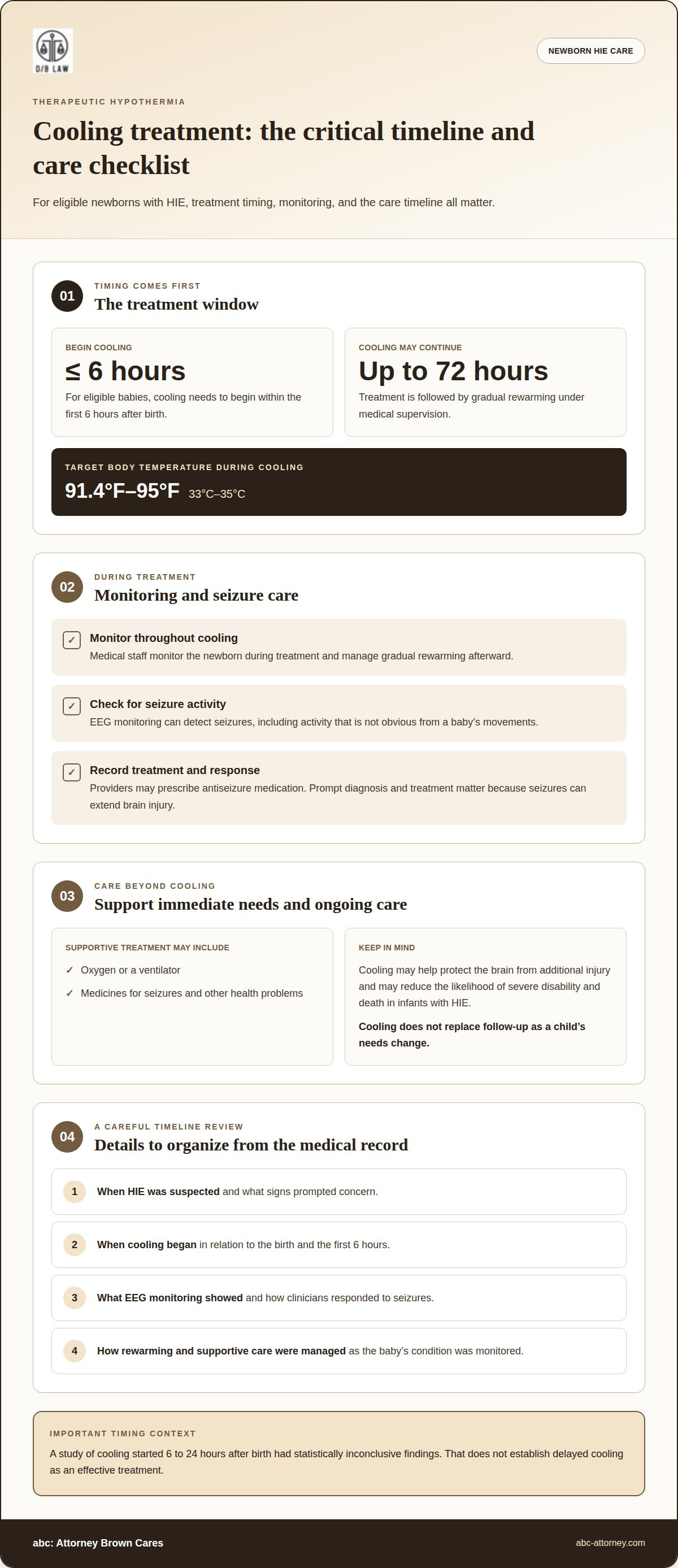
Therapeutic hypothermia, also called cooling treatment, lowers a newborn’s core temperature after HIE. For eligible babies, treatment must begin within the first 6 hours after birth. Cooling may continue for up to 72 hours, followed by gradual rewarming. Those time points matter because treatment is intended to limit further brain injury after oxygen deprivation.
During cooling, the newborn’s body temperature is lowered to 91.4°F to 95°F (33°C to 35°C). Medical staff monitor the baby throughout treatment and manage rewarming afterward. Cooling followed by rewarming may help protect the brain from additional injury. It may also reduce the likelihood of severe disability and death in infants with HIE. For eligible newborns, therapeutic hypothermia is the standard of care.
Timing is a central part of this treatment. The first 6 hours after birth are the treatment window for suspected neonatal HIE. A study of cooling started 6 to 24 hours after birth had statistically inconclusive findings. That does not establish delayed cooling as an effective treatment. The timing of the birth, signs of HIE, and start of cooling are therefore important details when reviewing a baby’s care.
Seizures need close attention during an HIE hospitalization. Healthcare providers may use EEG monitoring to detect seizure activity, including activity that isn’t obvious from a baby’s movements. They may prescribe antiseizure medication. Prompt diagnosis and treatment matter because seizures can extend brain injury. An EEG record can help show what clinicians detected and how they responded.
Cooling is only one part of care. Supportive treatment may include oxygen or a ventilator, along with medicines for seizures and other health problems. These measures address a newborn’s immediate needs while the care team monitors the baby’s condition. HIE can be serious, and developmental effects vary, so cooling doesn’t replace follow-up care as the child’s needs change.
For families reviewing a difficult birth, a clear timeline can help organize questions: when HIE was suspected, when cooling began, what EEG monitoring showed, and how seizures were treated. These details can also help a legal review assess whether treatment decisions contributed to harm. If you have concerns about the care your baby received, you can discuss an HIE treatment concern.
How can I help prevent neonatal HIE?
Regular pregnancy checkups may help reduce the risk of neonatal HIE, but they cannot prevent every case. High-risk pregnancies are more likely to result in HIE, so consistent prenatal care can help clinicians monitor changes in the mother’s and baby’s condition. Prevention means identifying concerns and responding to them, not assuming every injury can be avoided.
At prenatal visits, share changes in your health and ask how identified pregnancy risks will be monitored. A history of complications, new symptoms, or changes in the care plan can help the medical team understand the pregnancy’s needs. Clear communication supports informed decisions, but it cannot remove every risk or guarantee a particular outcome.
Labor and delivery require continued attention. If a complication threatens the mother or baby, the medical team should respond quickly. Fetal heart rate monitoring can help clinicians assess whether a baby is receiving enough oxygen during birth. Prevention depends not just on whether monitoring occurred, but on whether concerning information prompted an appropriate response.
Birth complications can develop despite prenatal care. An umbilical cord problem or a sudden change during labor, for example, may require prompt assessment. The mother’s pregnancy history and the baby’s condition help shape the response. No single precaution can prevent every cause of reduced oxygen or blood flow.
Some care aims to limit harm after HIE is suspected, rather than prevent the initial oxygen deprivation. Therapeutic hypothermia is one treatment used for eligible newborns. Timely diagnosis and treatment can matter because the goal is to protect the brain from further injury. This response doesn’t establish whether the initial event was preventable.
When a child has HIE, families may wonder whether malpractice contributed. The diagnosis alone cannot answer that question. A review must examine the pregnancy, labor, delivery, monitoring records, and timing of responses to complications. The records, for example, may show what the team observed and what steps followed.
Preserve the details you can access: appointment summaries, discharge papers, and notes about conversations with clinicians. Write down what you remember about the delivery and when concerns were raised. These details can help organize a later review alongside formal medical records, without requiring families to decide for themselves whether care met professional standards.
Not every case of HIE can be prevented, but attentive pregnancy care and prompt responses to delivery complications can reduce risk. If a newborn develops HIE, the key questions are what happened, what the medical team knew, and how it responded. Those facts help distinguish an unavoidable complication from a potentially preventable failure that caused or worsened brain damage.
How do I know if my child’s HIE was caused by medical malpractice?
HIE can occur before, during, or shortly after birth when oxygen or blood flow to the brain is reduced or stopped. A diagnosis identifies the injury, not its cause. Assessing possible malpractice requires a professional review of the delivery records. That review considers what happened, what the medical team knew, and how it responded.
Start with the medical timeline. Pregnancy records can reveal identified risks, while labor and delivery records show changes during birth. Fetal heart rate monitoring is one way the team tracks whether a baby is receiving enough oxygen. The records can show whether concerning changes appeared and what followed. A gap between a warning and a response may warrant closer scrutiny, but the entire sequence matters.
Possible contributors include problems involving the uterus or placenta, an umbilical cord tangled around the baby’s neck, and preeclampsia. An anesthesia overdose given to a mother for a C-section can affect the baby’s breathing and lead to oxygen deprivation. These are possible causes, not automatic proof of negligent care. A review must connect the complication, the care provided, and the resulting brain injury.
Newborn symptoms can help clinicians recognize distress. An Apgar assessment checks skin color, heart rate, reflexes, muscle tone, and breathing. Scores at 1, 5, or 10 minutes may provide clues about a baby’s condition after delivery. Seizures within 24 to 48 hours can also be a possible sign of HIE. Neither an Apgar score nor a seizure, by itself, establishes malpractice.
HIE symptoms may include drowsiness, reduced alertness, poor muscle tone, irritability, pale or blue lips or skin, seizures, abnormal movements, dilated pupils, and slow reflexes. A newborn may also have breathing or feeding difficulties. These signs matter because they can prompt testing and treatment. Their timing, severity, and documentation help clinicians assess the injury and reviewers understand how events unfolded.
Doctors may use blood tests, umbilical cord or placenta testing, lumbar puncture, head ultrasound, EEG, or brain MRI to help diagnose neonatal HIE. These results add clinical detail to the delivery timeline. A careful review compares test findings with monitoring records, observed symptoms, and treatment decisions. The central question is whether medical care contributed to oxygen deprivation or failed to respond appropriately, causing or worsening the injury.
Cerebral palsy is one possible effect, but not every child with HIE develops it. A child’s diagnosis and later symptoms describe the harm; they don’t establish how it happened. A complete evaluation considers both the newborn’s medical findings and the documented decisions during pregnancy, labor, and delivery.
Definition and effects of hypoxic-ischemic encephalopathy
HIE is brain injury caused by inadequate oxygen or blood flow before or shortly after birth. Its effects can extend beyond the newborn period, and their full extent may take months or years to understand. This uncertainty can make early diagnoses difficult to interpret. A child’s development over time provides important information about how the injury affects daily life.
Neonatal HIE can affect learning, movement, behavior, and physical health. Children may develop learning problems, ADHD, epilepsy, cerebral palsy, or other developmental disorders. Outcomes vary: an HIE diagnosis doesn’t mean every child will experience the same condition or that an early assessment captures every later need.
Some effects become clearer as a child grows. Difficulties associated with severe HIE may not become apparent until ages 3 to 4. More than 30% of children with HIE require special educational services between ages 6 and 7. These milestones show why developmental follow-up matters beyond the newborn’s hospital stay.
The effects can involve more than cognition or movement. HIE can also affect the heart, lungs, kidneys, and liver. Early on, seizures, breathing or feeding difficulties, and muscle or reflex problems may require attention. As children grow, physical and occupational therapy may help manage challenges such as cerebral palsy and support everyday activities.
The figures describe groups, not an individual child’s future. An estimated 25% to 60% of infants with HIE have long-term neurological conditions or cognitive-function issues. That range underscores the broad variation in outcomes. A child’s examination, developmental progress, and changing abilities offer more useful information for understanding personal needs than a population estimate alone.
For a family considering whether care contributed to HIE, the injury’s effects are only part of the analysis. A professional review can compare the child’s medical course with records from pregnancy, labor, and delivery. That process examines both the documented events and the harm that followed. You can discuss a review of your child’s HIE case.
The Dedric Brown Law Firm: Traumatic Brain Injuries
The Dedric Brown Law Firm represents families in birth injury and hypoxic or anoxic brain injury matters. If your child developed HIE, the firm can review whether medical care may have contributed and assess records surrounding pregnancy, labor, delivery, and treatment. A diagnosis alone doesn’t establish malpractice; the timeline and evidence are central to evaluating a claim.
The firm’s message, “Attorney Brown Cares,” reflects its focus on personal attention for families facing difficult questions. The Dedric Brown Law Firm also handles traumatic brain injury cases, helping clients pursue accountability when the evidence supports a legal claim. Families may seek a legal review to understand how an injury occurred and whether care fell short.
Contact The Dedric Brown Law Firm for a free case review of your family’s HIE concerns.
Move forward with clarity and care
Making sense of a child’s injury can take time, especially when medical records and family recollections raise difficult questions. You don’t need every answer before considering what comes next. A focused legal review can help organize unanswered questions and clarify whether pursuing accountability may be appropriate.
A hypoxic-ischemic encephalopathy birth injury can affect a family well beyond the delivery room. The next step isn’t about rushing into a decision. It’s about understanding your options, protecting your child’s interests, and moving at a pace that feels right for your family. “Attorney Brown Cares” reflects the firm’s commitment to giving families personal attention and compassion.
If you’re ready to discuss your concerns, contact The Dedric Brown Law Firm. You deserve thoughtful answers and support as you decide what comes next.
Frequently Asked Questions
What is the treatment for HIE?
HIE treatment can include therapeutic cooling, seizure care, and support for breathing or other medical needs. The care team monitors the newborn’s condition and uses findings such as EEG results to guide seizure management. Treatment also addresses problems affecting the lungs or other organs. After hospital care, follow-up may include developmental assessments and therapies tailored to the child’s needs.
How is HIE diagnosed?
Clinicians diagnose HIE by combining a newborn’s examination with test results and the history surrounding birth. Tests may include blood work, cord or placenta testing, EEG, ultrasound, and MRI. EEG is usually performed on the first day of life, while MRI is often performed when the baby is 4 to 7 days old. Comparing these findings helps build a clearer clinical picture.
What causes neonatal HIE?
Neonatal HIE results from reduced oxygen or blood flow to a baby’s brain before, during, or shortly after birth. Possible contributing factors include placental or uterine problems and complications during labor. A high-risk pregnancy can increase the likelihood of HIE, but a risk factor alone doesn’t establish the cause. Clinicians assess the specific events and findings surrounding each newborn’s condition.
Are HIE claims still valid if my child has passed away?
A child’s death does not, by itself, establish whether a legal claim can proceed. Whether surviving family members may bring a claim depends on applicable law, the evidence, and the circumstances surrounding the death. A review can examine medical records and delivery events to assess whether negligence contributed to the injury. Preserving relevant records and documents can help clarify the facts for that review.
Can a baby fully recover from HIE?
Some newborns with mild HIE symptoms and no brain damage may make a full recovery in about two weeks. Other children experience lasting effects, so early improvement alone doesn’t reveal every later developmental need. Keep notes on feeding, movement, alertness, and emerging skills, then share changes with clinicians. These observations help guide follow-up as the child grows.
Could My Child’s HIE Have Been Prevented?
Some HIE cases may be preventable, but prenatal care cannot prevent every cause. The key issue is whether the medical team recognized and responded to risks or signs of distress. Reviewers may compare fetal monitoring records with actions documented during labor. Cooling treatment after birth may limit further injury, but it doesn’t establish whether the original oxygen deprivation could have been avoided.
What is hypoxic-ischemic encephalopathy (HIE) in newborns?
HIE is a newborn’s brain injury associated with insufficient oxygen and reduced blood flow. “Hypoxic” refers to low oxygen, while “ischemic” refers to restricted blood flow; “encephalopathy” describes impaired brain function. The diagnosis can range from mild to severe. It describes a medical condition, not proof of how it happened or whether anyone’s conduct caused it.
What causes HIE during labor and delivery?
During labor and delivery, HIE may follow an interruption in oxygen or blood flow to the baby’s brain. Possible factors include a cord around the baby’s neck, preeclampsia, or anesthesia affecting a mother’s breathing during a C-section. Fetal heart rate monitoring can help the team assess oxygenation. The timing of warning signs and the response recorded during delivery help explain what happened.



Comments