
Rollover Truck Wreck Lawsuit: What Texas Crash Victims Should Know

Could a rollover truck wreck lawsuit help you hold the right people accountable, even when it’s unclear why the truck overturned? A rollover can leave you facing serious injuries, ongoing medical needs, and lost income while you try to understand what happened. The truck driver may not be the only person or company whose actions deserve a closer look.
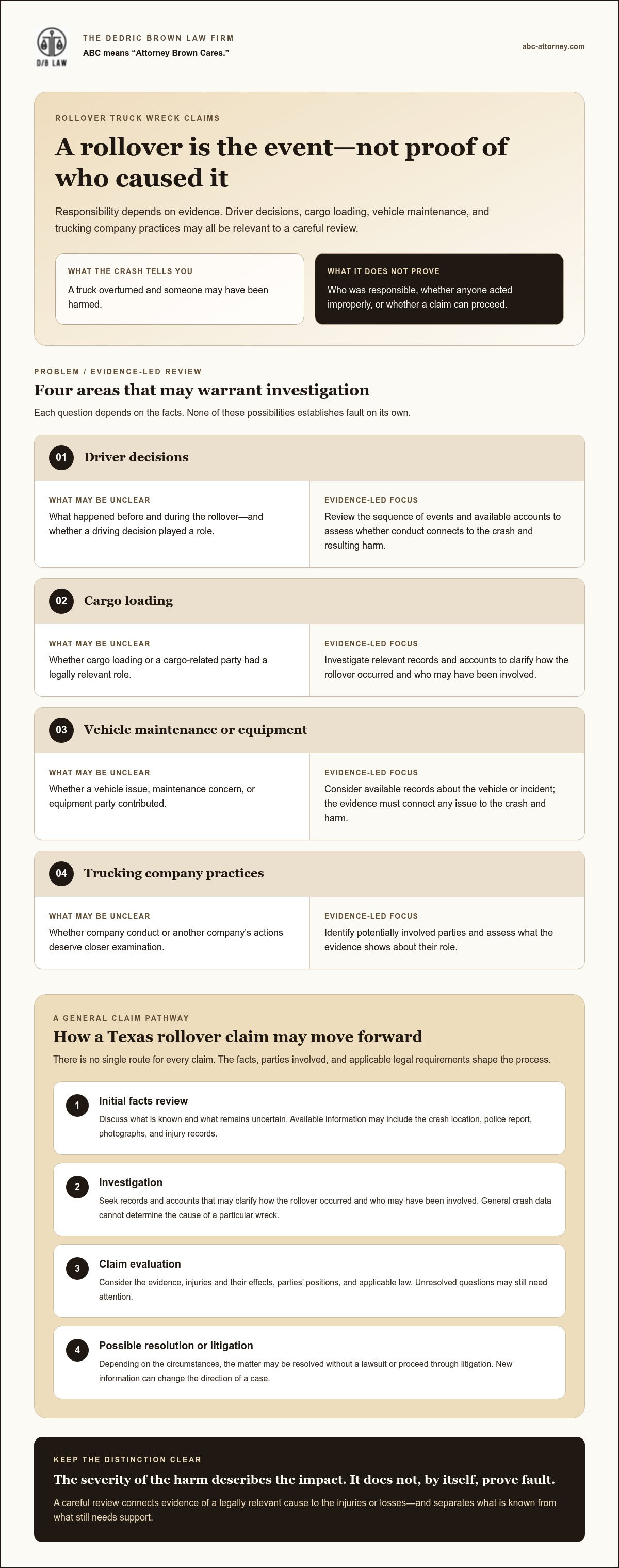
Responsibility depends on the evidence. Driver decisions, cargo loading, vehicle maintenance, and trucking company practices may all be relevant. A careful review can connect the crash circumstances to your injuries and losses, and clarify what steps may come next.
This article explains how a Texas rollover truck claim may proceed, what can affect fault, and what information can help an attorney evaluate your situation. It also covers practical steps for organizing records such as crash reports, photos, and medical documents. At the Dedric Brown Law Firm, ABC means “Attorney Brown Cares.” That commitment to personal, client-centered care reflects the firm’s mission: “Fighting for your rights with integrity and dedication.”
Table of Contents
Rollover Truck Wreck Lawsuit: When Might a Claim Be Considered?
A rollover truck wreck lawsuit is a civil claim seeking accountability for harm recognized by law. It may be considered when evidence suggests negligence or another legally relevant cause contributed to the crash and someone suffered a connected injury or loss. The rollover alone doesn’t establish liability, and filing a claim doesn’t guarantee compensation. The facts and applicable law determine whether a case can proceed and what outcome may be available.
The effects can continue long after the impact. Injuries may require treatment and interfere with work; the crash can also bring financial strain and emotional stress. Those effects deserve careful attention, but they don’t establish who caused the rollover. A legal review considers what happened, the harm that followed, and the evidence connecting them.
A serious crash is not automatically a viable legal claim. Responsibility depends on evidence connecting a legally relevant cause to the harm.
What facts can make a rollover truck wreck legally significant?
Investigators and attorneys may examine how the truck began to roll, what happened before and during the event, and whether a person’s or company’s conduct played a legally relevant role. Understanding vehicle rollover dynamics helps explain why the mechanics matter: rollovers can happen through different sequences, and how the event began can shape which questions deserve attention. The crash itself is one fact, not the whole case.
The injuries and losses must also be documented. Medical records may show treatment and help connect an injury to the crash; employment records may help show work-related effects. Other useful evidence may include witness accounts and available records about the vehicle or incident. No single item automatically resolves the issue. Each case depends on its own facts and applicable law.
Why a rollover does not automatically establish liability
A truck overturning signals a serious event, but it doesn’t identify who was responsible or prove that anyone acted improperly. Investigators and attorneys look at how the rollover happened and what followed. They may consider competing explanations, the sequence of events, and whether the evidence connects particular conduct to the injuries. The severity of the harm helps describe the impact, but it isn’t proof of fault on its own.
For example, imagine a truck rolls onto its side and damages a passenger vehicle. The rollover alone doesn’t explain whether a driving decision, a vehicle issue, or another circumstance played a role. Those are questions for evidence, not assumptions. A careful review separates what is known from what still needs support, helping an injured person make an informed decision about whether to pursue a claim.
You don’t need to know the legal answer before requesting an evaluation. A clear account of the crash, the injuries, and any records you already have can help an attorney assess whether further investigation may be warranted. The goal is to understand what the facts may support and what questions remain, not to promise a result.
How a Texas Rollover Truck Wreck Lawsuit May Move Forward
There’s no single route every truck wreck claim follows. A rollover truck wreck lawsuit may begin with a conversation and a review of available information, then develop as the evidence, injuries, and potentially responsible parties become clearer. Some matters may be resolved without a lawsuit; others may require litigation. The steps below offer a general picture, not a prediction about any individual case.
A lawsuit’s path depends on the facts, the parties involved, and the legal requirements that apply.
Initial facts review. A lawyer may listen to your account and review information you already have, such as the crash location, a police report, photographs, and injury records. This conversation can identify what is known, what remains uncertain, and what questions may need follow-up. It doesn’t decide whether you must file a lawsuit.
Investigation. If further review is appropriate, the investigation may seek records and accounts that clarify how the rollover occurred and who may have been involved. The FMCSA truck crash statistics offer broader context about large-truck crashes, but general data cannot determine what caused a particular wreck. Individual evidence must do that work.
Claim evaluation. The available evidence, the injuries and their effects, the parties’ positions, and applicable law inform whether a claim may proceed and how to address it. This stage may involve assessing unresolved questions and considering possible resolution. It isn’t a promise of a particular result.
Possible resolution or litigation. Depending on the circumstances, the parties may pursue a resolution or a lawsuit may be filed and proceed through court. The steps and decisions can differ from one matter to another, and a case may change direction as new information emerges.
What happens during an initial case review?
An initial review is an opportunity to explain what happened in your own words and discuss the information available so far. The lawyer may ask about the crash, known injuries, treatment, and communications with insurers. At the Dedric Brown Law Firm, a free case review gives you a chance to discuss a commercial truck wreck without committing to pursue a lawsuit. It can help identify issues to examine, but it can’t predict an outcome.
Why Texas-specific legal details need careful review
The rules and procedures that apply can depend on the case’s facts and where it may be heard. Limitation periods and filing requirements require current Texas-law review. Don’t rely on a general online description to determine your deadline; a qualified lawyer should assess the relevant dates, parties, and circumstances. Careful review is especially important when there are questions about who may be involved or which forum may apply.
If you’re unsure what information to bring or what questions to ask, you can discuss your truck wreck concerns with the firm. A focused conversation can help identify what may need review and support an informed next step.
Who May Be Responsible in a Rollover Truck Wreck Lawsuit?
A rollover may raise questions about more than the driver, but that doesn’t mean every person or company connected to the truck is responsible. A rollover truck wreck lawsuit requires a fact-specific review of possible causes, conduct, and harm. The table below identifies potential avenues of inquiry, not conclusions about fault.
These categories help organize questions; they don’t assign blame. A party’s connection to the truck or cargo alone doesn’t establish responsibility. Before naming anyone in a claim, an attorney must assess the evidence and applicable law. An investigation may support a claim involving one party, several parties, or none of the possibilities initially considered.
How driver conduct and company practices may be examined
An investigation may examine whether fatigue, unsafe driving, training, or oversight deserves closer attention. These are questions, not assumed causes. For example, a concern about driver fatigue needs support from the available records and circumstances; the fact that a rollover occurred doesn’t prove the driver was tired. Likewise, a question about company training or supervision must be evaluated using information about the company’s practices and any connection to the crash.
Careful analysis separates suspicion from what the evidence can support. That distinction can matter when evaluating the driver’s role and any claim involving the company. The review should also consider alternative explanations rather than treating one possible cause as established from the outset.
When cargo or equipment may become relevant
Cargo loading may warrant attention if available information suggests that the way a load was distributed or secured could have affected the vehicle. A mechanical issue may also become relevant if facts point to a component or maintenance concern. Neither possibility proves that cargo, a defect, or maintenance caused a particular rollover. Each requires investigation into the circumstances and a reasoned connection to the event.
Identifying potentially responsible parties takes case-specific investigation and legal analysis. The goal is to follow the evidence without assuming that every possible party shares fault. A careful review can clarify which questions deserve attention and which leads the facts do not support.
What to Prepare Before Discussing a Texas Rollover Truck Claim
You don’t need a complete file to start a conversation about a rollover truck wreck lawsuit. A few details can help an attorney understand the basic circumstances, identify questions, and discuss what information may be useful next. This checklist is a practical starting point, not a legal requirement or a test of whether you have a claim.
Information that can help explain what happened
If you’re able, write down what you remember while the details are clear. Keep your account factual: separate what you saw from what someone else told you, and note anything you’re unsure about instead of filling in gaps.
The crash date, approximate time, and location, including the road or nearby landmarks if known.
The names or contact details of people involved, along with any trucking company or other business identified in paperwork.
Available crash reports, insurance documents, photographs, and names or contact information for witnesses.
A brief timeline of what you recall before, during, and after the rollover, including any conversations about the crash.
Keep original records as they are. Don’t alter a document, add details you can’t verify, or guess at answers to make your account seem complete. Missing information doesn’t by itself determine whether a claim exists. An attorney can help identify what may be available and what remains uncertain.
Questions to raise about injuries and financial effects
Describe your injuries as accurately as you can, including when symptoms began, what care you’ve received, and how your condition has changed. Keep existing medical records, appointment information, and insurance correspondence together if convenient. You don’t need to wait until you’ve collected every record, and preparing for a legal discussion should never delay medical care.
It may also help to note changes in daily life: tasks that have become difficult, time away from work, or changes in the help you need at home. Keep available bills, pay records, or other documents reflecting expenses or work disruption. Don’t estimate the value of a claim or assume a particular document proves a specific amount. Those details need to be reviewed in context.
Brain injuries can affect medical needs, work, and everyday activities in different ways. If a brain injury is part of your experience, information about its ongoing effects may help frame the discussion. You don’t have to predict future needs on your own.
Bring what you have, even if it’s only a short timeline and a few documents. Discuss your rollover truck claim with the firm to understand which details may matter in a careful case review.
Discussing a Rollover Truck Wreck Lawsuit With The Dedric Brown Law Firm
After a serious truck crash, deciding what to do next can feel like another difficult task. The Dedric Brown Law Firm represents people in commercial truck wreck and catastrophic personal injury matters. A conversation gives you space to explain your concerns and discuss whether further legal review may make sense. You don’t need to arrive with every answer or decide in advance to file a lawsuit.
A personal, analytical approach to a serious injury claim
Founding Attorney Dedric Brown is a Texas attorney and CPA. These credentials don’t promise a particular result. A careful case discussion starts with your circumstances and the available information, while recognizing that questions about responsibility and harm require individual legal analysis. The firm’s approach reflects attentive communication and a commitment to treating clients with care, true to “Attorney Brown Cares.”
You can raise concerns about how the crash has affected your health, family, and work. You can also ask which questions may need further review. A thoughtful conversation can clarify what is known and what remains uncertain, without pressuring you to make an immediate decision.
A clear first step for Texas crash victims and families
The firm offers a free case review, giving you an opportunity to discuss the crash and ask questions without being required to pursue a lawsuit. The firm’s contingency fee model is stated this way: “You Pay Nothing Unless I Win Your Case!” This describes the fee arrangement, not a guaranteed case result.
If you’re ready to talk, contact the Dedric Brown Law Firm for a free case review. Share your concerns, ask for clarity, and decide on your next step in your own time.
Take the Next Step With Clarity
The questions after a rollover can feel difficult to sort through, especially while you’re focused on healing and supporting your family. You don’t have to resolve every uncertainty before asking for guidance. A thoughtful conversation can help you understand what may deserve closer review and choose a next step that fits your circumstances.
A rollover truck wreck lawsuit is shaped by specific evidence and applicable law, not assumptions about what happened. Bringing your questions forward can help turn uncertainty into a clearer understanding of your options. You don’t need a perfect account or every document before starting that conversation.
If you’re ready to discuss what happened, request a free case review. The Dedric Brown Law Firm represents people in truck wreck cases across Texas, including Houston, San Antonio, Dallas, Austin, Beaumont, Huntsville, Prairie View, and Brenham. Share your concerns and take the next step with care and clarity.
Frequently Asked Questions
Can I file a lawsuit after a rollover truck wreck in Texas?
Possibly. A rollover truck wreck lawsuit may be an option if the facts support a legally actionable claim, but the truck overturning alone doesn’t establish liability. A case-specific review considers whether someone suffered an injury, what may have caused it, what evidence connects the harm to the event, and which laws apply. The Dedric Brown Law Firm offers a free case review to discuss your circumstances without deciding your case in advance.
Who can be held responsible for a rollover truck accident?
Potentially relevant parties may include the driver, trucking company, a cargo-related party, or an equipment party, but evidence must support investigating each one. A company’s connection to the truck doesn’t by itself prove responsibility, just as a mechanical concern doesn’t establish who may be accountable. These are investigative leads, not conclusions. A lawyer can assess whether the available facts support a claim against any particular party.
What evidence matters in a rollover truck wreck lawsuit?
Potentially useful materials include a crash report, photographs, witness contact details, vehicle or cargo records, and documents showing injuries or treatment. Which items matter depends on the circumstances. A photo may show the scene, while a medical record may document care, but neither alone answers every legal question. Organize what you already have and note what you’re uncertain about. A legal review can help identify what questions to address next.
How long do I have to file a rollover truck wreck lawsuit in Texas?
The applicable filing deadline depends on current Texas law and the circumstances of the case, including the parties involved and any facts that could affect the rules. Don’t assume a general deadline applies to your situation or rely on an online estimate. A qualified lawyer should review the relevant dates and circumstances promptly. Timely guidance can help you understand which requirements may apply without guessing at a deadline.
What compensation may be available after a rollover truck wreck?
Any potential recovery depends on the injuries, documented losses, supporting evidence, and applicable law. A review may consider medical-related expenses, disruption to income, and other harm recognized by law. Records of treatment or missed work can help describe the practical effect of an injury, but they don’t establish a case value by themselves. No amount or outcome can be promised without a fact-specific legal assessment.
Do I have to pay upfront to discuss a rollover truck case with the firm?
The Dedric Brown Law Firm offers a free case review, and its contingency fee model is stated as: “You Pay Nothing Unless I Win Your Case!” This describes the firm’s fee arrangement, not a guaranteed case result. The firm serves people across Texas, including Houston, San Antonio, Dallas, Austin, Beaumont, Huntsville, Prairie View, and Brenham. To discuss your situation, contact the firm.
Can a rollover truck wreck cause a traumatic brain injury?
A serious collision can involve head trauma, but only a qualified medical professional can assess whether you have a traumatic brain injury. Seek prompt medical attention if you have health concerns, and follow the clinician’s guidance. If an injury is diagnosed, medical records can help document the care and effects for a legal review. The connection between an injury and a claim depends on the evidence and applicable law.



Comments