
How to Handle Medical Liens on a Settlement and Reduce Costs

A medical lien can reduce what you take home, but the amount claimed isn’t always the amount that must be paid. Knowing how to handle medical liens on a settlement starts with verifying the claim and reviewing whether it can be challenged or negotiated. For Texans resolving a personal injury claim, the lien and applicable rules deserve careful review.
It’s understandable to worry that medical bills could consume a settlement meant to help you recover. The key is to verify valid claims before distributing the funds and understand how health insurance, Medicare, or Medicaid may affect repayment. At The Dedric Brown Law Firm, personal care comes first.
This article explains how lien verification, negotiation, and payment work, how health insurance may affect the process, and how liens can change your final recovery. You’ll also learn when legal help can help protect your share.
Table of Contents
Can Medical Liens Be Negotiated or Reduced?
Often, yes. A lienholder may agree to accept less than the claimed balance. Attorney fees and case costs also affect the funds available to repay liens, so include them when calculating what remains for negotiation. At abc-attorney, Attorney Brown Cares, Attorney Brown personally approaches these discussions with compassion and care for each client’s well-being.
Calculating and Negotiating Lien Amounts
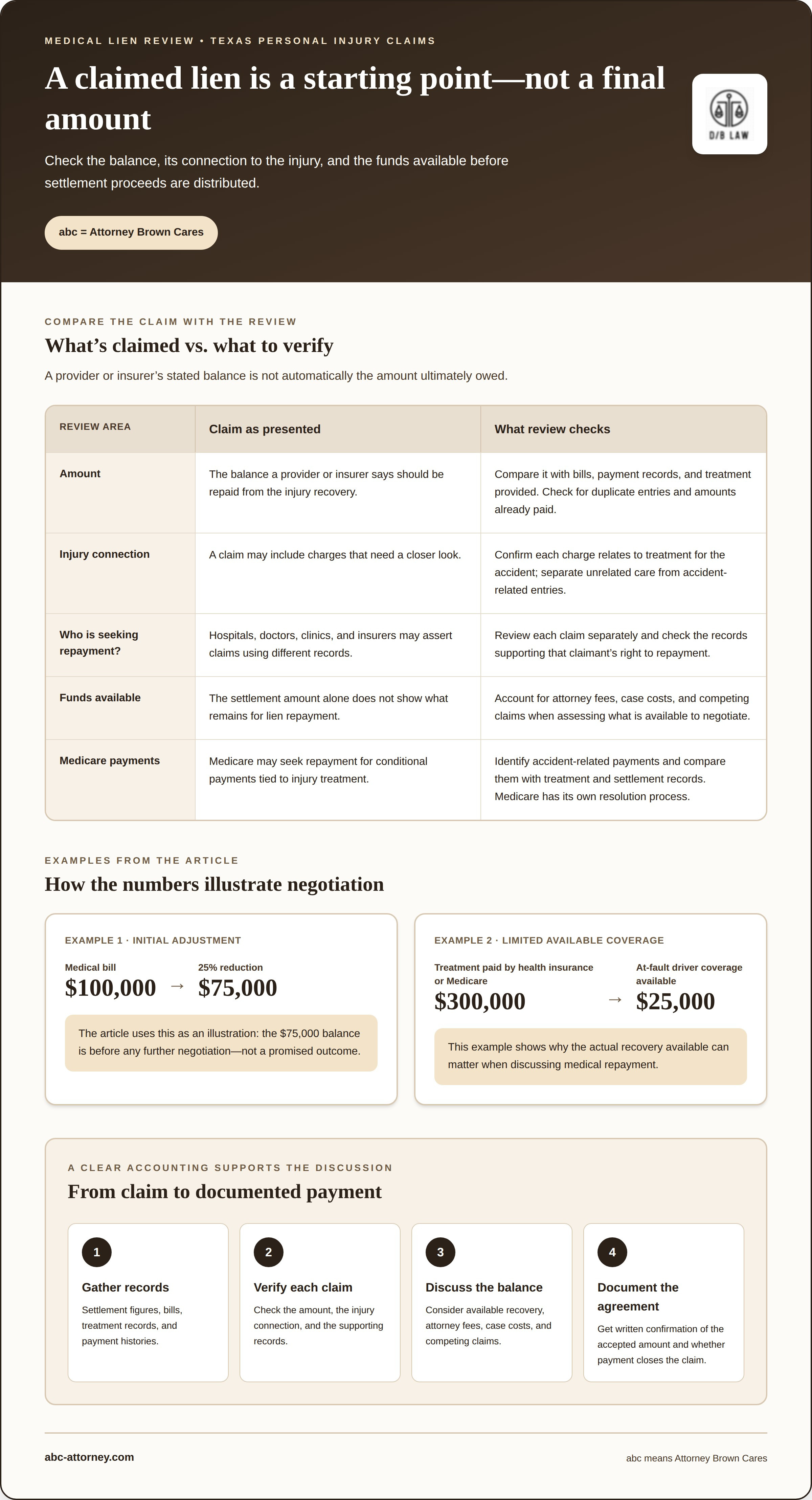
A lien amount is what a provider or insurer claims should be repaid from an injury recovery. Its accuracy and connection to the settlement matter: the claimed balance is not automatically the amount ultimately owed.
Start negotiations with a clear accounting of the settlement, attorney fees, case costs, and each lien claim. For example, a $100,000 medical bill reduced by 25% leaves a $75,000 lien before further negotiation. That example shows how an initial adjustment can change the balance, not what every lienholder will accept.
Negotiations can continue after settlement, when the actual recovery and competing claims are clearer. A settlement with limited available coverage may leave less money to address medical repayment. One example involves $300,000 in treatment paid by health insurance or Medicare, but only $25,000 available from the at-fault driver’s coverage. The figures help illustrate why the available recovery can matter in discussions.
Verifying Provider Claims
Verifying a provider’s claim means checking its amount and whether it relates to treatment for the injury. This matters because negotiations should address only charges that belong in the repayment calculation.
For each medical lien, an attorney can compare the claimed balance with billing records, payments, and the treatment provided. This review may reveal duplicate entries, charges unrelated to the accident, or amounts already paid. Each discrepancy gives negotiations a specific basis for seeking a lower balance.
The review also examines who is asserting the claim and what supports the right to repayment. Hospitals, doctors, clinics, and insurers may each provide different records. Separating their claims helps prevent one party’s balance from being mistaken for a complete accounting of accident-related care. Once the documented amount is clear, negotiations can start from a more precise figure.
Medicare Lien Negotiations
A Medicare lien negotiation addresses repayment for conditional payments Medicare made for injury-related treatment. Those payments may be subject to repayment if another responsible source later pays the injury claim.
The review starts by identifying which Medicare payments relate to the accident and comparing them with treatment and settlement records. Negotiations can then address the verified amount and the recovery available. Medicare’s claim is not an ordinary provider bill. It is a government reimbursement claim with its own resolution process.
Keep settlement figures, payment information, and relevant treatment records aligned throughout discussions. If the settlement changes or the payment list includes disputed treatment, those details can affect the amount being resolved. Precise records give negotiations a clear basis and help ensure the final lien amount reflects payments tied to the injury.
Attorney assistance with lien verification and payment
At abc-attorney, “abc” means “Attorney Brown Cares”, a commitment to personal attention and clients’ well-being. An attorney can examine repayment claims, confirm their basis, and coordinate payment from settlement proceeds. Since medical lien rules vary by state, the attorney first identifies which jurisdiction’s requirements apply to the claim.
Checking Lien Validity and Accuracy
Checking a lien means reviewing the claimant’s right to repayment, the amount sought, and its connection to the accident. This careful review helps ensure the settlement accounting distinguishes supported accident-related charges from amounts that need further review.
An attorney can compare provider bills with treatment records, payment histories, and the services provided. The review may uncover duplicate charges, unrelated care, or payments not credited against the claimed balance. If a bill combines accident treatment with other services, separating the entries gives negotiations a clearer factual basis and helps protect the client’s interests.
For an insurance company’s reimbursement demand, the attorney can compare the demand with benefits paid and treatment records. Different claimants may rely on different documents, so each claim needs its own review. This helps keep the settlement accounting tied to records for the specific accident and injury claim.
Written Reductions and Settlement Disbursement
A written lien reduction documents the amount a lienholder agrees to accept. The settlement disbursement should reflect this documented agreement, not an earlier balance that has since changed.
After reaching an agreement, the attorney can obtain written confirmation of the accepted amount and whether payment closes the claim. The attorney then uses that record to prepare the settlement accounting and coordinate payment before distributing the remaining proceeds, with care for the client’s interests.
The final accounting should reconcile the settlement statement with the lienholder’s written terms, current bill, and payments already made. If part of a claim remains disputed, the records should distinguish that amount from the portion agreed for resolution. Clear documentation reduces confusion about what each payment covers.
State Lien Requirements and Deadlines
State lien requirements govern how certain providers establish claims against settlement funds. Rules from another state should not be assumed to apply to a Texas injury claim.
For example, under North Carolina General Statutes § 44-50, covered medical liens can attach to settlement funds, and medical provider liens under these statutes generally cannot exceed fifty percent of the recovery after attorney’s fees are accounted for, according to the North Carolina General Assembly. This example illustrates why an attorney must identify the applicable state law rather than apply another state’s rule to a Texas claim.
Notice requirements and deadlines can also vary. An attorney can identify the requirements that apply to the specific claim, track relevant dates, and coordinate required notices during the lawsuit or settlement process. For help reviewing accident-related claims and payment records, speak with an attorney about lien review.
Billing health insurance before seeking payment from an accident recovery
When health insurance covers treatment, billing the health plan first may affect what is claimed from an injury recovery. Hospitals, clinics, providers, and insurers can assert repayment claims, so identifying each claimant helps clarify potential deductions. At abc-attorney, “abc” means “Attorney Brown Cares”, we provide insurance and reimbursement guidance with your well-being and individual needs in mind.
Providers and Insurers That Assert Claims
Potential claimants include hospitals, clinics, doctors, chiropractors, physical therapists, and health insurers. Identifying each party matters because providers may bill separately for accident-related treatment, while an insurer may seek reimbursement for payments it made.
A useful review separates provider bills from insurance records and connects each amount to the injury claim. For example, a hospital may claim for facility care, while a physical therapist bills for later treatment. The health insurer may also seek reimbursement for covered services. Keeping these records separate helps prevent one balance from being mistaken for the total owed.
If health insurance covers treatment, arrange for the health plan to be billed before treating the accident recovery as the first source of payment. Then compare the plan’s explanation of benefits with provider statements and payment records. This shows what insurance paid, which charges remain outstanding, and whether a provider’s balance reflects those payments.
That order matters because a provider’s billed amount and an insurer’s reimbursement demand are different claims. An attorney can reconcile both with treatment records and the settlement accounting. This gives a clearer picture of which claims relate to the accident and what each claimant says remains due.
Provider Liens and Insurer Subrogation
A provider lien is a provider’s claim for payment from an injury recovery. Insurer subrogation is an insurer’s effort to recover benefits it paid. The distinction matters because the claimant, supporting records, and amount under review differ.
A hospital or doctor may submit an unpaid bill for treatment. A health insurance company may instead seek repayment for care it already covered. An attorney reviews both, but should not treat a provider’s bill as proof of the insurer’s reimbursement amount. Each claim needs its own payment history and connection to the injury.
Medicaid and Medicare Reimbursement
Medicare and Medicaid may seek reimbursement for injury-related care they covered. Their claims matter because government program recovery can affect how settlement funds are allocated.
Medicare may seek repayment for conditional payments when liability insurance, no-fault coverage, uninsured motorist coverage, or another responsible source later pays for the injury claim. The Medicare Secondary Payer statute gives the United States subrogation rights to the extent of Medicare payments for an item or service. Medicaid recovery can also involve past and future medical care; the Supreme Court’s 2022 decision in Gallardo v. Marstiller addressed state Medicaid recovery from settlement proceeds.
Medicare and Medicaid claims are addressed before private insurance reimbursement claims. Separating government program claims from provider bills and private-plan claims helps create an accurate settlement accounting. A careful reconciliation connects each claimed payment to covered accident treatment before the recovery is distributed. For support with accident-related legal issues, discuss your injury claim with an attorney.
Can a Hospital Lien Take My Entire Settlement in Oregon?
An Oregon hospital lien is capped at one-third of the total settlement under ORS 87.555. That limit concerns hospital liens, not every medical or reimbursement claim that may affect settlement proceeds. At The Dedric Brown Law Firm, we help clients understand and manage their claims with personal attention.
How Liens Affect Settlement Proceeds
A medical lien directs payment to a claimant from settlement proceeds before the injured person receives the remaining funds. A hospital lien cap under state law does not erase other valid claims against a recovery.
For example, a $100,000 personal injury settlement with a $30,000 medical lien leaves $70,000 before other deductions. The example illustrates the arithmetic, not a guarantee of the amount ultimately received. Attorney fees, case costs, and other valid claims may also affect distribution.
For an Oregon hospital lien, compare the claimed amount with the one-third cap in ORS 87.555. Then distinguish that hospital claim from insurer reimbursement or other provider claims. An injury lawyer can assess which claim applies to which portion of the recovery and account for them separately.
Bills Exceeding Settlement Proceeds
Bills can exceed settlement proceeds when claimed medical costs are greater than the available recovery. A settlement may not cover every bill in full, even before other deductions.
For instance, if accident-related medical bills exceed the settlement, the available funds cannot pay every claimed amount in full. An attorney can identify each claimant, confirm the amounts, and negotiate based on the actual recovery. A provider's bill and an insurer's reimbursement demand are separate claims, each requiring its own accounting.
Negotiations may address the gap between the amount claimed and the funds available. Before payment, the parties can document any agreement in writing. That record clarifies the amount accepted and whether it resolves the specific claim. A hospital lien cap is not a universal limit on every medical bill or reimbursement claim.
Medicare and Medicaid Reimbursement Procedures
Medicare and Medicaid reimbursement procedures address government payments for injury-related treatment. Their repayment claims can reduce the compensation left after a settlement.
Settlements or payments involving Medicare reimbursement must be reported to Medicare within 60 days, according to the Centers for Medicare & Medicaid Services. Medicare may seek repayment for conditional payments when another responsible source later pays for the injury. Unpaid Medicare claims may also expose a recovery to consequences under the Medicare Secondary Payer Act.
Medicaid may also assert reimbursement claims for covered care. The attorney separates Medicare and Medicaid demands from Oregon hospital liens, then reconciles each claim with the treatment and settlement records. A written payment resolution helps establish which government claim has been addressed. This careful accounting shows how much remains for the injured person after the relevant claims and settlement deductions are handled. The Dedric Brown Law Firm's commitment to care means helping clients understand and manage each claim throughout this process.
How liens affect personal injury settlements
A medical lien reduces the portion of an injury settlement available to the injured person. Knowing how to handle medical liens on a settlement helps clarify what may remain after valid claims are resolved.
For example, a $100,000 personal injury settlement with $25,000 in medical liens leaves $75,000 before any other deductions. That arithmetic shows why the lien balance matters, but it doesn’t determine the final payment. Other claims, attorney fees, and case costs also affect the net recovery.
Settlement funds may pay valid liens before the injured person receives their share. An attorney generally verifies and resolves valid lien or reimbursement claims before distributing net proceeds. The review can affect both the amount paid and when the remaining funds are ready for distribution.
A common-fund issue may also arise when an attorney’s work creates a recovery that benefits a health insurer. One example uses a $15,000 insurer lien. The lien amount alone doesn’t explain the final allocation; the relevant agreement and applicable rules affect whether the insurer shares in the costs of securing the recovery.
During a personal injury case, an attorney can audit lien statements and challenge amounts that appear invalid. The review should separate injury-related treatment from unrelated care, then compare claimed balances with payments and records. Correcting an inaccurate claim changes the settlement accounting before funds are distributed.
Negotiations can also matter when the settlement is limited or multiple claims compete for the same recovery. A lienholder may agree to accept less, leaving more of the settlement for the injured person. The written agreement should state the accepted amount and whether payment closes the claim.
Some medical lien agreements explain what happens if a personal injury case ends without a settlement or verdict. The contract determines whether the provider can collect in that situation. Reviewing the signed terms clarifies whether an unsuccessful case leaves a separate payment obligation.
A practical understanding of how to handle medical liens on a settlement helps connect verified claims, negotiated amounts, and the final disbursement. If liens are affecting your injury settlement, get legal help reviewing your settlement claims.
The Dedric Brown Law Firm: Medical Malpractice Litigation
The Dedric Brown Law Firm handles Medical Malpractice Litigation and Personal Injury Litigation when an injury claim involves questions about negligent care or responsibility. If medical treatment led to a serious injury, legal representation can address the underlying claim and its financial consequences.
The firm handles Traumatic Brain Injuries, Hypoxic & Anoxic Brain Injury, and Birth Injuries. These cases can involve extensive treatment and reimbursement claims, making it important to account carefully for the injury and documented losses. Attorney Brown Cares reflects a commitment to personal attention and compassionate advocacy through a difficult legal process.
If you’re considering a potential claim or need help understanding your legal options, contact The Dedric Brown Law Firm for a free case review.
Take the Next Step Toward Clarity
Your next decision is how to address unresolved financial issues alongside your injury claim. A focused legal review can connect those questions to the broader facts of your case, so decisions reflect your circumstances rather than assumptions.
Understanding how to handle medical liens on a settlement can help you ask informed questions and weigh your options. If medical care or an injury caused lasting harm, consider whether the underlying event also warrants legal attention. You deserve clear communication and an advocate who takes your concerns seriously.
The abc-attorney name stands for “Attorney Brown Cares,” a commitment to personal attention and compassionate advocacy. If you’re ready to discuss your situation, contact The Dedric Brown Law Firm. Take the next step when you feel ready, with support focused on your needs.
Frequently Asked Questions
At abc-attorney, “abc” means “Attorney Brown Cares.” These FAQs reflect our commitment to personal, compassionate care as we help you understand medical liens.
What Is a Medical Lien & How Can It Affect My Personal Injury Case?
A medical lien is a claim seeking repayment for injury-related care from a personal injury recovery. It can affect the amount available to you and how the settlement is distributed. If a claim includes treatment from several providers, each balance may need separate review. Resolve those claims before treating the gross settlement as money available to spend.
Who Can File a Medical Lien Against Your Settlement?
Hospitals, clinics, doctors, chiropractors, physical therapists, and health insurers may assert claims connected to accident treatment. Government programs such as Medicare or Medicaid may also seek reimbursement for covered care. For example, a hospital may claim for facility services while an insurer seeks repayment for its payments. These are distinct claims, so identifying each claimant helps avoid confusing one party’s demand with another’s.
Your Settlement Is Finalized, Now What About Medical Liens?
After finalizing the settlement agreement, lien resolution begins. An attorney can obtain current payoff figures, compare them with settlement records, and address disputed or negotiable amounts. The final distribution should account for valid claims before the remaining proceeds go to you. Keep copies of the settlement statement and written lien resolutions to document how each payment was handled.
Can an Attorney Negotiate a Medical Lien for Me?
Yes. An attorney can review the claim, challenge unsupported charges, and negotiate repayment with the lienholder. Discussions may consider the available recovery, treatment linked to the accident, and whether records support the claimed balance. For instance, if a bill includes care unrelated to the injury, the attorney can dispute that portion instead of treating the entire statement as accident-related.
Do I Have to Pay a Lien for Treatment Unrelated to the Accident?
A claim for treatment unrelated to the accident should be distinguished from repayment for injury-related care. An attorney can compare dates, services, and medical records with the accident and the treatment claimed. If a statement combines both, separating the entries helps identify which charges connect to the injury claim. Do not accept the claimed amount as an accurate accident-related balance without this review.
How Much Can Lawyers Negotiate Medical Bills?
There is no single reduction amount that applies to every medical bill. The result depends on the claim’s documentation, the amount available from the recovery, and the lienholder’s agreement. A $100,000 medical bill reduced by 25% would leave $75,000 before any further negotiation, but that example does not establish a standard reduction. The attorney’s review should focus on the specific records and settlement circumstances.
What is a medical lien on a personal injury settlement?
A medical lien is a repayment claim for injury-related care asserted against funds recovered through a personal injury settlement or judgment. It may come from a provider seeking payment or an insurer seeking reimbursement for benefits it paid. For example, a physical therapy provider’s unpaid balance differs from an insurance company’s request to recover covered payments. The source of the claim determines which records support it.
How do Medicare and Medicaid liens work, and what are the repayment deadlines?
Medicare may seek repayment for conditional payments tied to injury treatment when another responsible source later pays. Settlements or payments involving Medicare reimbursement must be reported within 60 days, according to the Centers for Medicare & Medicaid Services. Medicaid recovery depends on the program and applicable rules; the Supreme Court’s 2022 decision in Gallardo v. Marstiller addressed recovery for past and future care. An attorney can track the claims and reporting obligations.



Comments