
Amputation Injury From a Car Accident: Compensation and Claims

A car-crash amputation can affect far more than mobility. An amputation injury from a car accident lawsuit may seek compensation for medical care, prosthetics, rehabilitation, lost income, and the lasting physical and emotional effects of limb loss. The potential value depends on the evidence, the harm, and who is legally responsible.
If you’re recovering while worrying about future care, work, and daily independence, those concerns belong in the claim. Amputation injuries can require ongoing treatment and care that are difficult to measure at the outset, so it matters to understand potential damages and how the evidence can support them.
This article explains what an amputation means in a car-crash claim, which losses compensation may cover, how liability and injury severity can affect claim value, and what factors may shape a resolution. It also describes how evidence can connect the crash to the injury and document its financial and personal effects.
Table of Contents
What Compensation Can I Claim for an Amputation After a Car Accident?
A claim may seek compensation for past and future medical care, prosthetics, rehabilitation, medication, and long-term support. Lawyers assess future medical expenses and lost earning capacity using treatment projections, rehabilitation needs, work history, and expert analysis. They can also connect those losses to the crash and the other party’s negligence.
Medical and Rehabilitation Costs
Medical and rehabilitation costs cover treatment for the amputation and support for adapting afterward. Care may continue well beyond emergency treatment and include surgery, physical therapy, medication, prosthetic devices, and long-term support.
A claim may include hospital bills, follow-up treatment, prosthetic fitting, and rehabilitation. For example, someone may need therapy to rebuild strength, balance, and coordination before using a prosthetic limb confidently. Claims may also account for future adjustments, maintenance, and replacement. Prosthetic limbs may need replacement every three to five years, so projected care can be an important part of evaluating compensation.
Home and vehicle modifications may also matter when an injury limits mobility or independence. Examples include wheelchair ramps, accessible bathrooms, and adaptive driving equipment. Medical records, treatment plans, invoices, and rehabilitation notes can show which expenses relate to the accident and how care needs change over time.
Expert Support for Future Costs
Medical, vocational, and economic experts assess different aspects of future losses. Their analysis can show why a current bill alone does not capture the full medical impact or the ways an amputation may affect future work and earning capacity.
A medical expert can explain the injury, expected treatment, prosthetic needs, and anticipated rehabilitation. A vocational expert can assess how physical limitations affect job duties, work options, or a return to previous employment. An economic expert can use those assessments, along with work and income records, to estimate future financial losses. Together, their findings support a claim with evidence rather than broad assumptions.
Following medical advice and attending recommended rehabilitation can help create a clear record of treatment and recovery. Missed appointments or gaps in therapy may raise questions about the course of care, while consistent records can document pain, progress, and continuing limitations. Keep appointment summaries, prescriptions, prosthetic adjustment records, and therapy notes for a claim review.
A lawyer can organize medical records, identify expenses linked to the crash, and assess how negligence caused the injury. For example, the legal analysis can connect crash evidence with treatment records and expert opinions. This helps distinguish accident-related expenses from unrelated care and present future medical and earning losses clearly, with supporting evidence.
Compensation depends on the losses supported by evidence, including treatment already received and projected future care. A thorough claim accounts for the practical effects of the injury, from rehabilitation and prosthetic needs to work limitations and changes at home.
Factors affecting settlement value
Settlement value reflects the injury’s lasting effects, the strength of the liability evidence, and the losses supported by records. The type of amputation matters, but no single figure can capture every person’s circumstances.
Settlement Factors by Amputation Type
When considering settlement factors by amputation type, the injury’s location and severity must be considered alongside its documented consequences. Losing a finger, hand, foot, or leg can affect daily activities and work in different ways.
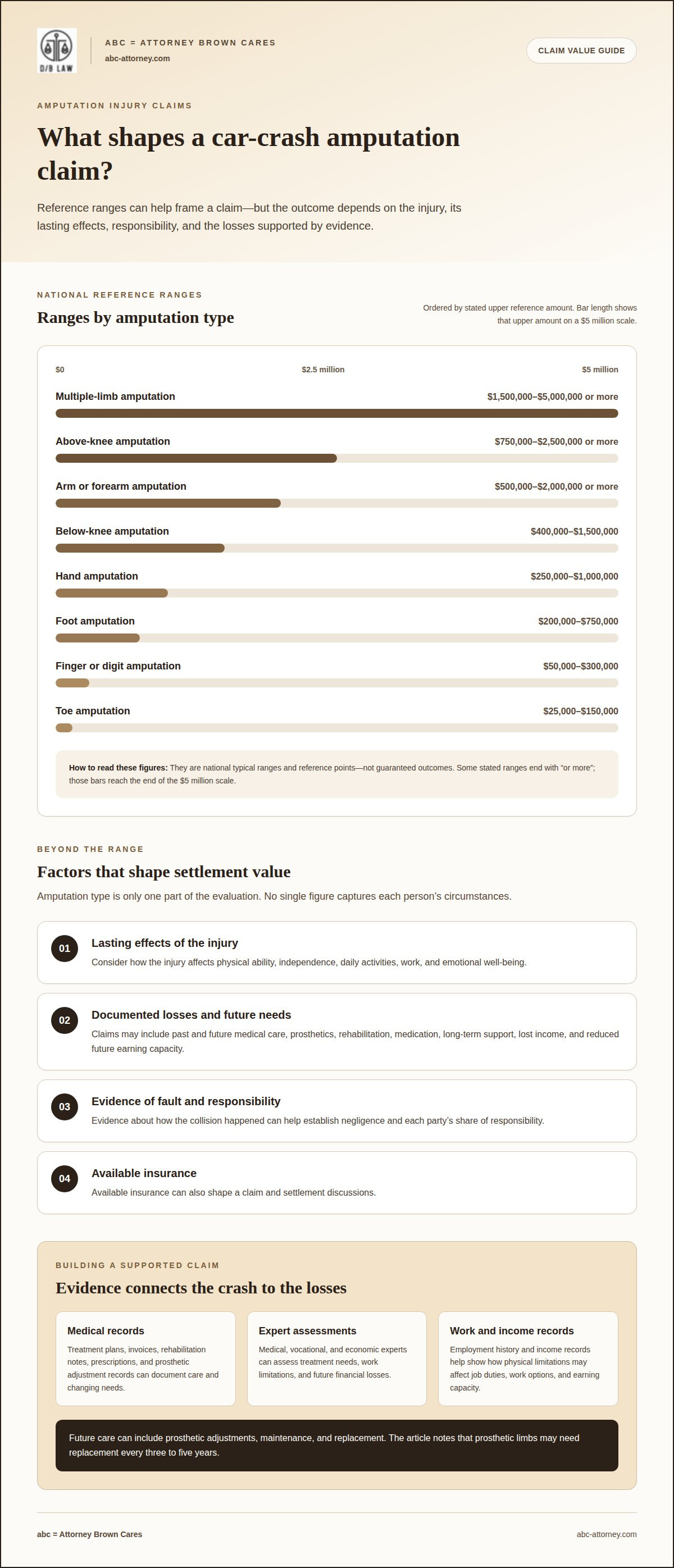
National typical ranges include $50,000 to $300,000 for a finger or digit, $250,000 to $1,000,000 for a hand, and $500,000 to $2,000,000 or more for an arm or forearm. A toe amputation range is $25,000 to $150,000; a foot amputation range is $200,000 to $750,000.
For leg injuries, the stated national range is $400,000 to $1,500,000 for a below-knee amputation and $750,000 to $2,500,000 or more for an above-knee amputation. Multiple-limb cases may range from $1,500,000 to $5,000,000 or more. These figures are reference points, not guaranteed outcomes.
Beyond the type of amputation, a lawyer evaluates how the injury affects physical ability, independence, work, and emotional well-being. An injury that prevents someone from returning to an established occupation may result in different earning losses from one with fewer effects on work. Medical records, employment history, expert assessments, and evidence connecting the crash to the injury help substantiate these losses.
Available insurance and each party’s share of responsibility can also shape a claim. A dispute about fault, for example, may require evidence showing how the collision occurred. The strength of that evidence, the documented losses, and the ability to establish negligence all inform settlement discussions.
Negotiation and Trial Paths
Negotiation seeks an agreed settlement; a trial asks a jury or judge to decide disputed issues. Either path requires a clear presentation of liability and damages.
Many amputation injury cases settle before trial, though some proceed to a jury verdict. A lawyer can present records, expert opinions, and documented effects to support a demand, then compare the insurer’s response with the evidence. If negotiations do not resolve the dispute, a trial may put questions of fault and compensation before a factfinder.
Reported cases illustrate how individual circumstances shape outcomes. Another woman who lost her leg below the knee in a collision with a semi-trailer received a $2,000,000 settlement. These outcomes do not determine the value of a different claim.
Reviewing the injury, liability evidence, and documented losses together can clarify the factors shaping a claim. To discuss how those factors apply to your circumstances, talk through your settlement questions.
Liability and negligence in amputation lawsuits
To prove a car accident amputation claim, a lawyer may examine police reports, witness statements, medical records, expert opinions, and accident reconstruction analysis. These records can help connect the crash, another party’s conduct, and the amputation.
Establishing Fault and Causation
Establishing fault and causation means showing that another party’s negligence caused the crash and resulting injury. Serious harm alone does not establish legal liability.
A claim must show a breach of a duty of care and that the breach more likely than not caused the injury. For example, evidence that a driver was distracted can be considered alongside crash details and medical records documenting the amputation. Expert opinions or accident reconstruction analysis may help explain how the collision occurred and led to the injury.
Negligence disputes can turn on each driver’s actions, the timing of the collision, and the available evidence. A police accident report and eyewitness accounts, for instance, may describe a traffic signal or vehicle movement differently. An attorney can organize those accounts with physical evidence and medical records, then assess whether the evidence connects the other party’s conduct to the injury.
Resolving Liability Disputes
Liability disputes arise when parties disagree about who caused a crash, how it happened, or whether the crash caused the amputation. Resolving these questions matters because disputed responsibility can affect whether and how a claim proceeds.
For instance, one driver may allege that the injured person contributed to the collision, while the injured person points to the other driver’s conduct. Fault rules vary by state. In some contributory negligence states, a finding that the injured person was even 1% at fault may bar recovery. Some modified comparative fault states allow reduced damages only below a 50% or 51% fault threshold, depending on the state.
Responsibility may extend beyond a driver if another party contributed to the crash. Potentially liable parties can include negligent third parties, such as contractors, or product manufacturers, designers, or distributors if a defective product or inadequate warning caused the injury. Evidence must connect that party’s conduct or product to the accident.
Insurance can bring another layer of dispute. If the at-fault driver’s coverage cannot cover amputation-related losses, potential sources may include the injured person’s underinsured motorist coverage, an umbrella policy, or insurance held by another responsible party. Policy terms and evidence of responsibility determine which coverage may apply.
Building a liability case means examining crash reports, witness accounts, medical documentation, and expert analysis together. This evidence can show how the collision happened, identify responsible parties, and support the connection between negligence and the injury.
What Damages Can You Recover?
An amputation claim may include medical bills, prosthetic costs, rehabilitation, lost wages, reduced earning capacity, pain and suffering, and emotional distress. The applicable damages depend on the losses connected to the crash and supported by evidence.
Lost Wages and Earning Capacity
Lost wages are income missed during recovery; reduced earning capacity reflects a diminished ability to earn in the future. Both may matter if an amputation changes someone’s work or career options.
For example, a delivery driver who cannot safely return to driving may miss wages during recovery and face limits on future employment. A claim can distinguish missed pay from longer-term effects on earning potential. Work records, pay information, job duties, and vocational assessments can help explain how the injury caused each loss.
Rehabilitation may affect when someone can return to work and which duties they can perform. A person who resumes employment with reduced hours or modified tasks may still have lost earning capacity. The relevant comparison is between work and income before the crash and the person’s supported capacity afterward, not simply whether they returned to some job.
Pain and Suffering Damages
Pain and suffering damages address physical pain and emotional harm, rather than bills or pay records. They matter because serious limb loss can affect ordinary activities, independence, and enjoyment of life.
For example, medical records may document ongoing pain, while rehabilitation notes describe activities that remain difficult. A personal journal can record daily pain, emotional challenges, and limitations at work or home. These details help show how the injury affects life beyond treatment costs. A claim may also include emotional distress and loss of enjoyment of life when supported by evidence.
Phantom limb sensations and chronic pain can continue after an amputation. Their effects vary, so a claim should connect documented symptoms to specific consequences, such as disrupted sleep or difficulty with household tasks. A clear record of these changes helps explain non-economic damages without treating every person’s recovery as the same.
Medical Bills and Prosthetic Costs
Medical and prosthetic expenses include past and projected care related to the amputation. These costs matter because treatment and device needs may continue after emergency care.
For example, damages may include surgery, medication, physical therapy, prosthetic fitting, maintenance, and replacement. A person may also need follow-up care as their condition and device needs change. Medical records, invoices, and treatment projections can connect those expenses to the accident and support the amount claimed.
Claims may include future medical expenses as well as bills already incurred. They may also account for long-term care and practical modifications, such as an accessible bathroom or adaptive driving equipment. These are separate from lost wages and pain and suffering, though each category may contribute to the overall damages sought.
Organizing damages by category makes it clearer how the crash affected finances and daily life. Wage records, for instance, support income losses; treatment documents support medical expenses; and recovery notes describe pain or activity limitations. Together, these records provide a fuller picture of the losses the claim seeks to address.
Traumatic amputations in car accidents
A traumatic amputation can happen at the crash scene or follow severe damage that surgeons cannot repair. After some car crashes, doctors attempt limb-salvage surgeries over several weeks before recommending amputation. That distinction matters because the claim may involve both the collision’s immediate trauma and medical decisions made during later treatment.
Crush injuries can damage bone, blood vessels, nerves, and surrounding tissue. For example, someone may survive the impact but undergo repeated operations before doctors determine whether the limb can be saved. The medical timeline helps explain how the crash caused the catastrophic condition and why treatment progressed from emergency care to amputation.
Traumatic limb loss also brings challenges beyond surgery. A person may need time to adjust to changes in mobility, use a prosthesis, and resume everyday activities. Phantom limb pain, scarring, and continuing discomfort may form part of the documented effects. In a personal injury claim, treatment records and evidence of changes to work, independence, and daily routines can describe those consequences.
A reported case involving a 28-year-old social worker illustrates how individual facts shape a result. The reported injuries included permanent scarring, phantom limb pain, and ongoing discomfort. That outcome is an example, not a prediction for another person’s claim.
For a traumatic amputation claim, the medical chronology can clarify the connection between the collision and the final injury. Records can document the initial trauma, limb-salvage attempts, surgery, and rehabilitation. Crash evidence can establish how the collision occurred, while testimony from treating professionals can explain the injury’s progression. Together, these details help show what the person experienced and how the loss changed their life.
When limb loss follows a vehicle collision, recovery may involve more than physical treatment. Someone may face new transportation needs, limits on former activities, and emotional strain. A claim should reflect the specific effects supported by evidence, rather than treating every amputation as identical. The location of the amputation, course of treatment, lasting symptoms, and effect on daily life all matter.
Careful legal analysis can bring the crash evidence, medical timeline, and personal consequences into one coherent account. If a traumatic amputation followed a collision, discuss your car accident injury claim and the evidence that may help establish its full impact.
The Dedric Brown Law Firm
The Dedric Brown Law Firm handles serious automobile accidents and personal injury litigation. After an amputation, legal support can help assess how the crash happened, organize evidence of liability, and present the injury’s effect on work and daily life.
That process calls for careful attention to both the person and the details of the claim. The firm’s guiding message, ABC, means “Attorney Brown Cares”: a commitment to personal care alongside focused legal advocacy. If a car crash caused limb loss, consider a free case review with the firm to discuss the evidence, potential damages, and questions affecting your claim.
Contact The Dedric Brown Law Firm to discuss your car accident and the legal questions you’re facing.
Take the Next Step Toward Protecting Your Future
After a life-changing crash, your legal decisions should reflect the life you’re working to rebuild. A careful review can clarify which evidence matters, which questions deserve attention, and how to approach an amputation injury from a car accident lawsuit while keeping your personal priorities in view.
You don’t have to resolve every uncertainty at once. Start with a conversation about your circumstances, concerns, and goals. The Dedric Brown Law Firm provides personal attention and focused legal advocacy for serious injury matters, giving you space to discuss what matters most before deciding how to move forward.
If you’re ready to talk through your situation, contact The Dedric Brown Law Firm. A thoughtful next step can help you move forward with greater clarity and confidence.
Frequently Asked Questions
What Is an Amputation?
An amputation is the complete or partial removal of a limb or body part, through trauma or surgery. After a vehicle collision, a limb may be severed during the crash or removed later because of severe damage. For example, surgeons may determine that a crushed limb cannot be preserved. The medical records describe the injury, treatment, and resulting limitations relevant to a claim.
How Long Do You Have to File a Lawsuit?
The filing deadline depends on the state and circumstances of the claim. For a Texas case, the applicable deadline must be assessed under the rules governing that specific claim. The collision date, parties involved, and legal basis may affect the analysis. A prompt review by a Texas attorney can help identify the deadline that applies.
How Can Experts Strengthen Your Case?
Experts can explain technical issues that records alone may not establish. A medical expert may clarify the injury’s progression, while an accident reconstruction expert can analyze vehicle movement and collision evidence. Vocational or economic experts may assess work effects and lost earning capacity. For example, a vocational expert could compare a person’s former job duties with tasks they can perform after the injury.
How Does Your Own Fault Affect Your Claim?
Your share of fault may affect whether you can recover and how much compensation remains available. The rules differ by state. In some contributory negligence states, even a 1% finding of fault may bar recovery. Some modified comparative fault states allow reduced damages only below a 50% or 51% threshold, depending on the state. Evidence about driving behavior and the collision can help resolve disputed fault.
Understand the Basics: Who Can Be Held Liable?
A driver whose negligence caused the collision may be liable for an amputation injury. Another party may also be responsible if evidence connects its conduct or product to the crash. For example, a defective vehicle part may raise questions about a manufacturer, designer, or distributor. Liability depends on evidence linking a party’s actions to the collision, not simply their presence in the events.
What Kind of Damages Can You Claim?
A claim may seek damages for financial losses and personal harm caused by the injury. These may include treatment expenses, lost income, reduced earning capacity, physical pain, emotional distress, and diminished enjoyment of life. For example, records showing that someone cannot perform their previous occupation may help explain future work-related losses. The claim should distinguish documented financial effects from the injury’s impact on daily activities.
What compensation can you recover for an amputation caused by a car accident?
Compensation may cover accident-related treatment, prosthetic care, rehabilitation, lost wages, and other supported losses. An amputation injury from a car accident lawsuit may also seek damages for pain, emotional distress, or reduced independence. For example, records may show how a collision-related injury disrupted work and everyday routines. Evidence should connect each claimed loss to the crash and resulting injury.
How are car accident amputation lawsuit settlements calculated?
There is no single formula for calculating a settlement. An amputation injury from a car accident lawsuit may consider evidence of fault, the injury’s lasting effects, documented financial losses, and available insurance. For example, the analysis may account for how the injury affects a person’s specific job and daily activities. Outcomes in other cases do not determine an individual claim’s value because the evidence and circumstances differ.


Comments