
When to Hire a Lawyer After a Car Accident for Claim Support

Updated: 10 hours ago
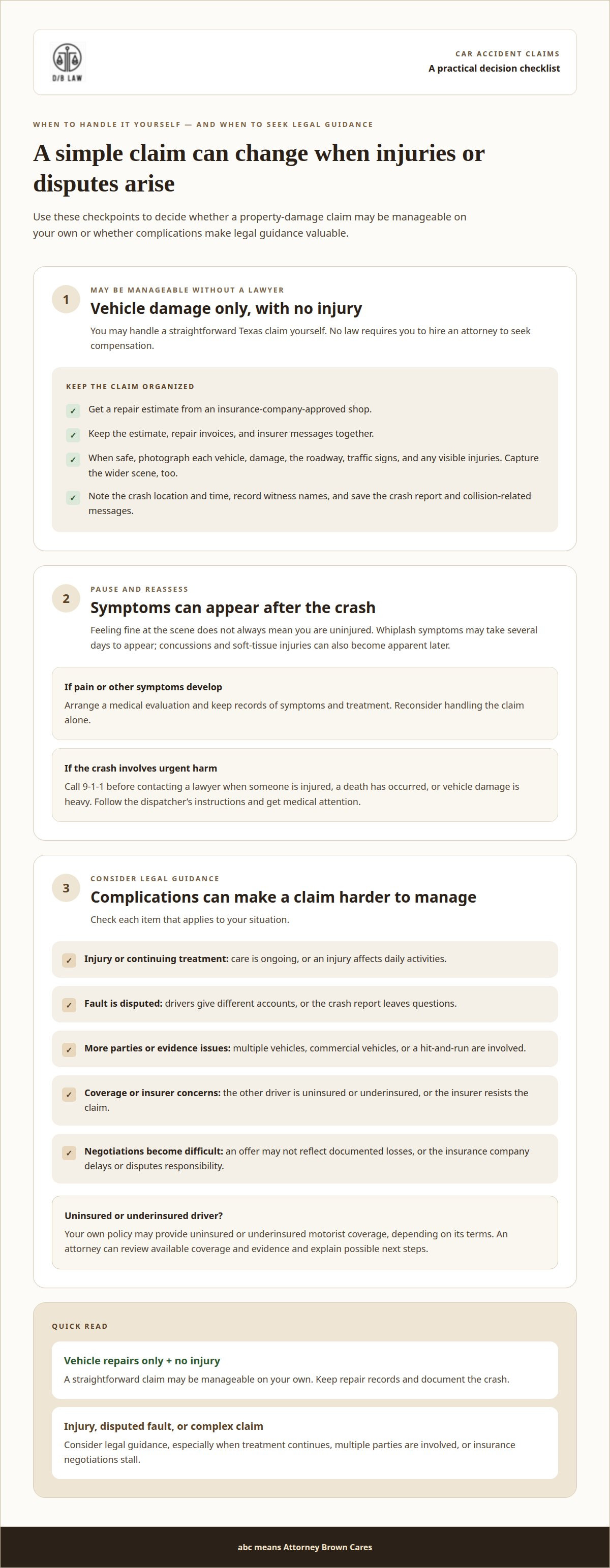
Not every car accident claim requires a lawyer. If a crash caused only vehicle damage, you may be able to handle the claim yourself; no law requires you to hire an attorney to seek compensation. Knowing when to hire a lawyer after a car accident matters most when someone is seriously hurt, fault is disputed, multiple parties are involved, or insurance negotiations become difficult.
It’s reasonable to manage a straightforward claim on your own. But pain may appear after the crash, expenses can add up, and an insurer’s position may be difficult to resolve. If any of these issues arise, legal guidance can help you understand your options and preserve the details that support your claim.
This guide explains when you may handle a claim without an attorney and when legal help may be useful. You’ll learn how a lawyer can approach insurance negotiations, disputed fault, and accident-related expenses, as well as what to consider when choosing an auto accident attorney in Texas.
Table of Contents
1. When Do you NOT Need an Attorney after an Accident?
You may handle a Texas claim yourself when a crash causes vehicle damage only. No law requires an injured person to hire an attorney to seek compensation. For a minor collision with no injury, start by getting a repair estimate from an insurance-company-approved shop. Keep the estimate, repair invoices, and insurer messages together. If pain, headaches, or other symptoms develop, seek a medical evaluation and reconsider handling the claim alone.
Document the scene as soon as it’s safe. Photograph each vehicle from several angles, including the damage, roadway, traffic signs, and any visible injuries. Capture the wider intersection or road, not just close-ups. Note the crash location and time, along with witness names. Save the crash report and messages about the collision. These records can help explain what happened if a Texas insurer later questions fault.
Call 9-1-1 before contacting a lawyer when a crash involves an injury, a death, or heavy vehicle damage. Follow the dispatcher’s instructions and get medical attention. Serious injuries can involve hospital care, continuing treatment, and disputed expenses. Multiple vehicles, commercial vehicles, or a hit-and-run can add parties and evidence issues. In those situations, consider legal representation early.
Don’t assume you’re uninjured just because you felt fine at the scene. Whiplash symptoms may take several days to appear, according to the National Institute of Neurological Disorders and Stroke. Concussions and soft-tissue injuries can also become apparent later. If pain develops, arrange a medical evaluation and keep records of symptoms and treatment. A personal injury attorney may help when an injury requires ongoing care or affects daily activities.
Contact a lawyer if you were injured by an uninsured or underinsured driver, fault is disputed, or the insurer resists your claim. Your own policy may provide uninsured or underinsured motorist coverage, depending on its terms. An attorney can review the available coverage and evidence, then explain possible next steps. If the crash caused a death, seek legal guidance about the rules that apply to your Texas claim.
For example, after a Dallas-area collision, preserve photographs, medical records, repair estimates, and insurer correspondence. Keep documents together and note when each was created. These steps can help an attorney assess what happened and identify missing information. Don’t rely on a deadline or rule from another state when considering a Texas claim.
A lawyer’s help is most useful when a claim involves more than vehicle repairs. Consider legal representation if treatment continues, the other driver denies responsibility, or multiple people or vehicles are involved. Preserve witness details and keep a clear record of expenses. A minor property-only claim may remain manageable without an attorney, while an injury or fault dispute can make legal guidance valuable.
2. How attorneys handle claims and insurance negotiations
An attorney can manage claim communications and organize evidence supporting your position. The process often starts with reviewing the crash report, medical records, repair documents, and insurance correspondence. The attorney can identify disputed details, determine which insurer should receive the claim, and explain what information may be needed. This preparation helps keep statements and documents consistent as negotiations develop.
An insurance adjuster may contact a driver within hours or days after a crash. The adjuster may ask for a recorded statement about the collision, injuries, or treatment. Before responding, understand what the questions cover and how your answers may affect the claim. If you have legal representation, your attorney can manage communications and help prevent an incomplete answer from becoming a point of dispute.
Handling a claim without a lawyer can mean assessing losses and negotiating without legal guidance. A claimant may accept an early settlement before understanding the injury’s full effects, or give a statement an insurer uses to challenge the claim. Missing evidence and unclear expense records can also weaken a demand. These risks matter more when injuries continue or responsibility is contested.
Review early offers carefully. Compare the offer with documented treatment, lost income, vehicle damage, and the injury’s ongoing effects. A quick payment may not account for later care or unresolved symptoms. Ask what the settlement covers and whether accepting it would close the claim.
An attorney evaluates an offer against the available evidence, not just its headline amount. They can organize bills, treatment records, wage information, and proof of fault into a demand. They can also explain which losses the offer addresses and identify gaps that need clarification. If the insurance company delays, disputes responsibility, or refuses reasonable negotiation, counsel can respond with supporting records and continue pursuing the claim.
Keep every adjuster email, letter, and claim number in one file. Record the date of each call, the person’s name, and any requested documents. Provide accurate information and retain copies of everything you send. If an adjuster requests a recorded statement or presents a settlement, pause to understand its purpose and scope. A lawyer can review the request and help you decide how to respond.
If an adjuster’s offer or questions leave you unsure about your next step, discuss your insurance claim with abc-attorney (Attorney Brown Cares) before making a decision.
3. Disputed fault
Fault disputes arise when drivers give different accounts, a crash report leaves questions, or physical evidence suggests another version of events. One driver may say the other changed lanes; the other may blame a sudden stop. These disagreements can affect whether compensation is available and how responsibility is assessed. Hiring an attorney becomes more valuable when another driver denies fault or an insurer assigns you part of the responsibility.
Fault rules depend on where a crash happened, so a Texas claim needs a Texas-specific assessment. A driver’s actions, the collision evidence, and the injury claim all matter when responsibility is contested. Don’t rely on rules from another state to predict how a Texas insurer or court may evaluate your situation.
Establishing fault means connecting available evidence to what each driver did before impact. An attorney can review the crash report, vehicle damage, witness statements, surveillance footage, and medical records. For example, photographs showing damage to the side of a vehicle may help assess a disputed lane-change account. A witness who saw the intersection may provide an independent account of what happened.
Preserve evidence as soon as possible. Save photographs, the crash report, insurer communications, and witness contact details. Note which statements come from direct observation and which repeat someone else’s account. A timeline can help compare those accounts with vehicle damage and medical records. Don’t alter photographs or delete messages that may relate to the collision.
Consider legal representation when the insurer disputes fault, several drivers blame one another, or an injury claim involves serious harm. A lawyer can identify evidence gaps and examine whether available records support each account. If an adjuster assigns you responsibility, ask what evidence supports that assessment. A clear explanation can show what remains disputed and which records may help address it.
For a Texas collision, focus on evidence connected to the crash and the people involved. An attorney can assess the records, explain how disputed responsibility may affect compensation, and help respond to an insurer’s position. Preserve key documents and witness details while they remain accessible, especially when drivers’ accounts conflict.
Legal guidance can be especially useful when evidence appears incomplete or an insurer’s fault assessment doesn’t match your account. A careful review can identify unanswered questions, such as whether a witness saw the vehicles before impact or whether nearby footage exists. Clear records help an attorney evaluate the dispute and explain practical next steps for your Texas claim.
4. Recording medical costs and other expenses
After a Texas crash, seek medical evaluation promptly, even if symptoms seem manageable. Whiplash symptoms can take several days to appear, according to the National Institute of Neurological Disorders and Stroke. Concussions and soft-tissue injuries may also emerge later. Tell the medical professional about the collision and each symptom, then follow the recommended treatment plan. Those records connect the reported injury with the care received.
Keep a running file of every accident-related expense. Save itemized medical bills, pharmacy receipts, appointment summaries, and insurance explanations of benefits. For crashes where a family pet was harmed or lost, remember to compile veterinary bills and receipts for tributes, evaluating pet memorial website pricing to keep a complete record of pet-related losses. Record the date, provider, service, and amount charged or paid. If treatment continues, add each new bill instead of relying on memory. A dated record shows how expenses develop and gives an accident attorney clearer information during the claims process.
Track more than medical bills. In addition to vehicle repair quotes, document temporary travel and transportation costs while your car is out of service—whether using local rentals or booking dedicated ground transit like JAMALimo for scheduled airport travel. Record missed work, reduced hours, and work duties you couldn’t perform after the crash. Keep employer communications and available wage records alongside the dates missed. Also note interruptions to school, household responsibilities, or usual activities. Missing more than a couple of days of work, school, or normal activities may be a reason to consider legal help, especially if the interruption continues.
Ongoing treatment can change the picture of an injury. A person may need follow-up appointments, therapy, or changes to daily routines as recovery progresses. Keep appointment dates and instructions together, and note practical effects, such as needing help with household tasks. The full extent of an injury may take weeks or months to become apparent, so don’t treat an early bill as a complete record of losses.
Consistent medical documentation matters. Insurers may argue that delayed treatment means an accident victim wasn’t injured, so a gap between the crash and evaluation can become a point of dispute. If symptoms begin later, tell the medical professional when they started and how they affect you. Follow through with care and keep records of missed appointments or treatment changes, including the reason.
A claim may involve economic losses, such as treatment expenses and lost income, as well as noneconomic effects, such as pain. A personal injury lawsuit requires documentation of actual losses and evidence establishing the other driver’s fault. Organize records by category, then note which documents support each loss. For example, pair an absence record with wage documentation and treatment dates. A clear file helps an attorney assess what the claim includes and where further records may be needed.
Bring your expense file to a lawyer when bills keep arriving, work remains disrupted, or treatment is ongoing. Organized records help clarify the costs already incurred and the practical effects that are still unfolding. Keep the originals and share copies, so each document remains available as the claim develops.
5. Choosing a lawyer who specializes in auto accident cases
Choose an attorney whose work includes auto accident claims, not just general legal matters. A lawyer familiar with vehicle collisions can assess crash evidence, injury records, insurance positions, and disputed responsibility together. That matters when a claim involves ongoing treatment or multiple drivers. For a simple repair dispute, extensive personal injury representation may not fit your needs.
Use the first conversation to understand how the attorney would approach your specific facts. Bring the crash report, insurer correspondence, medical records, and expense notes. Ask how those documents shape the claim, what evidence may still be needed, and which issues could affect negotiations. A useful answer should connect your records to a practical strategy, not rely on broad promises.
Questions about representation can clarify the lawyer’s role and your decisions:
Who will handle adjuster communications and review settlement offers?
How will the legal team investigate disputed fault or missing evidence?
What information or decisions will the attorney need from you as the claim progresses?
Listen for direct explanations. If a lawyer says a witness statement matters, ask how it relates to the crash account. If the attorney identifies a gap in medical records, ask which dates or documents are relevant. Specific answers show how the lawyer evaluates evidence and explains your rights. They also give you a clearer basis for deciding whether the proposed approach suits your situation.
Communication deserves equal attention. Ask who will be your main contact, how updates are shared, and how quickly the team typically responds to questions. Clarify who reviews important documents before they go to an insurance company. For example, if an adjuster requests information, you should understand whether the attorney will review it with you or explain the response process.
Review the written fee agreement before choosing representation. Make sure it explains how the attorney’s fee is calculated, which case expenses may arise, and how those expenses are handled. Ask for plain-language explanations of any terms you don’t understand. A clear agreement helps you understand the responsibilities and costs involved without relying on assumptions or verbal summaries.
The Dedric Brown Law Firm, abc (Attorney Brown Cares), offers a free case review to help you assess the attorney’s focus and communication style. Use the discussion to describe the collision, the injury, and the insurer’s position. Notice whether the lawyer listens closely, distinguishes established facts from open questions, and explains possible next steps without promising a result. Those qualities matter when difficult decisions arise during negotiations.
Choose counsel based on relevant auto accident experience, careful evidence review, and clear communication. If you’re weighing legal representation for a Texas crash, discuss your car accident claim.
The Dedric Brown Law Firm
The Dedric Brown Law Firm handles auto wreck claims and personal injury litigation. If injuries, disputed fault, ongoing treatment, or insurance negotiations make your claim difficult to manage, legal guidance can help clarify the evidence, losses, and next steps. The firm also represents people in traumatic brain injury and hypoxic and anoxic brain injury matters, which can involve serious and complex consequences after a crash. You deserve clear, attentive support as you consider your options. The firm’s “ABC” message means “Attorney Brown Cares,” reflecting a commitment to personal attention. To discuss your accident and claim, contact The Dedric Brown Law Firm.
Choose Your Next Step With Confidence
Deciding when to hire a lawyer after a car accident isn’t a test of toughness. It’s a practical choice about whether you can assess the claim, manage insurer communications, and make important decisions with the information you have. If uncertainty is keeping you from moving forward, a focused conversation can help clarify what you need to know.
Before discussing representation, consider what matters most to you: understanding your options, resolving unanswered questions, or getting support with the next decision. You can ask how a lawyer would approach your situation and what role you would have throughout the process. Clear, thoughtful guidance should help you make an informed choice without pressure.
When you’re ready to talk through your concerns, contact The Dedric Brown Law Firm, where abc stands for “Attorney Brown Cares”. Take the next step at a pace that feels right, with your questions and priorities at the center.
Frequently Asked Questions
When Do you NOT Need an Attorney after an Accident?
You may not need an attorney when a collision causes only minor vehicle damage and no one is injured. For example, if both drivers agree about what happened and the repair estimate resolves the issue, you may be able to manage the claim yourself. Keep copies of estimates and insurer messages. If pain develops, fault becomes contested, or the claim expands beyond repairs, reconsider whether legal guidance would help.
Cost Concerns: Can I Even Afford a Lawyer?
You can ask about the fee arrangement before deciding whether to hire a lawyer. The Dedric Brown Law Firm—abc, meaning “Attorney Brown Cares”—offers a free case review and states, “You Pay Nothing Unless I Win Your Case!” Ask how the contingency arrangement applies to your case and how expenses are handled. A clear explanation can help you understand the financial terms before choosing representation for a Texas accident claim.
Should I Get a Lawyer for a Car Accident?
Consider a lawyer if an injury affects your health or work, the other driver disputes responsibility, or the insurance company challenges your claim. A minor crash with agreed facts and vehicle damage alone may be manageable without representation. For example, if new symptoms lead to ongoing appointments while an adjuster questions their connection to the collision, legal advice can help you understand which records and decisions matter.
What Does a Car Crash Attorney Do?
A car crash attorney reviews the claim, evaluates supporting evidence, communicates with insurers, and advises you about settlement decisions. For example, the attorney may compare the insurer’s position with the crash report, treatment records, and repair documents. If the claim involves a serious injury or disputed fault, counsel can identify unresolved issues and explain possible next steps. The attorney’s role is to guide the legal process, not promise a particular result.
When Should I Hire a Lawyer After a Car Crash in Dallas?
In Dallas, consider hiring a lawyer when an injury is serious, fault is disputed, a commercial vehicle is involved, or insurance negotiations stall. A lawyer can assess the collision details and explain which documents may support your claim. The Dedric Brown Law Firm, abc—“Attorney Brown Cares”—handles serious automobile accident claims in Texas. Whether the crash happened in Dallas, Houston, San Antonio, Austin, Beaumont, Huntsville, Prairie View, Brenham, or another Texas community, choose counsel whose work includes auto accident cases.
When should you hire a lawyer after a car accident?
Hire a lawyer when you need help understanding the claim, responding to an insurer, or assessing the effect of disputed fault. Timing matters especially when injuries are serious or the claim involves several parties. You can seek legal representation while an insurance claim is underway; you don’t have to wait until negotiations end. Bring the information you have so the attorney can discuss your situation and potential next steps.
Should I hire a car accident lawyer if I have minor injuries or property damage only?
For property damage alone, you may be able to handle a straightforward claim directly with the insurer. A repair estimate and clear agreement about the collision can make that practical. Pay attention to minor injuries if symptoms persist, treatment becomes necessary, or the insurer questions the injury. For example, headaches that continue after the crash can turn a repair-only matter into a personal injury claim worth discussing with counsel.
How serious must injuries be to hire a personal injury lawyer after a crash?
There’s no single injury threshold that determines whether you should seek legal advice. Consider the effects on treatment, work, daily activities, and recovery. Hospital care, continuing medical appointments, or symptoms consistent with a traumatic brain injury can make a claim more complex. A lawyer can review how the injury and available records relate to the collision, helping you understand whether legal representation may be useful.



Comments