
What to Do After a Catastrophic Truck Wreck: A Guide

After a devastating truck crash, the most important first step isn’t figuring out who was at fault. It’s getting everyone to safety and medical care. In the shock that follows, families may face urgent health concerns alongside questions about reporting, insurance, and what to do after a catastrophic truck wreck. You don’t have to solve everything at once.
Start with safety and treatment. Then take practical steps to document what happened and protect the injured person’s options without making assumptions about fault. A commercial truck collision can involve more than a driver and another vehicle. The trucking company, records, and commercial insurance can make the investigation more complex than an ordinary car crash.
This guide explains what to prioritize at the scene, how to organize the next steps, and when a lawyer may help manage the investigation and claims process while your family focuses on care and recovery. At abc, meaning “Attorney Brown Cares,” the commitment is personal: steady guidance, careful attention, and advocacy grounded in compassion.
Table of Contents
Immediate Steps After a Truck Wreck: Safety and Care
After a catastrophic truck wreck, shock can make even simple decisions feel difficult. Focus on one priority at a time: protect people from immediate danger, get emergency help when needed, and let responders guide the next steps. If you’re trying to determine what to do after a catastrophic truck wreck, remember that scene safety and medical care come before photographs, statements, or exchanging information.
A commercial truck collision can leave vehicles in dangerous positions, with traffic still moving nearby or smoke and debris creating new hazards. A general overview of a Traffic collision helps explain the term, but the response depends on the conditions at the scene. Don’t assume it’s safe to approach a vehicle or cross the road. Move away from traffic, fire, smoke, or another immediate hazard only if you can do so safely. Follow the dispatcher’s directions.
Assess danger from a safe position. Look for immediate hazards without entering traffic or approaching unstable vehicles.
Call 911 when emergency help is needed. Tell the dispatcher what you know about injuries and hazards, then follow their instructions.
Wait on documentation. Photos, statements, and information exchanges can wait until people are safe and urgent medical needs are addressed.
How to respond to injuries and hazards at the scene
Call emergency services if someone appears seriously injured or there’s immediate danger. Give the dispatcher clear, factual details about the location, visible hazards, and the help that may be needed. Don’t enter an unsafe area or attempt a rescue or other action beyond your training. If you’re with an injured family member, share known medical concerns and relevant information with responders, then let them direct care.
If you’re unsure whether a situation is safe, keep your distance and tell the dispatcher what you can see. Don’t enter traffic or approach fire, smoke, or damaged vehicles to gather information. Conditions can change quickly. Once responders arrive, follow their instructions and avoid distracting them while they assess the situation.
Why medical evaluation matters after a severe collision
Being awake, able to speak, or initially feeling all right doesn’t establish that no injury occurred. The shock of a severe collision can make it difficult to recognize how you feel, and some symptoms or complications may become noticeable later. Seek prompt medical assessment after a serious wreck, and explain to clinicians what happened and what concerns you or your family member has.
After the evaluation, follow clinicians’ instructions and keep appointments as directed. If a new or worsening concern develops, seek medical guidance rather than relying on how the person seemed at the scene. Family members can help by sharing observations and making sure responders and clinicians hear relevant information. In the first moments, care comes first. The rest can wait.
After the Scene: Organize Records and Keep a Clear Account
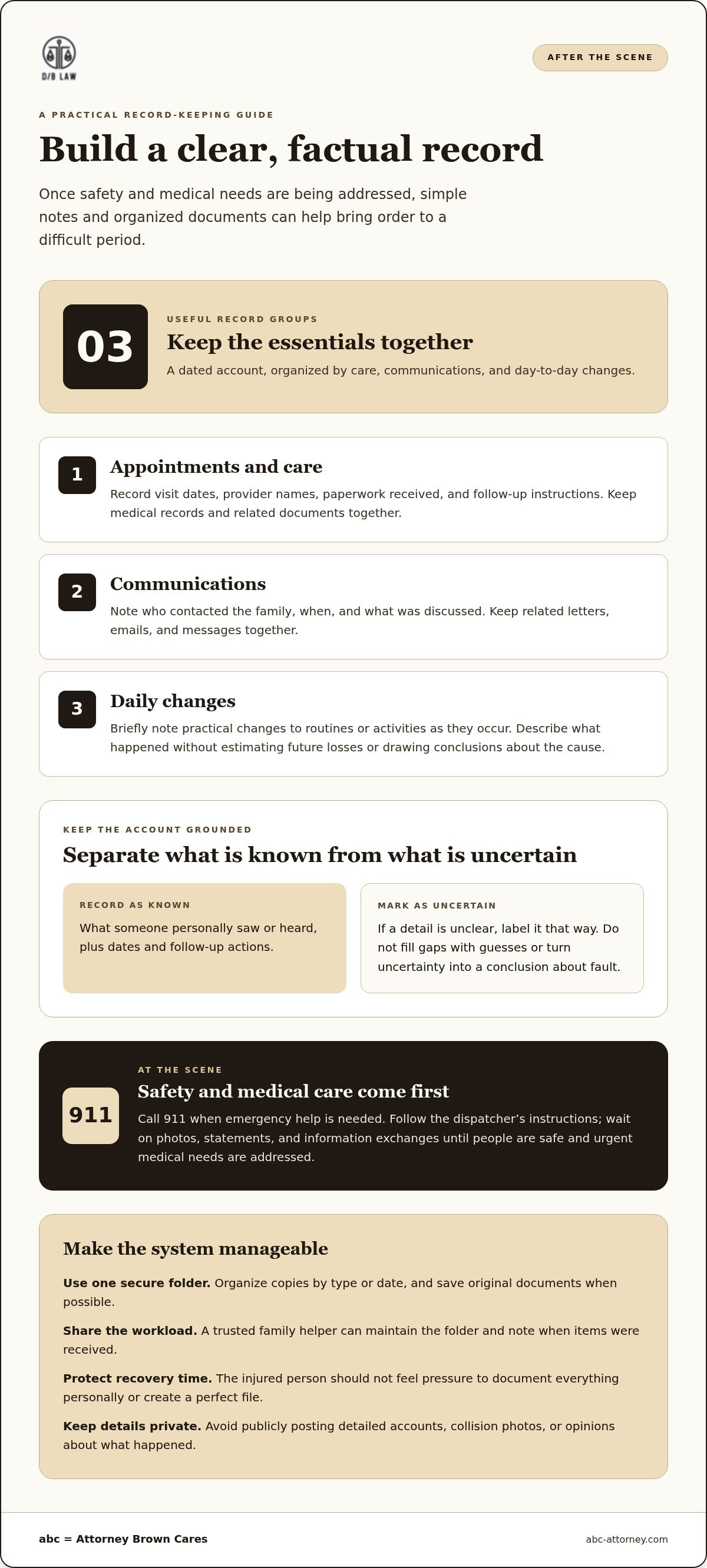
Once immediate safety and medical needs are being addressed, simple record-keeping can bring some order to a difficult period. The injured person may be managing treatment, pain, or exhaustion, so a trusted family member can help track dates and documents. Keep the account factual: write down what someone personally saw or heard, and distinguish it from what they were told or believe may have happened.
That distinction matters after a commercial truck wreck. A person may remember the vehicles’ positions but not know their speed or why the collision occurred. Don’t turn an uncertain detail into a conclusion about fault. A clear account of known events and follow-up actions gives the family a useful reference without requiring anyone to reconstruct the crash from memory later.
What to record and organize in the days after the wreck
Use a dated note or simple timeline. Add names and contact details, appointment dates, and the substance of relevant calls or messages. Keep copies of documents received from responders, healthcare providers, and insurers. If a detail is uncertain, label it that way rather than filling in a guess.
Appointments and care: Record visit dates, provider names, paperwork received, and follow-up instructions.
Communications: Note who contacted the family, when, and what was discussed. Keep related letters, emails, and messages together.
Daily changes: Briefly note practical changes to routines or activities as they occur. Record what happened without estimating future losses or drawing conclusions about their cause.
Save original documents when possible and organize copies by type or date. A secure physical or digital folder can make it easier to locate information when the family needs it. The Federal Motor Carrier Safety Administration’s Large Truck and Bus Crash Facts offers broader information about truck and bus crashes. It doesn’t replace the specific records and details connected to an individual collision.
How to preserve information without disrupting recovery
Keep the system manageable. An authorized family helper can maintain the folder, add new records, and note when each item was received. Share access only with people who need it. The injured person shouldn’t feel pressure to document everything personally or spend recovery time building a perfect file.
Avoid posting detailed accounts, collision photos, or opinions about what happened publicly. A post can spread beyond its intended audience and may leave out important context. Keep relevant communications private and factual. For help understanding questions about the wreck or the next steps, find information about the firm’s truck-wreck representation.
Why a Commercial Truck Wreck Can Involve More Than One Claim Question
After an ordinary car crash, people often focus on what happened between the drivers, what damage occurred, and which insurance may apply. Those questions still matter after a commercial truck wreck. But the truck’s use, ownership, and operating relationships may raise additional issues that need a closer, fact-specific review.
That doesn’t mean a trucking company, driver, maintenance provider, or anyone else is automatically responsible. Their possible relevance depends on the evidence. Depending on the circumstances, an investigation may consider who owned or operated the truck, how it was maintained, or whether loading played a role. Records about a trip, vehicle, cargo, or work relationships may help clarify those questions if they exist and are available.
Understanding what to do after a catastrophic truck wreck includes recognizing that identifying the right questions can take time. The chart below shows areas that may be reviewed, not conclusions about any particular collision.
Questions that may differ in a commercial vehicle collision
A passenger-vehicle collision may involve a relatively direct account of the drivers and vehicles. A commercial truck collision can require a broader review of who controlled the vehicle, how the trip was arranged, and whether maintenance or loading circumstances matter. These are investigative possibilities, not assumptions. The available evidence determines which parties or records deserve attention.
For example, the truck’s title, a carrier’s records, or information about a loading arrangement could prompt further questions, but none establishes fault by itself. A careful review connects each potential issue to evidence instead of treating a company’s involvement as proof of responsibility.
Why liability and insurance questions need careful review
More than one person or organization, and more than one insurance policy, may be relevant in some cases. The details matter. An insurer’s early position is a claim position, not necessarily a final legal determination of responsibility. Don’t treat it as the last word before the available facts and applicable issues have been reviewed.
A lawyer can help organize the questions, assess what information may be needed, and explain how the known facts shape the next steps. That review can help families understand a complicated process without guessing about fault or predicting a claim’s outcome.
What to Do in the Days After a Catastrophic Truck Wreck
Once emergency care is underway, the days that follow can bring appointments, paperwork, and calls while the injured person is still recovering. Keep the priorities simple: follow medical guidance, make the next appointments manageable, and handle claim-related communications deliberately. You don’t have to resolve every question at once.
A practical sequence can help:
Follow the care plan. Keep appointments as directed and contact the treating professional with questions about instructions or changes in the person’s condition.
Choose a family coordinator. If the injured person agrees and needs help, ask a trusted person to track appointments, organize documents, and keep a brief timeline.
Pause over unfamiliar communications. Note who contacted you, which organization they represent, and what they’re asking for. Take time to understand a document before signing or authorizing anything.
Texas reporting processes and legal deadlines can depend on the circumstances. Don’t rely on a general checklist or assume a date that applies to someone else’s situation applies to yours. If a deadline or reporting question arises, seek guidance based on the specific facts and current requirements.
How to handle calls and documents from insurers
During a call, write down the caller’s name, organization, date, and request. If you’re unsure what a question means or need time to review a document, ask for clarification and pause before responding in detail. Read forms carefully before signing, and make sure you understand what information or authorization they request. Avoid guessing about events you didn’t observe.
Keep copies of documents and correspondence together. If you’re uncertain about the effect of a form or recorded statement, consider getting legal guidance before proceeding. The right next step can depend on the document, the request, and the circumstances of the claim.
How to keep recovery and practical decisions on track
Recovery can make routine tasks harder. With the injured person’s permission, a family helper can coordinate appointment reminders, keep a short timeline of treatment and communications, and note major changes in daily activities. Keep entries factual and brief. This creates an organized reference without making documentation another burden for the person healing.
Knowing what to do after a catastrophic truck wreck also means making room for questions. Legal guidance may help a family understand incoming requests and organize the claim process while attention stays on care and recovery. Learn about discussing next steps with the firm.
When Legal Guidance Can Help After a Catastrophic Truck Wreck
After a catastrophic collision, a family may be managing medical care while trying to understand records, insurance communications, and unanswered questions about what happened. Legal guidance can help organize those questions and explain possible next steps. It can’t promise a particular result, and no responsible review should assume who is at fault before examining the available facts.
A lawyer may review documents and accounts already gathered, identify where more information could help, and handle legal communications related to the claim. That support can ease some of the practical burden on families, giving them more room to focus on the injured person’s care. The review should distinguish what is known from what still needs investigation.
What a careful truck-wreck case review can address
A careful review may examine available records, identify questions about the truck’s operation or other relevant circumstances, and determine what may require further investigation. It can also consider the nature and effects of traumatic brain injury or other life-altering harm, alongside information from treating professionals. Potential legal options depend on the specific facts and applicable law.
For example, a document may raise a question without answering it. Counsel can assess whether additional records or other investigation may clarify the issue, rather than treating an incomplete account as a conclusion. The goal is a fact-based understanding of the claim and its needs, not a prediction about liability or outcome.
This kind of review may help families sort the work into manageable steps:
Review what’s available: Consider records, correspondence, and the family’s factual account.
Identify what remains unclear: Separate confirmed details from questions that need more information.
Manage claim communications: Help the family understand and respond thoughtfully to legal or insurance-related requests.
How Attorney Brown Cares reflects the firm’s approach
abc stands for “Attorney Brown Cares” and reflects the firm’s commitment to attentive, personal support during a difficult process. Dedric Brown is an attorney and Certified Public Accountant. His financial-analysis background can inform a careful review of complex records, alongside the firm’s work with commercial truck wrecks and catastrophic injuries.
Experience is relevant context, not a guarantee of any outcome. Each matter depends on its facts, evidence, and applicable law. If you’re weighing what to do after a catastrophic truck wreck, you can discuss your situation with The Dedric Brown Law Firm and ask about possible next steps. You don’t need to have every document or answer ready before starting a conversation. View the firm’s contact information.
Take the Next Step at Your Own Pace
After a devastating collision, the path forward may feel uncertain. You don’t need to have every detail organized or know exactly what to ask before seeking guidance. A conversation can help you explain what’s happening, raise the concerns weighing on your family, and consider a practical next step without assuming what the facts will ultimately show.
If you’re still wondering what to do after a catastrophic truck wreck, give yourself permission to focus on one decision at a time. Your family’s questions deserve careful attention, and the next step can begin with simply sharing your situation.
Contact The Dedric Brown Law Firm to discuss your next steps. You don’t have to face the uncertainty alone. The firm represents people affected by commercial truck wrecks and traumatic brain injuries in Texas, including Houston, San Antonio, Dallas, Austin, Beaumont, Huntsville, Prairie View, and Brenham.
Frequently Asked Questions
Should I go to the hospital after a truck wreck if I feel okay?
Arrange a prompt medical assessment after a serious truck wreck, even if you feel okay at first. Feeling alert doesn’t establish that you’re uninjured, and some concerns may become noticeable later. Tell the clinician about the collision and share relevant health information, such as existing conditions or medications. Follow the care instructions you receive, and seek medical guidance if your condition changes or you have questions about your recovery.
What information should I give the trucking company’s insurer?
Keep any response accurate and limited to what you know. You can confirm basic identifying or contact details, but don’t guess about how the collision happened or agree with conclusions you can’t verify. Before providing a detailed recorded statement or signing a document, make sure you understand what’s being requested. Note the caller’s name, organization, date, and request, and consider legal guidance if you’re unsure how to proceed.
Do I need a lawyer after a catastrophic truck wreck in Texas?
Whether legal guidance makes sense depends on the facts, injuries, and questions involved. A lawyer may help assess a complicated claim, explain potential next steps, and handle legal communications, but speaking with one doesn’t guarantee a particular result. The Dedric Brown Law Firm represents clients in Texas, including Houston, San Antonio, Dallas, Austin, Beaumont, Huntsville, Prairie View, and Brenham. A discussion can help you understand whether further review may be useful.
Who may be responsible for a commercial truck wreck?
Responsibility depends on evidence, so the presence of a truck or company doesn’t by itself establish fault. Depending on the circumstances, an investigation might examine the driver’s actions, the carrier’s role, vehicle maintenance, or cargo loading. It may also consider other people or organizations connected to the trip. Each possibility needs a factual basis. An early insurance position is not necessarily the final legal assessment of responsibility.
How do I get a Texas crash report after a truck wreck?
Start by identifying the agency that responded to or investigated the collision, using any paperwork or contact information you received. Ask that agency which process it uses to provide a crash report and what details it needs to locate the record. The report’s availability and request process may depend on the agency and incident. Keep any reference information you were given, and avoid assuming the report alone answers every question about the wreck.
What if I do not remember exactly what happened in the collision?
Don’t fill memory gaps with guesses. Write down what you do remember, mark uncertain details clearly, and note whether information came from someone else or a document. If your memory changes or another detail comes back later, add a dated note rather than rewriting the earlier account. A clear distinction between personal observations and assumptions can help prevent confusion as records and accounts are reviewed.
Is it too late to get legal help after I have spoken with an insurer?
Not necessarily. Speaking with an insurer doesn’t, by itself, answer whether legal guidance could still help. The details matter, including what was discussed and whether you signed or authorized anything. Keep copies of relevant messages and documents, and make a note of any conversation you remember. A lawyer can review those materials and discuss possible next steps based on the specific circumstances, without assuming that the conversation decided the claim.



Comments