
Symptoms of TBI After a Car Accident: What to Watch For

What if the crash seemed over, but new symptoms surfaced hours or days later? Changes in how you feel, think, act, or sleep can be unsettling, especially if you left the scene believing you were okay. The symptoms of TBI after car accident injuries aren’t always obvious right away. Noticing a change doesn’t mean you should try to diagnose yourself.
This guide covers physical, cognitive, emotional, and sleep-related changes to watch for, when to seek urgent medical attention, and how to keep a clear record of what’s different. A healthcare professional can evaluate your symptoms and guide your care. Write down when a change began, how it affects daily life, and whether it improves or worsens. That record can help you explain what’s happening to clinicians, loved ones, or your employer. Once immediate medical needs are addressed, legal support can help you understand how an attorney reviews accident-related accountability and losses. At ABC, meaning “Attorney Brown Cares,” personal attention starts with listening.
Table of Contents
Symptoms of TBI After a Car Accident: What Changes Should You Notice?
Feeling different after a crash can be confusing, especially if you seemed fine at the scene. A headache, trouble concentrating, or a change in mood can have many possible causes. Symptoms alone can’t tell you whether you have a traumatic brain injury (TBI), so don’t try to diagnose yourself.
In plain language, a TBI is an injury that disrupts how the brain normally works, often after a blow or jolt to the head or body. The Traumatic Brain Injury (TBI) Overview describes common causes and effects, but only a qualified healthcare professional can evaluate your individual symptoms. Symptoms of TBI after car accident injuries can vary, and a change may become noticeable later rather than at the scene. If you suspect a head injury, seek medical advice. Get emergency help for severe or rapidly worsening symptoms.
Noticing symptoms helps you report a change; it does not diagnose a brain injury. Tell a clinician what you’re experiencing, when it began, and whether it’s getting better, worse, or staying the same. Don’t dismiss a new, persistent, or worsening change just because it seems manageable.
Physical symptoms people may notice after a crash
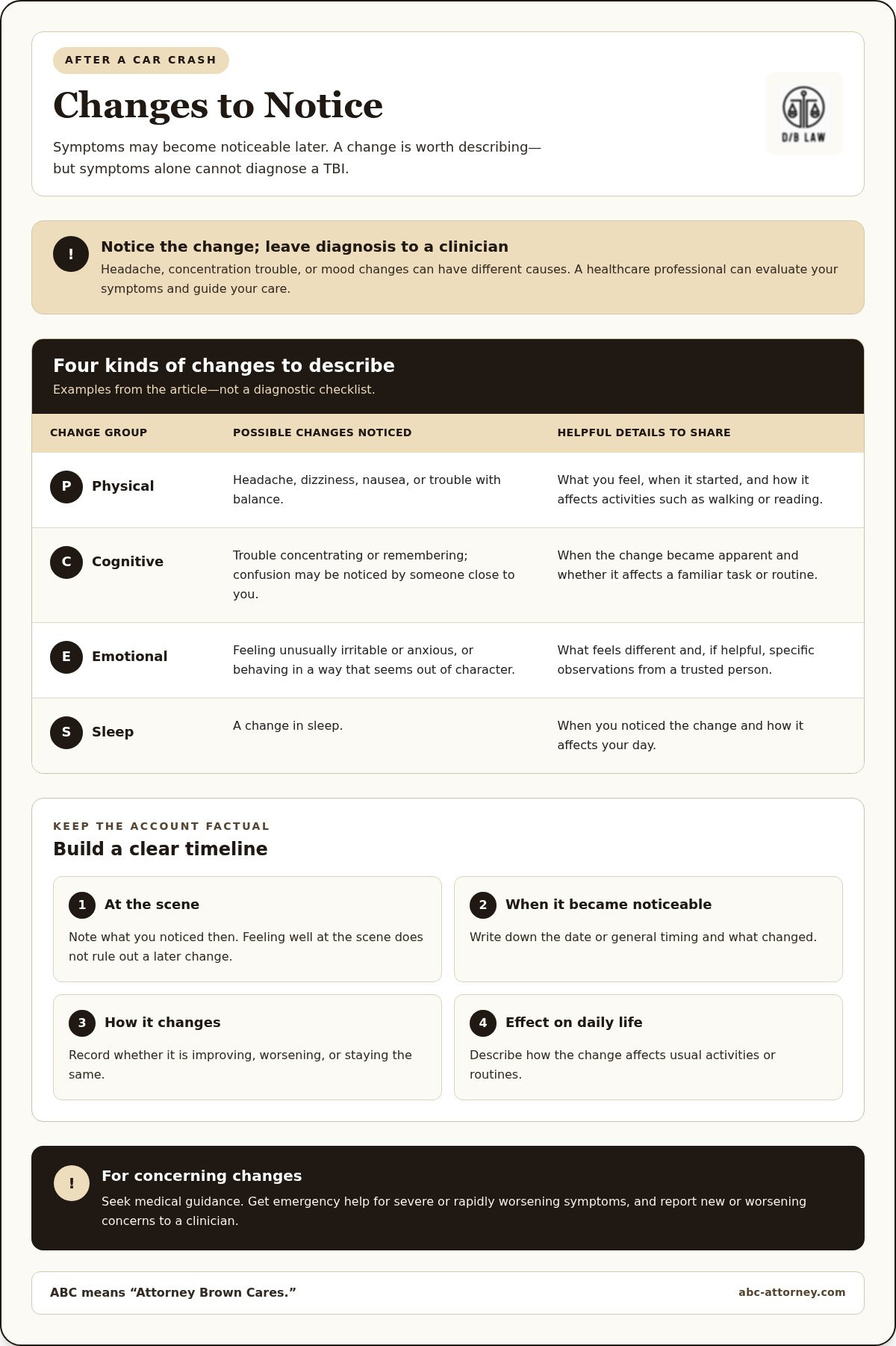
Possible physical symptoms include headache, dizziness, nausea, or trouble with balance. These symptoms can have different causes, and none proves a TBI on its own. When you speak with a clinician, describe what you feel, when it started, and how it affects activities such as walking or reading. Report worsening symptoms or new changes promptly.
Cognitive, emotional, and sleep-related changes
Someone may have trouble concentrating or remembering, feel unusually irritable or anxious, or notice changes in sleep. Sometimes a family member or friend spots a difference first, such as confusion or behavior that seems out of character. Their observations can help you describe what has changed, but they don’t establish a diagnosis.
Keep your account simple and factual: note the symptom, when you noticed it, and how it affects your day. If you’re struggling to explain the change, ask someone you trust to help describe what they’ve observed. Your clinician can use those details to guide an appropriate evaluation and next steps.
How TBI Symptoms Can Change After a Car Accident
There isn’t one pattern that fits everyone. Symptoms can differ in type and intensity depending on the injury and other factors. Some changes are obvious at the scene; others become noticeable later, as a person returns to familiar activities. The NINDS Traumatic Brain Injury Fact Sheet discusses symptoms that may emerge after an injury. No single timeline applies to every person.
Can TBI symptoms appear or become noticeable later?
Yes, a symptom may be noticed after the immediate event, or a person may recognize a change only when trying to focus, sleep, or manage a familiar routine. That doesn’t by itself confirm a TBI, and feeling well at the scene doesn’t rule one out. Don’t wait for a particular number of hours or for a checklist to match. Seek medical guidance for concerning changes.
Give the clinician a clear timeline: what you noticed at the scene, what changed afterward, when each change became apparent, whether it is worsening or easing, and how it affects daily activities. This context can help the clinician assess your concerns alongside other symptoms and the circumstances of the crash. If you’re unsure whether a change matters, describe it rather than deciding for yourself.
Why symptoms can be hard to recognize
Pain, stress, fatigue, and injuries elsewhere in the body can make it harder to sort out what you’re feeling or explain when it began. An initial impression, including the absence of a visible head injury, can’t settle whether a brain injury occurred. Only an appropriate medical professional can evaluate a suspected TBI.
People close to you may notice changes in attention, mood, or everyday behavior that you haven’t recognized yourself. Their observations can add useful context, but they can’t replace a medical assessment. If possible, ask them to describe specific changes and when they noticed them, without guessing at the cause.
Keep a brief, factual record as changes occur. Note the date or general timing, what happened, and whether it affected a usual task. Follow medical guidance and report new or worsening concerns. After your medical needs are addressed, you can consider legal questions separately. ABC stands for “Attorney Brown Cares”; talk with Attorney Brown about how an attorney reviews accident circumstances and claimed losses, not about diagnosing or treating an injury.
TBI or Concussion After a Car Accident: What Symptoms Can, and Cannot, Tell You
It’s easy to treat “concussion” and “TBI” as competing labels. They’re related terms: a concussion is generally considered a mild form of traumatic brain injury, not an entirely separate type of condition. Both refer to an injury affecting how the brain works. A clinician must assess the person and circumstances to determine what diagnosis, if any, applies.
Symptoms can offer important information, but they can’t identify the cause on their own. Headache, dizziness, nausea, memory problems, or changes in mood may occur after a brain injury, but they can also have other explanations. The Mayo Clinic TBI Symptoms and Causes resource describes a range of possible symptoms. Use information like this to prepare questions for a clinician, not to diagnose yourself.
How concussion and traumatic brain injury terms relate
These terms aren’t mutually exclusive. A concussion falls under the broader TBI category. A person also doesn’t have to lose consciousness for a brain injury to be possible. Not fainting, having no obvious wound, or feeling able to continue after a crash does not rule one out.
Why a symptom checklist can’t diagnose an injury
Symptoms of TBI after car accident events can overlap with effects of pain, stress, fatigue, or injuries to other parts of the body. A checklist can help you describe what has changed, but it can’t determine the cause. A healthcare professional can evaluate your symptoms and decide what assessment or care is appropriate.
Tell a clinician what you noticed, when it began, and whether it’s changing. If symptoms are urgent or worsening, seek emergency medical care rather than waiting to match a checklist or relying on an online comparison.
What to Do If You Notice TBI Symptoms After a Car Accident
If you notice a concerning change after a crash, put your health first. Symptoms of TBI after car accident injuries can’t be diagnosed from a checklist or by an attorney. Take these steps instead:
Get emergency help for an emergency. If symptoms are severe or rapidly worsening, call emergency services or go to an emergency department. Don’t wait for a law firm or an online symptom list to guide an urgent medical decision.
Arrange medical evaluation. If the change isn’t an emergency but concerns you, contact a healthcare professional promptly for guidance. Explain that it followed a car accident, even if you didn’t notice it at the scene.
Follow the clinician’s instructions. Ask what changes to watch for, what to do if they occur, and when to follow up. If your condition worsens or you’re unsure how to follow the advice, contact a medical professional promptly.
Record what you observe. Keep notes to help explain the changes clearly at appointments and during follow-up.
When to seek emergency care or prompt medical advice
For severe or rapidly worsening symptoms, seek emergency care now. Don’t drive yourself if you feel unsafe to do so. For new or concerning changes that aren’t immediately severe, contact a healthcare professional for prompt advice rather than waiting to see whether they fit a symptom checklist. A medical professional can guide you based on your circumstances. Being prepared for sudden roadside injuries is crucial, and individuals looking to equip their vehicles with first aid gear can discover First Medical Training Ltd to find suitable emergency kit bags.
How to keep a useful symptom record
Use a notebook or phone note. For each change, record when it began, how it feels, how long it lasts, and whether it is improving, worsening, or recurring. Include how it affects daily activities, such as completing a task, sleeping, or keeping an appointment. If someone close to you notices a change, record their observation separately from your own.
Also write down appointment dates, questions you want to ask, and the instructions your clinician gives you. Keep the wording factual. For example, record “headache started after lunch and lasted through the afternoon,” rather than concluding that it proves a brain injury. Bring your notes to appointments, and ask your clinician about any change you’re uncertain about.
A factual symptom log can make conversations with your healthcare team clearer and more complete. Medical care comes first. When you’re ready to consider accident-related legal questions, ABC, meaning “Attorney Brown Cares,” can listen and discuss how an attorney reviews the crash circumstances, records, and claimed losses. Contact Attorney Brown about your accident-related concerns.
After Medical Care: Texas TBI Claims and Support from Attorney Brown Cares
Your health comes first. Follow your clinician’s guidance and focus on care. Legal questions can wait until you feel ready to consider them. An attorney cannot diagnose or treat a traumatic brain injury, and legal representation doesn’t replace medical care. The legal role is separate: an attorney reviews the crash circumstances, available records, and losses you say resulted from the accident.
Keeping clear notes about symptoms of TBI after car accident injuries can help you describe changes and their effects in your own words. Those notes can inform a conversation about a claim, but they don’t establish a diagnosis or prove what caused a symptom.
What an attorney may review in a car accident TBI claim
An attorney can examine information about how the crash happened and review relevant records, including medical records you authorize for review, subject to applicable requirements. A factual symptom log or appointment notes can help communicate what you experienced and how it affected daily activities. The purpose is to understand the available information and claimed losses, not to make a medical judgment or promise what a claim may achieve.
Helpful details may include when you sought care, what changes you reported, and how those changes affected ordinary routines or responsibilities. Keep medical questions with your healthcare team. A legal review focuses on accident-related information and records relevant to your concerns.
How ABC puts care and personal attention at the center
ABC means “Attorney Brown Cares.” That name reflects a commitment to listen, communicate clearly, and give careful attention to each client’s concerns. You don’t have to sort through every legal question at once. When you’re ready, you can share what happened and discuss legal support for a Texas injury claim. You don’t need to treat a symptom log as proof or reach a conclusion about your injury before speaking with a clinician.
Dedric Brown’s attorney and CPA credentials support careful review of complex injury-related financial information. That work is separate from medical evaluation and treatment. The Dedric Brown Law Firm represents people in traumatic brain injury claims and serious automobile accident cases, reviewing accident-related accountability and claimed losses without diagnosing or treating a TBI.
The firm represents clients across Texas, including Houston, San Antonio, Dallas, Austin, Beaumont, Huntsville, Prairie View, and Brenham. Contact Attorney Brown about a Texas TBI claim when you’re ready to discuss your accident-related concerns.
Take Your Next Step With Care and Clarity
Changes after a crash can be hard to make sense of. Symptoms of TBI after car accident injuries may vary, and symptoms alone can’t provide a diagnosis. Share new or worsening concerns with a healthcare professional, follow their guidance, and keep a factual record of changes and how they affect daily life.
Medical care comes first. If you’re ready to discuss the legal side, an attorney can review the accident circumstances, available records, and claimed losses. The Dedric Brown Law Firm focuses on traumatic brain injury and serious automobile accident cases. Dedric Brown’s attorney and CPA credentials bring careful attention to complex injury-related financial information, while legal review remains separate from diagnosis and treatment.
ABC means “Attorney Brown Cares.” You deserve to be heard and treated with personal attention. The firm represents clients in Houston, San Antonio, Dallas, Austin, Beaumont, Huntsville, Prairie View, Brenham, and communities across Texas. Contact Attorney Brown Cares to discuss your situation when you feel ready. One step at a time, you can seek the care and support that fit your needs.
Frequently Asked Questions
What are the most common symptoms of a TBI after a car accident?
Commonly reported symptoms can include headache, dizziness, nausea, balance problems, difficulty concentrating or remembering, mood changes, and sleep disruption. Symptoms of TBI after car accident injuries vary, and any one of these changes can have causes other than a brain injury. Symptoms alone can’t confirm a diagnosis. Note what you experience and when it occurs, and share new, persistent, or worsening changes with a healthcare professional.
Can TBI symptoms appear days after a car accident?
Yes, some symptoms may become noticeable after the crash, though there’s no single timeline that applies to everyone. You might recognize a change only when you return to usual activities, such as focusing on a task or keeping up with a routine. Don’t wait for a particular number of days or for a checklist to match. Contact a healthcare professional about concerning changes, and seek emergency care if symptoms are severe or rapidly worsening.
Can you have a TBI after a car accident without losing consciousness?
Yes. A person can have a possible brain injury without losing consciousness. Being awake at the scene, having no visible head wound, or feeling able to continue doesn’t rule out an injury. If you notice a change after the crash, tell a healthcare professional what you’re experiencing and when it began. A clinician can evaluate your circumstances and symptoms; the fact that you didn’t faint cannot determine the diagnosis.
What should I do if I notice possible TBI symptoms after a car accident?
Seek emergency care for severe or rapidly worsening symptoms. For other concerning changes, contact a healthcare professional for advice rather than trying to diagnose yourself online. Follow their instructions, ask what changes to watch for, and raise questions if symptoms shift. Keep a factual record of when each change began, how long it lasted, and how it affected daily activities. A trusted family member’s observations may also help explain what’s different.
How can I tell the difference between a concussion and a TBI?
A concussion is generally considered a mild form of traumatic brain injury, so the terms aren’t mutually exclusive. Symptoms such as headache, dizziness, or concentration problems can occur with concussion, but they can also have other causes. A symptom list can’t determine whether you have a concussion or another condition. A healthcare professional must assess your symptoms and decide what evaluation is appropriate. Don’t use an online checklist as a substitute for medical care.
Should I see a doctor if I feel fine after a car accident?
Feeling fine at the scene doesn’t by itself establish whether you have an injury. If you hit your head, suspect a brain injury, or later notice concerning changes, seek medical guidance. A clinician can consider the crash and your individual circumstances. If you feel well and have no concerns, a healthcare professional can advise whether an examination is appropriate based on your circumstances. If symptoms appear or worsen, don’t rely on how you felt immediately after the accident.
Can a Texas attorney help with a traumatic brain injury claim after a car accident?
A Texas attorney can review the crash circumstances, relevant available records, and losses you say resulted from the accident. The Dedric Brown Law Firm focuses on traumatic brain injury and serious automobile accident cases. Dedric Brown holds attorney and CPA credentials. Legal review doesn’t diagnose or treat an injury, so address medical needs with a healthcare professional first. The firm serves Texas communities including Houston, San Antonio, Dallas, Austin, Beaumont, Huntsville, Prairie View, and Brenham. Contact Attorney Brown Cares to discuss your situation.



Comments