
Personal Injury Claim Mistakes to Avoid in Texas

Handling a personal injury claim alone can create risks that are easy to miss. The mistakes to avoid in a personal injury claim include delaying medical care, discussing the case on social media, accepting a quick settlement, and making statements before you understand their consequences. These shortcuts can make it harder to document your injuries and losses.
It’s understandable to want to manage things yourself, especially while coping with pain, missed work, and insurance calls. But a claim involves more than explaining what happened: medical records, statements, evidence, and settlement decisions all matter. This article covers common missteps in Texas, including the importance of prompt treatment and careful documentation, how social media posts can be misunderstood, and what to consider before settling or representing yourself. You’ll learn how to protect your claim and when legal guidance may help.
Table of Contents
1. What Are The Most Common Personal Injury Claim Mistakes?
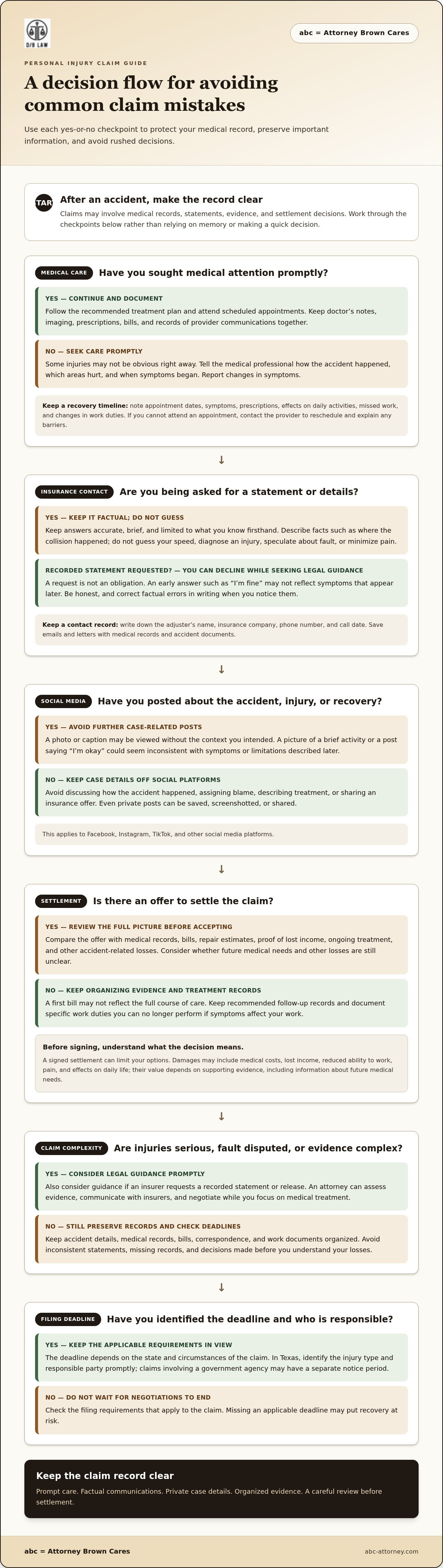
Insurance adjusters may ask questions before you understand the full extent of your injuries. Keep communications accurate, brief, and limited to facts you know firsthand. For example, describe where the collision happened, but don’t guess your speed or diagnose an injury. Write down the adjuster’s name, insurance company, phone number, and the date of each call. Save emails and letters with your medical records and accident documents.
The other driver’s insurer may request a recorded statement. You can decline while seeking legal guidance; a request is not an obligation. A recorded answer such as “I’m fine” may not reflect symptoms that appear later. Don’t speculate about fault, minimize pain, or agree with an adjuster’s version just to end the call. Be honest, and correct factual errors in writing when you notice them.
Before discussing compensation or accepting an offer, ask an attorney to review the claim and explain your rights. An initial offer may not account for ongoing medical treatment, missed work, or other accident-related losses. Compare it with the evidence you have, including medical records, bills, repair estimates, and proof of lost income. A signed settlement can limit your options, so don’t treat a quick payment as a complete evaluation.
The deadline to file a personal injury lawsuit depends on the state and the circumstances of the claim. In Texas, identify the injury type and responsible party promptly; claims involving a government agency may have a separate notice period. Missing an applicable deadline may put recovery at risk, so don’t wait for negotiations to end before checking the filing requirements.
There’s no single typical lawyer fee or case-cost amount across the United States. Fees and expenses depend on the representation agreement and work involved, so read the written terms carefully to understand how costs are handled before signing.
Consider hiring an attorney promptly if injuries are serious, fault is disputed, or an insurer requests a recorded statement or release. An attorney can assess evidence, communicate with insurers, and negotiate while you focus on medical treatment. Common mistakes to avoid in a personal injury claim include inconsistent statements, missing records, and accepting an offer before understanding your losses. Preserve documents and seek advice before making decisions that could affect your case.
2. Seeking prompt medical attention
After an accident, seek medical attention promptly, even if you initially feel unhurt. Some injuries may not be obvious right away, and waiting can make it harder to connect later symptoms to the crash. Tell the medical professional how the accident happened, which areas hurt, and when symptoms began. If pain, dizziness, weakness, or other symptoms change, report the change rather than assuming it will pass.
A delay can leave a gap between the accident and your first medical record. An insurance company may point to that gap when questioning whether the accident caused the injury. Prompt care documents your symptoms, examination, and test results. Keep copies of doctor’s notes, imaging, prescriptions, and medical bills together.
Follow the treatment plan your medical professional recommends and attend scheduled appointments. If you can’t make an appointment, contact the provider to reschedule. Explain barriers, such as transportation or side effects, rather than stopping treatment without discussion. Missed appointments or unexplained gaps can raise questions about whether you followed recommended care. A clear record of visits and communications helps explain your course of treatment.
Keep a simple recovery timeline. Record appointment dates, new symptoms, prescriptions, and how the injury affects daily activities, such as walking, sleeping, or returning to work. Save receipts and bills, and keep work records showing missed time or changes in duties. These details can show how the injury developed and affected your routine, not just what happened during the first examination.
Damages in a personal injury case may include medical costs, lost income, reduced ability to work, pain, and effects on daily life. Their value depends on evidence such as bills, treatment records, work documents, and information about future medical needs. A settlement offer should account for current losses and supported future effects.
Don’t assume the first bill reflects the full course of care. Ask your medical provider about the expected treatment plan and keep records of recommended follow-up. If symptoms limit your ability to work, document the specific duties you can no longer perform. Those details can help distinguish temporary lost income from a lasting reduction in earning capacity.
Organized records can help you navigate the medical and insurance parts of a claim. If an injury requires ongoing care or affects your ability to earn, discuss your injury claim with an attorney before evaluating a settlement offer.
3. Avoiding social media posts about an injury claim
A photo or caption shows only a moment, but an insurance adjuster may treat it as evidence of your activity. For example, a picture of you standing at a family gathering could seem inconsistent with reported difficulty standing, even if you were upright briefly and needed help afterward. A post saying “I’m okay” may also seem to conflict with symptoms you later describe to a doctor. Avoid posting about the accident, your injuries, or your recovery while the claim is active.
Keep case details off Facebook, Instagram, TikTok, and other social media platforms. Don’t describe how the accident happened, assign blame, discuss treatment, or share an insurance offer. Even with a private account, someone else can save, screenshot, or share your posts. Ask friends and family not to tag you in accident-related photos or post updates about your condition. A well-meaning caption can add statements you didn’t choose.
Photos and videos may lack context. A clip of you lifting a grocery bag doesn’t show whether you felt pain, needed help, or stopped soon afterward. A lawyer or adjuster reviewing it may compare the clip with your reported symptoms and activity limits. That doesn’t mean every ordinary activity contradicts an injury. It means a post may invite questions that a few seconds of video can’t answer.
Before sharing a recovery update, consider whether it could be misunderstood outside its intended audience. Avoid check-ins at medical appointments, workout photos, travel updates, and jokes about the crash. Don’t ask followers to weigh in on fault or suggest what your claim is worth. Those conversations can spread beyond the original group and create statements that distract from medical records and other evidence.
If you’ve already posted about the accident, don’t panic or try to explain it in another post. Save a copy, note when it appeared, and tell your lawyer promptly. Don’t edit or delete material to conceal it; changes may raise further questions about the original wording or timing. Your lawyer can assess the post alongside the full account of your symptoms and daily activities.
A practical boundary is simple: use social media for ordinary, unrelated updates, but keep the claim private. If someone asks how you’re doing, respond briefly without discussing injuries, treatment, or negotiations. Consistency matters. An honest account shared directly with your lawyer is more useful than a quick public post without full context.
4. What Can Go Wrong If You Accept a Quick Settlement Offer?
After a car accident, an insurer may offer a settlement before your medical needs are clear. A quick payment can feel useful when bills are arriving, but the first offer may not reflect your full losses. For example, it may cover an emergency visit while overlooking follow-up care, time away from work, or ongoing pain. Don’t treat an offer as a complete measure of your losses.
Evaluate the offer against documented losses, not just the amount available immediately. Gather medical bills, treatment records, missed-work information, repair costs, and receipts for accident-related expenses. Then consider future medical care, reduced ability to work, pain, changes to daily routines, and any lasting disability. Each category needs supporting evidence. A settlement that omits a known loss may not meet your needs.
Some injuries become clearer as treatment continues. For instance, someone with back pain after a collision may later need additional care or face limits at work. Accepting a settlement before understanding the injury’s course can leave future costs unaccounted for. Ask what the proposed agreement covers, whether it resolves the entire claim, and what options remain after signing.
Pressure to accept quickly is no substitute for careful review. If an adjuster says an offer expires immediately, request the terms in writing and take time to compare them with your records. Check whether the offer addresses medical costs, lost income, reduced earning capacity, and nonfinancial effects. Don’t sign a release or settlement agreement until you understand its effect. An attorney can review the terms and explain how the evidence supports your claim.
Once a personal injury settlement is finalized, you generally can’t reopen the claim if symptoms worsen or new treatment becomes necessary. That makes timing crucial. Before accepting, organize current bills and records, ask your medical provider about recommended follow-up, and list accident-related losses that remain uncertain. Failing to account for future care or work limitations can turn quick relief into a lasting financial burden.
Negotiations can take weeks or sometimes months, depending on the evidence, the losses involved, and whether the parties agree on responsibility and claim value. This gives you time to review documents and compare an offer with the injury’s actual effects. Don’t accept just to end difficult conversations. Carefully reviewing the agreement, records, and outstanding needs helps you make an informed decision instead of rushing into a final settlement.
5. Representing yourself in a personal injury claim
Handling a personal injury case yourself means building the claim while managing your recovery. You must organize evidence, explain how another person caused the injury, document losses, and respond to insurance company requests. Each task depends on details that must fit together. For example, a crash report, witness account, and medical record should support a consistent timeline. Missing a connection can make your account harder to present clearly.
Insurance companies handle injury cases regularly and may use experienced lawyers to challenge a claim’s value. An adjuster may question whether the collision caused a particular symptom or whether treatment was necessary. Without legal experience, it can be difficult to know which records address those questions. Keep a written log of requests, deadlines, and documents sent, and retain copies of every response.
Proving responsibility takes more than saying the other person was at fault. You may need photographs, witness details, incident reports, and records showing what happened before and after the accident. In a serious intersection collision, for example, traffic signals, vehicle damage, and separate witness accounts may each add context. A lawyer can identify gaps, assess conflicting evidence, and prepare a clear presentation instead of relying on assumptions.
Calculating losses also requires careful organization. Medical bills show charges, but may not explain how an injury affects daily tasks or future work. Keep records of missed shifts, changed duties, travel for appointments, and out-of-pocket expenses. If a shoulder injury prevents you from lifting at work, document the restriction and its effect on your job. A complete file connects the injury to practical financial and personal consequences.
Negotiating without guidance can put you at a disadvantage when an insurer disputes fault, treatment, or the extent of your losses. A lawyer can communicate with the insurer, present supporting evidence, and assess proposed terms. Legal help may be especially useful when injuries are serious, multiple parties are involved, or medical records leave questions about causation. The goal is a well-supported claim, not simply a quick response to pressure.
If you’re considering handling the case alone, first list the unresolved issues: responsibility, injury evidence, financial losses, and insurer requests. Then weigh those demands against the time and knowledge you can commit while receiving medical attention. A missing document or unclear response can create avoidable complications. Legal guidance before a key decision can help you understand what evidence to present and which questions need answers.
Talk with an attorney about your injury claim if you need help assessing evidence, dealing with an insurer, or preparing to present your case.
The Dedric Brown Law Firm: Traumatic Brain Injuries
The Dedric Brown Law Firm represents people pursuing claims involving traumatic brain injuries and other serious injuries. Consider legal guidance when an accident causes lasting symptoms, disrupts daily life, or raises questions about future care and lost income. A brain injury claim may require close attention to medical evidence and the injury’s effects over time.
The firm also handles hypoxic and anoxic brain injuries, birth injuries, and truck wreck matters. If your injury followed a truck collision or involves a traumatic brain injury, legal representation can help you understand your claim and next steps.
For personal attention and guidance about your situation, contact The Dedric Brown Law Firm through abc-attorney.com.
Move Forward With a Clear Plan
Your next step is to turn uncertainty into a practical plan. Gather the documents and questions that still matter to you, then decide what guidance would help you make informed choices. The mistakes to avoid in a personal injury claim can affect how clearly your circumstances and losses are understood, but careful decisions can help you move forward with greater confidence.
ABC means Attorney Brown Cares, a commitment to personal attention and support throughout a difficult process. The Dedric Brown Law Firm can listen to your concerns and discuss how its legal representation may fit your situation. You don’t need every detail resolved before starting that conversation.
Contact The Dedric Brown Law Firm to discuss your circumstances and possible next steps. Take the process one informed decision at a time.
Frequently Asked Questions
What Are The Most Common Personal Injury Claim Mistakes?
Common errors include guessing about fault, overlooking a document, or giving inconsistent details. Several mistakes to avoid in a personal injury claim happen during everyday decisions: for example, an injured person may forget to save a repair estimate or fail to record a change in work duties. In Texas, keep a simple case file with dated notes, correspondence, and receipts. Review it before important calls so your account stays clear and accurate.
Can Social Media Posts Or Public Comments Harm Your Claim?
Yes, a post or comment can be taken out of context and compared with your account of the injury. A Texas claimant who writes “back to normal” after a brief outing may face questions if symptoms continue. Avoid discussing the accident or case publicly, including in neighborhood groups and comment threads. Ask friends not to tag you in posts about activities or recovery, and don’t assume privacy settings prevent screenshots or sharing.
How Can Communication With Your Lawyer Affect Your Claim’s Success?
Clear, timely updates help your lawyer identify issues before they complicate the claim. Share difficult facts too, such as a prior injury, a missed appointment, or a conversation with an insurer. Give your lawyer copies of letters and note who called, what they requested, and when. If you’re unsure whether a detail matters, mention it rather than leaving it out. A complete account helps counsel prepare consistent responses and identify evidence that needs follow-up.
How Can Failing To Document Injuries & Evidence Reduce Your Settlement?
Missing records can make it harder to show how an injury affected you and what losses followed. For example, without a work schedule or supervisor’s note, it may be difficult to connect missed shifts to recovery. Preserve original photos, messages, receipts, and repair documents, then note when and where each came from. In a Texas claim, a dated timeline can link an event, symptoms, appointments, and expenses without relying only on memory.
What if I was partially at fault for the accident?
Partial fault alone doesn’t determine whether you can recover compensation. Key questions include what each person did, what the available evidence shows, and how responsibility applies under Texas law. Don’t admit fault or assume the other party’s accusation settles the issue. Save relevant messages, identify witnesses, and write down your recollection while it’s fresh. A lawyer can assess how disputed facts may affect your claim.
What Can Go Wrong If You Accept a Quick Settlement Offer?
A quick settlement can close the claim before you understand its full scope. Before signing, read the release carefully and identify which claims, parties, and losses it covers. Check that the written terms match what the adjuster discussed, and keep a complete copy of the agreement. If payment is offered while treatment or work restrictions continue, compare the terms with your current records and outstanding questions before deciding.
What Happens If You Don’t Follow Your Treatment Plan?
Gaps in care without explanation may prompt questions about whether symptoms continued or recommended treatment was followed. If cost, transportation, side effects, or scheduling interfere, tell your provider and ask about practical options. Keep notes of that conversation and any revised instructions. Don’t change medication or stop appointments based on guesswork. A clear record can explain why your care changed and distinguish a deliberate treatment decision from a missed step.
What Steps Can You Take To Avoid Common Pitfalls & Maximize Your Claim?
Build one organized record instead of relying on scattered texts and memory. Keep a dated event timeline, a folder for bills and insurer correspondence, and a list of questions for your lawyer. Before sending a document, note what it is and why it matters. Review your file regularly for missing items, such as a witness’s contact details or a receipt. These habits help you respond thoughtfully and keep information about your Texas claim easier to assess.



Comments