
Amniotic Fluid Embolism: Symptoms, Diagnosis and Treatment

About 1 in 40,000 births in the United States involves an amniotic fluid embolism, a rare, sudden emergency in which amniotic fluid or fetal material enters the mother’s bloodstream and can block blood flow through the lungs. It may cause severe breathing and heart problems, so recognizing the signs and beginning emergency care quickly matter.
It’s understandable to want clear answers about what happened, especially when a birth emergency affects both mother and baby. Amniotic fluid embolism can be difficult to diagnose because no single test confirms it; clinicians assess symptoms, vital signs, and other possible causes. This article explains possible symptoms, how doctors reach a diagnosis, what emergency treatment may involve, and what physical or emotional effects may follow.
Understanding the medical facts can help families make sense of a frightening experience and identify questions that may arise afterward. The sections ahead offer a clear overview, with compassion for those affected and their families.
Table of Contents
What Is Amniotic Fluid Embolism?
This condition is a rare, sudden obstetric emergency involving amniotic fluid or fetal material entering the mother’s bloodstream. It can trigger severe breathing and cardiovascular problems, followed by abnormal bleeding. Unlike a pulmonary embolism, which involves a blood clot, AFE is associated with material from pregnancy and a severe body-wide reaction. Symptoms can overlap with other emergencies, so clinicians consider the full clinical picture.
No single proven cause explains why AFE occurs. Researchers describe it as an anaphylactoid syndrome of pregnancy, meaning the event can resemble a severe allergic reaction. The term describes a proposed reaction, not a confirmed allergy or predictable trigger. AFE can arise during labor or around delivery, including in people with no recognized risk factors.
Several factors have been associated with AFE, but evidence does not establish them as direct causes. Being older than 35 and becoming pregnant for the fifth time or later are listed as possible risk factors. Placenta accreta spectrum has also shown a strong association, with an adjusted odds ratio of 10.01 and a 95% confidence interval of 7.03 to 14.24. An association means the conditions appeared together more often in data; it does not prove that placenta accreta causes AFE.
Allergy-related findings differ across registries. In a national registry, 41% of patients had a history of allergies. In the International AFE Registry, 66% reported atopy, latex allergies, or food allergies. These figures describe different groups and categories, so they should not be treated as one universal rate. They also do not show that allergies trigger the emergency or reliably identify who may experience it.
Other reported associations include placenta previa at term and conception through in vitro fertilization. The International AFE Registry reported placenta previa at term in 10% of women with AFE and in vitro fertilization in 8%. These observations can guide research, but they cannot predict an individual outcome. A normal pregnancy history does not rule out the condition, and having a listed risk factor does not mean AFE will occur. The practical distinction is between a possible association and a proven cause: current evidence supports the first, not the second.
Emergency treatment and symptom management
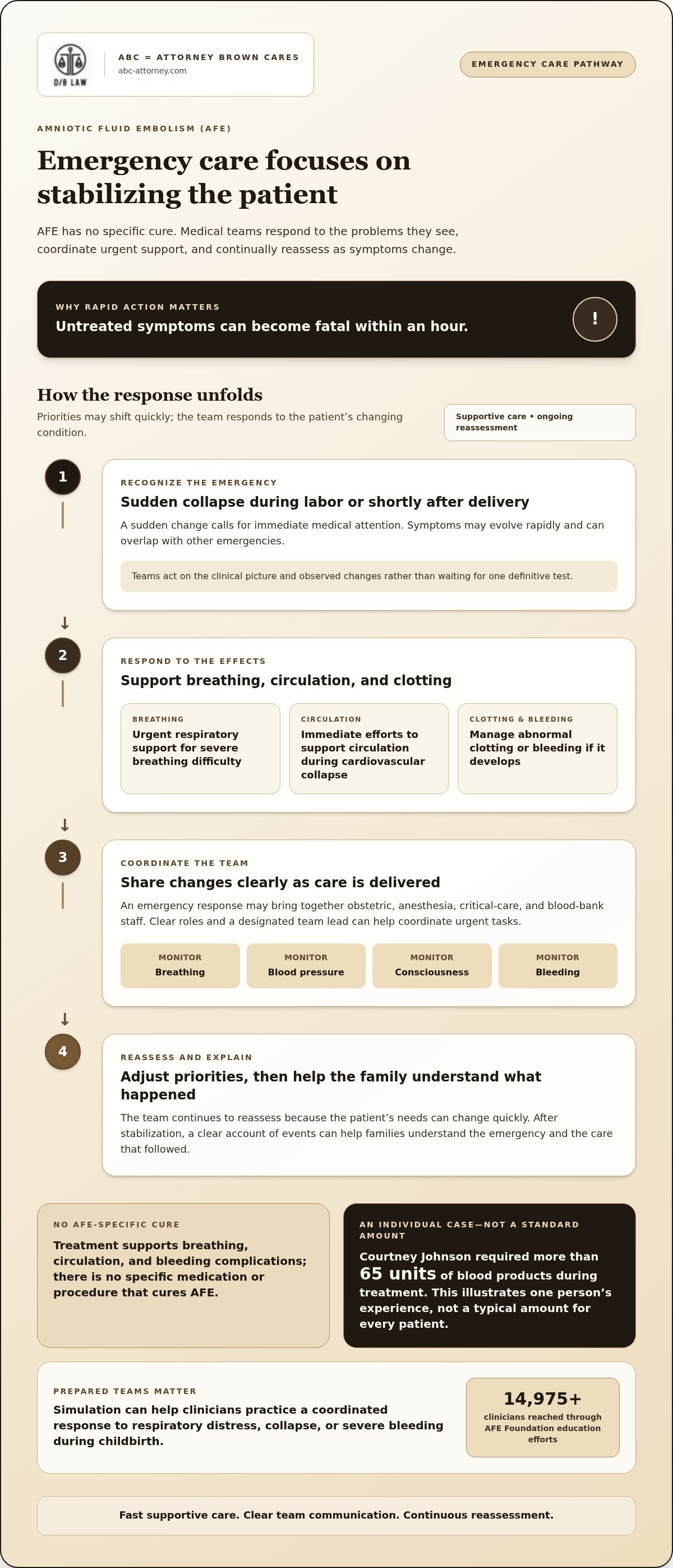
A sudden collapse during labor or shortly after delivery requires immediate medical attention. There is no specific treatment that removes the cause of amniotic fluid embolism. Instead, care focuses on rapid supportive treatment for the patient’s changing respiratory and cardiovascular problems. Prompt recognition matters because untreated symptoms can become fatal within an hour.
Medical teams respond to the effects they observe rather than waiting for one definitive test. Severe breathing difficulty calls for urgent respiratory support, while cardiovascular collapse requires immediate efforts to support circulation. If abnormal clotting or bleeding develops, clinicians manage that complication as well. Priorities can shift quickly, so the team reassesses the patient throughout care.
There is no single medication or procedure that works as an AFE-specific cure. Treatment can involve coordinated interventions for breathing, circulation, and bleeding. Courtney Johnson required more than 65 units of blood products during her treatment. Her experience illustrates the potential scale of support in an individual case, not a standard amount for every patient.
Clear communication helps the team act without delay. An emergency response may involve obstetric, anesthesia, critical-care, and blood-bank staff. Team members need to share changes in breathing, blood pressure, consciousness, and bleeding. A designated team lead and clear role assignments can help coordinate urgent tasks while staff continue to reassess the patient.
Training can help clinicians recognize the pattern and practice coordinated action. A simulation can rehearse how a team responds to sudden respiratory distress, collapse, or severe bleeding during childbirth. According to the AFE Foundation, its education efforts have reached 14,975+ clinicians. Education is particularly relevant because symptoms can evolve quickly and may overlap with other emergencies.
For families, the emergency can be confusing and traumatic. A loved one may need urgent procedures, intensive care, or substantial blood-product support. Ask the treating team to explain immediate priorities and major changes in the patient’s condition. After stabilization, a clear account of events can help the family understand what happened and what care followed.
Emergency treatment is focused on survival and stabilizing the patient, not determining legal responsibility. If questions remain about the medical decisions or care provided, discussing concerns about medical care can help clarify what information may matter.
Long-term physical and mental health effects
Survival after childbirth can mark the start of a recovery journey for both mother and baby. Outcomes vary, so understanding possible physical, developmental, and emotional effects can help families plan ongoing support.
Long-Term Effects on Mothers and Infants
Long-term effects can involve the central nervous system, other bodily systems, and emotional health. For a mother who experiences cardiac arrest or severe oxygen deprivation, physical recovery may include lasting neurological challenges. More than 1,000 survivors have shared experiences of physical and mental health difficulties. These experiences show why recovery needs attention beyond hospital discharge.
Infants can also need follow-up after a pregnancy emergency. Neonatal survival after AFE has been reported as 79% in the US registry. Survival alone does not describe a child’s developmental progress. Babies affected by AFE are usually recommended for developmental monitoring for up to 18 months. That monitoring can help identify needs as a child grows.
Recovery and Rehabilitation
Rehabilitation can address ongoing effects after the acute medical crisis ends. A patient with nervous-system complications may need support tailored to changes in movement, thinking, or daily activities. Physical rehabilitation can address functional challenges, while mental-health care can support emotional recovery. Specific needs depend on which bodily systems were affected during the emergency.
Families can keep a record of follow-up appointments, symptoms, and recommended therapies. For an infant, developmental monitoring through 18 months provides a structured period for observing progress. For a mother, ongoing care can address physical symptoms and psychological distress. Recognizing both tracks matters because a placenta-related emergency can affect family members in different ways.
Survival and Ongoing Effects
Survival statistics vary across studies and registries, and they describe different patient groups. One study reported survival of about 83%. More recent international registry data reported 10% maternal mortality and 46% neurologically intact survival. These figures are not interchangeable: survival and survival without neurological impairment measure different outcomes.
Reports also indicate that survival has increased over the last 20 years. That progress does not mean every survivor avoids lasting effects. The central nervous system and other bodily systems can sustain serious injury, and rehabilitation may be needed. Looking beyond immediate survival helps families understand why follow-up remains important after childbirth.
For infants, the US registry reported neonatal survival of 79%, while developmental monitoring may continue for up to 18 months. For mothers, recovery can involve both physical and mental-health needs. A clear follow-up plan helps families track concerns, coordinate care, and respond when new challenges emerge after discharge.
What are the signs and symptoms of AFE?
Recovery after AFE can involve lasting physical and mental health effects, and future pregnancies have been reported without recurrence. A 2009 review described nine successful subsequent pregnancies; the AFE Foundation Registry report recorded 26 of 80 survivors with later pregnancies and no recurrence.
AFE is also called an anaphylactoid syndrome of pregnancy because the body’s response can resemble a severe allergic reaction. “Anaphylactoid” describes the reaction pattern, not proof of an allergy. The emergency can involve sudden cardiovascular collapse, severe breathing difficulty and low oxygen, seizures, or a dangerous clotting disorder. Not every patient experiences all these signs.
Symptoms can develop in different sequences. Some patients first experience acute respiratory failure or hypotension, meaning dangerously low blood pressure. These atypical presentations account for approximately one-fourth of cases. Disseminated intravascular coagulation, or DIC, can appear first, follow other symptoms, or be absent. This variation makes the combination and timing of signs important.
DIC is a serious clotting problem in which the body forms clots and uses up clotting factors, increasing bleeding risk. A pregnancy-related DIC scoring table gives 0 points when fibrinogen is above 200 mg/L. That threshold is one part of a structured assessment, not a stand-alone way to diagnose AFE. The score must be considered alongside the patient’s condition and other findings.
Symptoms requiring urgent attention during pregnancy, labor, or soon after delivery include sudden trouble breathing, collapse, seizures, and severe bleeding. These signs can also occur with other obstetric emergencies. Medical teams assess the overall pattern rather than relying on one symptom. Because the condition can worsen rapidly, sudden respiratory or cardiovascular changes call for an immediate emergency response.
There is currently no proven way to prevent AFE. Regular appointments with a doctor remain part of pregnancy care, but they cannot guarantee prevention. Possible risk factors do not reliably identify who will experience the emergency, and a normal pregnancy does not rule it out. Knowing the warning signs helps families understand why sudden changes during childbirth need urgent assessment.
For someone considering pregnancy after surviving AFE, reported later pregnancies without recurrence provide context, not a prediction for an individual. Recovery may also require continued attention to physical and mental health. Follow-up can address lingering effects while the patient and care team discuss pregnancy history and future plans.
Diagnosis based on symptoms and vital signs
Diagnosis depends on the timing and pattern of symptoms, vital signs, and evidence gathered during the emergency. No single test confirms AFE; clinicians assess characteristic findings and consider other possible causes.
Symptoms During or Shortly After Childbirth
This emergency generally arises during labor or soon after delivery, and typically occurs within 30 minutes of delivery. That timing matters because a sudden change around childbirth can prompt rapid assessment.
Difficulty breathing and chest pain are among the symptoms reported during childbirth. A sudden decline in breathing or circulation can also cause vital signs to change quickly. The clinical team considers when symptoms began, how they developed, and whether other findings followed. A timeline of labor, delivery, and symptom onset can help clarify the sequence.
Maternal and Fetal Symptoms
AFE primarily presents through sudden maternal symptoms, although the emergency can also affect the baby’s condition. The mother may experience severe breathing difficulty, low oxygen, cardiovascular collapse, or seizures. Not every patient develops every classic sign, so the absence of one symptom does not settle the diagnosis.
During a maternal emergency, the care team considers the fetus’s status alongside changes in the mother’s condition. There is no specific fetal symptom pattern defined for AFE. Families can ask how the team documented maternal symptoms, vital signs, and fetal observations during labor and delivery.
Signs and Related Complications
Clinical diagnosis draws on characteristic signs and the exclusion of other potential causes. Clinicians assess the timing and combination of respiratory, cardiovascular, and neurological symptoms. Because AFE can resemble other pregnancy emergencies, a single symptom or vital-sign reading is not enough evidence on its own.
Clotting problems add another important diagnostic clue. Disseminated intravascular coagulopathy may be the initial feature or may be absent. Among patients who survive the initial cardiorespiratory phase, 50% develop a coagulopathy. Its presence can strengthen concern, but its absence does not rule out AFE.
There is no single confirmatory test, and clinicians may diagnose AFE by reviewing the full event. They compare symptoms, vital signs, timing, and evidence with other possible explanations. In some cases, the diagnosis is reached retrospectively, after investigative information becomes available. That review can clarify why the emergency was identified as AFE.
If questions remain about fetal monitoring or a possible birth injury, discuss your birth injury concerns.
The Dedric Brown Law Firm: Traumatic Brain Injuries
The Dedric Brown Law Firm represents families affected by traumatic brain injuries, hypoxic and anoxic brain injuries, and birth injuries. If a mother or baby suffered oxygen deprivation or neurological harm during an AFE emergency, legal guidance can help the family understand whether medical care contributed to the injury. The firm handles medical malpractice litigation and can review available records and the sequence of care.
Keep discharge papers, test results, and notes about key events, if available. These details can help clarify what happened during labor, emergency treatment, and recovery. ABC stands for “Attorney Brown Cares,” reflecting a commitment to personal attention during a difficult time.
For a thoughtful discussion about a possible birth injury or brain injury case, contact The Dedric Brown Law Firm or visit abc-attorney.com.
Choose a Clear Next Step
After a birth emergency, unanswered questions can weigh heavily on a family. A legal review can help clarify whether concerns about care during an amniotic fluid embolism emergency warrant closer attention. It also gives families space to explain what matters to them and understand possible next steps.
At abc-attorney, “abc” means “Attorney Brown Cares.” That message reflects a commitment to treating families with compassion, respect, and personal attention during a difficult time.
If you’re ready to talk through your concerns, contact The Dedric Brown Law Firm. A conversation can be a thoughtful first step toward greater clarity.
Frequently Asked Questions
Can labor induction cause an AFE?
Labor induction is not established as a cause of AFE. No proven cause has been identified, and proposed risk factors do not reliably explain why the emergency occurs. If symptoms begin during an induced labor, timing alone cannot show that induction caused them. Understanding the sequence requires reviewing the patient’s condition, symptoms, and care records together, rather than treating one event as proof.
Are AFE clots a sign of medical malpractice, or bad luck?
Clotting complications alone don’t establish medical malpractice or prove that an event was unavoidable. AFE can involve disseminated intravascular coagulation, a serious disruption in clotting, but this complication must be considered alongside the full clinical timeline. Relevant questions include which symptoms appeared, how the team responded, and what the medical records document. A careful review distinguishes the complication itself from concerns about the care provided.
What are the long-term effects for people who survive?
Some survivors face lasting neurological, physical, or emotional challenges, while others have different experiences. For example, complications affecting the central nervous system may require rehabilitation and changes to daily routines. Emotional effects can continue after the emergency has passed. Families can track symptoms, therapy recommendations, and changes in functioning across follow-up visits. This record helps the care team address ongoing needs, not just the initial hospital crisis.
What treatments are available for AFE?
Care for amniotic fluid embolism focuses on urgent supportive treatment because no specific cure is available. Medical teams address the patient’s problems, such as respiratory failure, cardiovascular collapse, or severe bleeding. Treatment may support breathing and circulation while clinicians manage clotting complications. Needs can change quickly, so teams reassess the patient and adjust care to developing symptoms rather than follow a fixed treatment plan.
What’s the survival rate for AFE?
Reported survival rates vary across studies, with estimates ranging from 20% to 60%; one study reported survival of about 83%. These figures reflect different groups and study methods, so they shouldn’t be treated as a single prediction for an individual patient. Survival also differs from survival without neurological injury. The patient’s complications and the outcome being measured both affect how a reported rate should be understood.
What is an amniotic fluid embolism (AFE), and how does it happen?
AFE is a rare, sudden childbirth emergency associated with amniotic fluid or fetal material entering the mother’s bloodstream. It can trigger a severe reaction involving breathing, circulation, and blood clotting. The exact cause isn’t proven, and pregnancy history alone cannot reliably predict the event. Clinicians identify the condition from the pattern of symptoms and by considering other possible explanations.
What are the symptoms and warning signs of AFE during labor or shortly after birth?
Warning signs can include sudden difficulty breathing, chest pain, collapse, seizures, or severe bleeding during labor or soon after birth. For example, abrupt breathing distress followed by a sharp decline in circulation signals an emergency requiring immediate medical attention. Symptoms don’t always appear together, and clotting problems may emerge later or be absent. Families should alert the care team immediately to sudden changes.
How is amniotic fluid embolism diagnosed?
Clinicians diagnose amniotic fluid embolism by assessing symptoms, vital signs, timing, and other possible causes; no single test confirms it. They may compare the documented onset of breathing or circulation problems with later findings, including abnormal clotting. Because some diagnoses are made retrospectively, records from labor, delivery, and emergency care can help clarify how the conclusion was reached. A test result alone does not explain the entire clinical picture.



Comments