
Wrongful Death Attorney for Families in Florida and Alabama

Could choosing a wrongful death attorney affect how thoroughly your family’s claim is investigated and presented? After a loss, clear answers matter. A wrongful death claim is a civil case that generally requires proof that someone’s wrongful conduct caused the death and resulting losses. In most cases, Texas law sets a two-year filing deadline from the date of death, according to the Texas Legislature.
ABC stands for Attorney Brown Cares, a commitment to personal attention for families facing difficult legal questions. This guide explains what a wrongful death claim involves, common causes, Texas’s filing deadline, and what to consider when choosing an attorney. It also covers who may file and what damages may be available, helping you understand key legal issues before deciding on your next step.
Table of Contents
What is a Wrongful Death Claim?
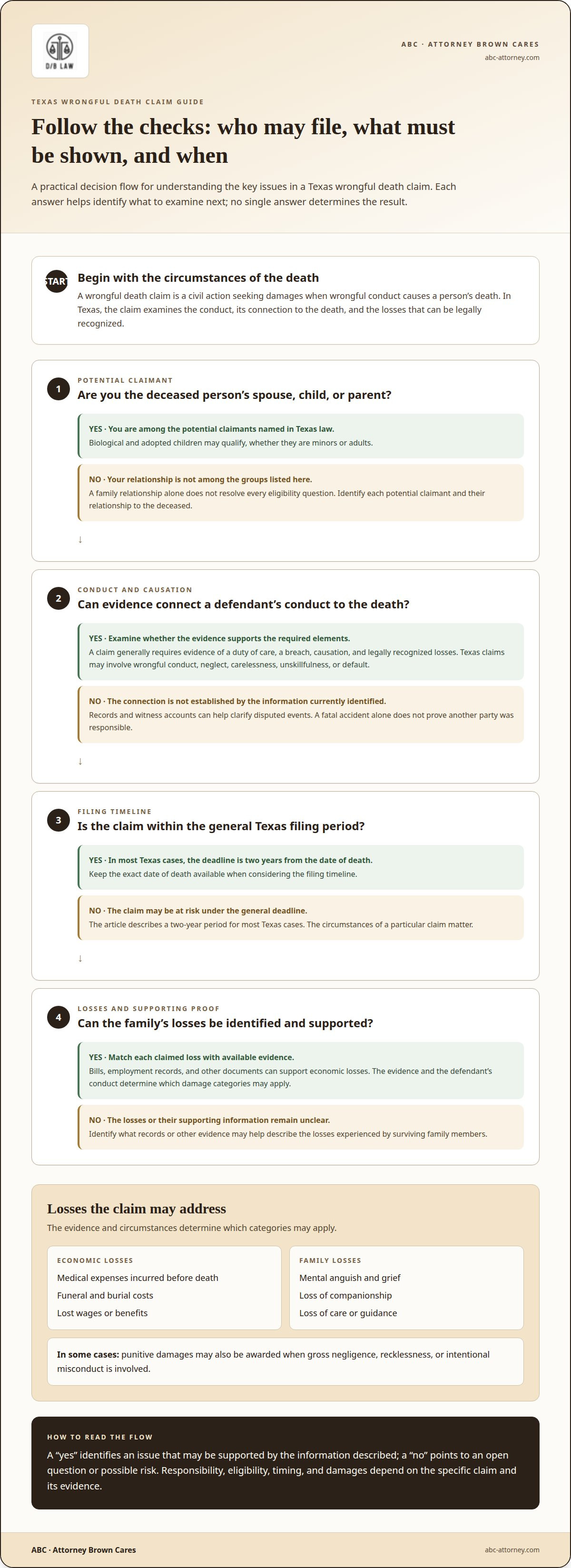
A wrongful death claim is a civil action seeking damages when someone’s wrongful conduct causes a person’s death. In Texas, the claim focuses on whether a wrongful act, neglect, carelessness, unskillfulness, or default caused the death and supports liability.
Economic and Non-Economic Losses
Texas wrongful death damages may include medical expenses incurred before death, funeral and burial costs, and lost wages or benefits. Bills, employment records, and other documents can help support these economic losses. A claim may also seek damages for mental anguish, grief, and loss of companionship, care, or guidance. These losses reflect the effects on surviving family members, not just the deceased person’s financial contributions.
In cases involving gross negligence, recklessness, or intentional misconduct, punitive damages may also be awarded. The evidence and the defendant’s conduct determine which categories may apply.
Who Can Recover Damages
In Texas, the deceased person’s spouse, children, and parents may have the right to file a wrongful death lawsuit. Biological and adopted children may qualify whether they are minors or adults. Because a family relationship alone does not resolve every eligibility question, an important early step is identifying each potential claimant and their relationship to the deceased.
A wrongful death claim is a civil action, separate from any criminal charges or case. A criminal proceeding does not replace the family’s civil claim or resolve every issue that claim must establish.
Proving Negligence and Causation
A claim generally requires evidence that the defendant owed the deceased a duty of care, breached it, and caused the death. The plaintiff must also establish legally recognized losses. In a fatal crash, for example, evidence about the driver’s actions must connect the conduct to the collision and resulting death. Records and witness accounts can help clarify disputed events and support the claimed losses.
How long a case takes depends on factors such as disputed responsibility, the evidence, and the complexity of assessing losses. Its value depends on the damages supported by evidence and the circumstances of the death. Common issues include disputes over whether the defendant’s conduct caused the death, whether the evidence supports negligence, and which losses the family may legally recover.
Florida wrongful death filing deadline
Florida’s statute of limitations sets the deadline for starting a wrongful death case. According to the Florida Legislature, a claim must be filed within two years. The period begins at death, not when surviving family members finish grieving or determine who was responsible. Missing the deadline can put the claim at risk, so identifying the date of death is an essential first step.
Two years can pass quickly as a family gathers records, identifies potential defendants, and investigates what happened. A driver’s conduct, medical care, or another party’s actions may require careful review. A lawyer can assess the filing timeline while examining the evidence, rather than waiting for the investigation to finish before considering a filing. The practical priority is to get legal advice promptly and preserve information relevant to the claim.
Other states set different statutory periods. These examples are comparisons, not alternatives to Florida law. The law governing a claim depends on its circumstances:
Texas: In most cases, the statute of limitations is two years from the date of death, according to the Texas Legislature.
California: The statute of limitations is generally two years from the date of death, according to the California State Legislature.
Alabama: A personal representative has two years from the date of the victim’s passing to file a wrongful death lawsuit.
Alabama child-death exception: Parents have six months to file a claim when a child under 19 dies.
Alabama’s child-death timeline deserves particular attention. If the parents of a deceased minor or 18-year-old do not file within six months, the child’s estate personal representative can file. That shorter period differs from Alabama’s general two-year period. The relationship between the claimant, the estate, and the date of death can therefore affect which deadline applies.
Do not assume another state’s deadline applies just because the responsible driver lives there or an accident occurred near a state border. Florida, Texas, California, and Alabama each have distinct rules, and the applicable timeline depends on the particular claim. Keep the exact date of death available when discussing the case. A wrongful death attorney can use it to identify the relevant filing period and plan next steps.
If a death involved medical care, such as C-section complications, the timeline still requires prompt attention. To discuss the dates and circumstances affecting a potential Florida claim, contact a legal professional.
Common causes of wrongful death
A fatal event may lead to a wrongful death case when another party’s wrongful conduct caused the loss. Common examples include vehicle collisions, medical negligence, and dangerous property conditions. The circumstances matter: an accident alone does not establish that someone else was responsible. A wrongful death lawsuit examines the conduct that led to the death and the evidence connecting that conduct to the outcome.
Vehicle collisions: Truck and automobile crashes can cause fatal injuries. Trucks can weigh up to 80,000 pounds, making the consequences of a collision especially severe. A claim may examine how the driver acted, whether another party contributed, and what records help explain the crash. The fact that a person died in a collision does not, by itself, prove negligence; the evidence must connect a responsible party’s conduct to the death.
Medical negligence: A death following medical treatment may raise questions about whether a provider’s conduct caused the fatal outcome. For example, a family may examine care surrounding a C-section complication or a birth injury involving hypoxic or anoxic brain injury. These cases require close analysis of the care provided and the sequence of events. A serious medical outcome alone does not prove negligence.
Unsafe buildings and property: A dangerous condition can also cause a fatal injury. In an Upper West Side incident, part of a building façade fell eight stories and killed a 2-year-old girl. That example shows why a death investigation may examine the physical condition of a property, the events before the incident, and the parties connected to the hazard. The evidence must establish how the condition caused the death.
These categories can overlap. A collision may involve a driver and a commercial employer, while a medical death may follow a sequence of decisions rather than a single event. Identifying each possible cause helps clarify which records, witnesses, and responsible parties matter. A personal injury claim brought before a death may also raise different issues from a later wrongful death action, so the timeline and legal basis need careful review.
Families can help preserve the factual record by keeping available accident reports, medical records, photographs, and insurance correspondence together. These materials may show what happened, when it happened, and who was involved. A lawyer can then assess whether the evidence supports a lawsuit and which party’s conduct may have caused the death. The goal is to build a clear account from reliable evidence, not to assume fault.
For surviving family members, learning the cause can be difficult, especially when explanations conflict. A careful investigation separates confirmed facts from assumptions and tests possible causes against the available evidence. This disciplined approach helps determine whether legal action is supported and which questions the case must answer.
Alabama's definition of wrongful death
Alabama wrongful death actions are governed by Alabama Code Section 6-5-410. The law treats these cases differently from ordinary claims for a deceased person’s losses. The personal representative of the deceased person’s estate brings the lawsuit. That distinction matters: family members may be affected by the case, but the estate’s personal representative is the party authorized to file under Alabama’s framework.
Alabama’s remedy differs from that of states that focus on compensating survivors for financial and personal losses. Alabama wrongful death lawsuits allow punitive damages rather than compensatory damages. In practical terms, the claim centers on the defendant’s conduct and the legal purpose of punitive damages, not simply a calculation of funeral expenses or lost income. This rule can shape how a lawyer evaluates evidence and presents the case.
Texas uses a different definition. A death may qualify as wrongful when another person or entity caused it through a wrongful act, neglect, carelessness, unskillfulness, or default. The central question is whether the defendant’s conduct caused the death and supports a legal claim. For example, a fatal crash involving a driver could raise questions about carelessness, but the circumstances and evidence determine whether the legal elements are met.
Texas also identifies close relatives who may have the right to bring a claim. A deceased person’s spouse, children, and parents may qualify. Biological and adopted children may pursue a claim whether they are minors or adults. This shows why the definition of wrongful death and the identity of eligible claimants are related but separate issues. A family should not assume Alabama’s filing structure applies to a case governed by Texas law.
Ohio’s wrongful death law appears in Ohio Revised Code Section 2125. It provides for liability when a death results from a wrongful act, neglect, or default that would have allowed the deceased person to bring a personal injury claim if they had survived. The comparison clarifies the basic legal question: would the conduct have supported a personal injury action before death? Ohio’s formulation is not Alabama’s statutory framework.
When comparing these states, identify where the death occurred, who may file, and which law governs before evaluating compensation. A C-section-related death, for example, may require close review of the medical events and the applicable state’s rules. Alabama’s personal-representative requirement and punitive-damages remedy should not be applied to a Texas or Ohio claim. State law defines both how to bring a wrongful death lawsuit and what remedy may be available.
Choosing a wrongful death attorney
Choose a lawyer who can explain the legal issues, evidence needs, and case strategy in plain language. Ask how they would investigate the circumstances of the death, not just how confidently they discuss results.
Attorney Selection Considerations
Ask about experience with claims involving circumstances like yours, such as a fatal crash, birth injury, or unsafe property. A lawyer should explain which facts matter, who may be responsible, and what evidence could support your family’s claim. Clear answers help you assess whether the attorney understands the specific challenges involved.
Look for a disciplined investigative approach. A medical death, for example, may require a review of treatment records and the timeline of care, while a fatal crash may turn on accident records and witness accounts. Ask who will handle communication, how updates will be shared, and how the attorney will explain disputed evidence. Specific answers are more useful than broad assurances.
Also assess whether the lawyer can explain the rules that apply to your state and family’s circumstances. Alabama’s personal-representative filing structure differs from Florida’s eligible-survivor framework. A thoughtful lawyer should explain how those rules affect who brings the claim and what it must establish, without promising a particular outcome.
Fees and Contingency Coverage
In a contingency agreement, the attorney’s fee is based on an agreed share of a recovery. The written agreement should explain the percentage and when it applies. It should also state how case expenses are handled, since expenses and attorney fees are separate terms. Review the agreement carefully so you understand the terms before representation begins.
Ask for a clear explanation of expenses, such as costs connected with obtaining records or preparing evidence. The agreement should say whether those expenses are deducted from a recovery and how they are handled if the case does not recover compensation. Don’t rely on a verbal summary alone. The written terms govern the arrangement.
When to Hire a Lawyer
Contact a lawyer as soon as practical after a death that may involve negligence. Early legal review can help preserve records, identify witnesses, and organize information while events are easier to document. It also gives family members time to understand who may bring the claim and which filing deadline applies.
Prompt advice is especially valuable when an insurer requests statements, responsibility is disputed, or several parties may have contributed. A fatal crash involving a driver and a commercial employer, for example, may require investigation beyond the immediate collision. A lawyer can assess those issues while the family focuses on immediate needs.
If you’re weighing legal representation, discuss your family’s wrongful death case and the questions that matter most to you.
The Dedric Brown Law Firm
The Dedric Brown Law Firm helps families evaluate serious injury and fatality claims involving complex evidence. The firm handles traumatic brain injuries, hypoxic and anoxic brain injuries, birth injuries, and truck wrecks. When a death may be connected to one of these circumstances, the firm can help clarify the legal questions, assess relevant evidence, and explain potential next steps.
Families can turn to the firm for careful review of medical events, crash circumstances, or the connection between an injury and a death. Each case calls for a focused assessment of what happened and who may be responsible. The process should be clear, respectful, and centered on the family’s concerns.
To discuss your family’s circumstances, contact The Dedric Brown Law Firm.
Take the Next Step With Clarity
After a sudden loss, it can be hard to know which question to address first. You don’t need to have every detail settled before speaking with a wrongful death attorney. A focused conversation can help clarify your concerns, identify information relevant to your family’s situation, and explain what legal representation may involve.
The Dedric Brown Law Firm’s ABC identity stands for Attorney Brown Cares. The firm approaches families with personal attention and takes their legal concerns seriously. You can share what happened, ask about the process, and decide what feels right for your family’s next step.
Contact The Dedric Brown Law Firm to discuss your circumstances. One thoughtful conversation can help you move forward with greater clarity and support.
Frequently Asked Questions
What Damages May Be Recoverable?
Recoverable damages depend on state law, eligible claimants, and the evidence. In Florida, a claim may include documented medical expenses before death and financial losses, as well as losses such as companionship or guidance. Alabama’s remedy differs: wrongful death actions allow punitive damages rather than compensatory damages. Keep bills, income records, and other relevant documents organized so the legal team can assess which losses the applicable law recognizes.
How Long Do You Have to File?
The deadline depends on the state and the circumstances. In Florida, the Florida Legislature sets a two-year filing period for wrongful death claims. Alabama generally gives a personal representative two years from the victim’s death, while a shorter six-month period applies to parents filing for a child under 19. Record the date of death and promptly determine which rule governs; waiting to resolve family or insurance questions can consume valuable time.
What Evidence Can a Wrongful Death Attorney Help Preserve After a Fatal Accident?
After a fatal accident, an attorney can help preserve records that clarify what happened and the resulting losses. Useful materials may include medical records, accident or police reports, photographs, and correspondence with insurers. For a crash, reports and photographs may document the scene; for a medical case, treatment records can show the course of care. Consult an attorney before giving an insurer a statement or signing documents.
What Is the Process?
The process usually begins with a review of the circumstances, records, and potential claimants. The legal team then evaluates what evidence connects the death to another party’s conduct and documents relevant losses. Next, the proper person or representative brings the claim under the applicable state rules. The parties may address the claim through negotiation or litigation. Clear records, timely decisions, and a well-defined account of events help keep each stage grounded in evidence.
What is the pecuniary loss statute in New York?
New York EPTL Section 5-4.3 governs the amount recoverable in a wrongful death action. EPTL Section 5-4.1 authorizes a personal representative to bring the action. The New York State Legislature also sets a general two-year deadline from the date of death. These provisions address different questions: who may bring the case, what amount may be recovered, and when the action generally must begin.
Why Legal Help Matters?
Legal help matters because a fatality claim can involve disputed events, multiple records, and rules that vary by state. An attorney can organize evidence, assess potential defendants, and explain who may bring the action. For example, Alabama’s personal-representative requirement differs from Florida’s rules identifying eligible family members. Early guidance can also help families respond carefully to insurer requests and understand documents before signing.
What does a wrongful death attorney do?
A wrongful death attorney evaluates whether the evidence supports a claim, identifies parties whose conduct may have caused the death, and explains which family members or representative may file. The lawyer can gather and review records, document losses, address insurer communications, and present the claim through negotiation or litigation. A fatal medical case, for example, requires a different records review from a truck collision, although both may involve questions of causation and responsibility.
Who can file a wrongful death lawsuit in the United States?
There is no single claimant rule for every U.S. wrongful death case. State law determines who may file. Florida identifies spouses, children, parents, and certain dependent blood or adoptive siblings. Alabama generally gives the filing right to the estate’s personal representative. Texas law may allow a deceased person’s spouse, children, or parents to file. Both the family’s relationship to the deceased and the state governing the claim matter.


Comments