
Brachial Plexus Palsy: A Comprehensive Guide to Medical Rights and Recovery (2026)

What if the "unfortunate birth complication" that left your child's arm motionless was actually a preventable, auditable failure in medical precision? You're likely overwhelmed by complex terminology and the terrifying possibility of your child facing a permanent disability. It's natural to feel protective and angry when rising therapy costs collide with the uncertainty of your child's recovery. I understand that you need clear answers, a proven path forward, and a relentless advocate who treats your case with the technical scrutiny of a certified auditor.
This guide provides a comprehensive look at brachial plexus palsy, detailing how 80% to 90% of infants can recover with early intervention and why the average settlement for these injuries has climbed to $1.32 million as of March 2026. We'll explore medical causes like shoulder dystocia, analyze the $2.38 million lifetime economic burden of these injuries, and determine if you have a valid legal claim to fight for the justice your family deserves. You'll gain the expertise, the data, and the confidence needed to navigate this journey from consultation to courtroom.
Key Takeaways
Identify the specific nerve pathways within the "electrical grid" that dictate whether your child experiences temporary weakness or permanent paralysis.
Differentiate between brachial plexus palsy injuries that heal naturally, such as neurapraxia, and more severe cases like neuromas that require surgical intervention.
Learn to spot auditable medical failures where a healthcare provider’s breach of the standard of care transformed a birth into a traumatic injury.
Discover the critical timing for early intervention therapy and the advanced surgical techniques, like nerve grafts, that can restore function to the shoulder and arm.
Understand how a combined legal and financial audit of your medical records can expose insurance tactics and secure your family's future through unwavering advocacy.
Table of Contents What is Brachial Plexus Palsy? Understanding the Nerve Network Types and Causes of Brachial Plexus Nerve Damage The Line Between Birth Complication and Medical Negligence Treatment Paths and Long-Term Care for Nerve Injuries Pursuing Justice: How the Dedric Brown Law Firm Audits Your Case
What is Brachial Plexus Palsy? Understanding the Nerve Network
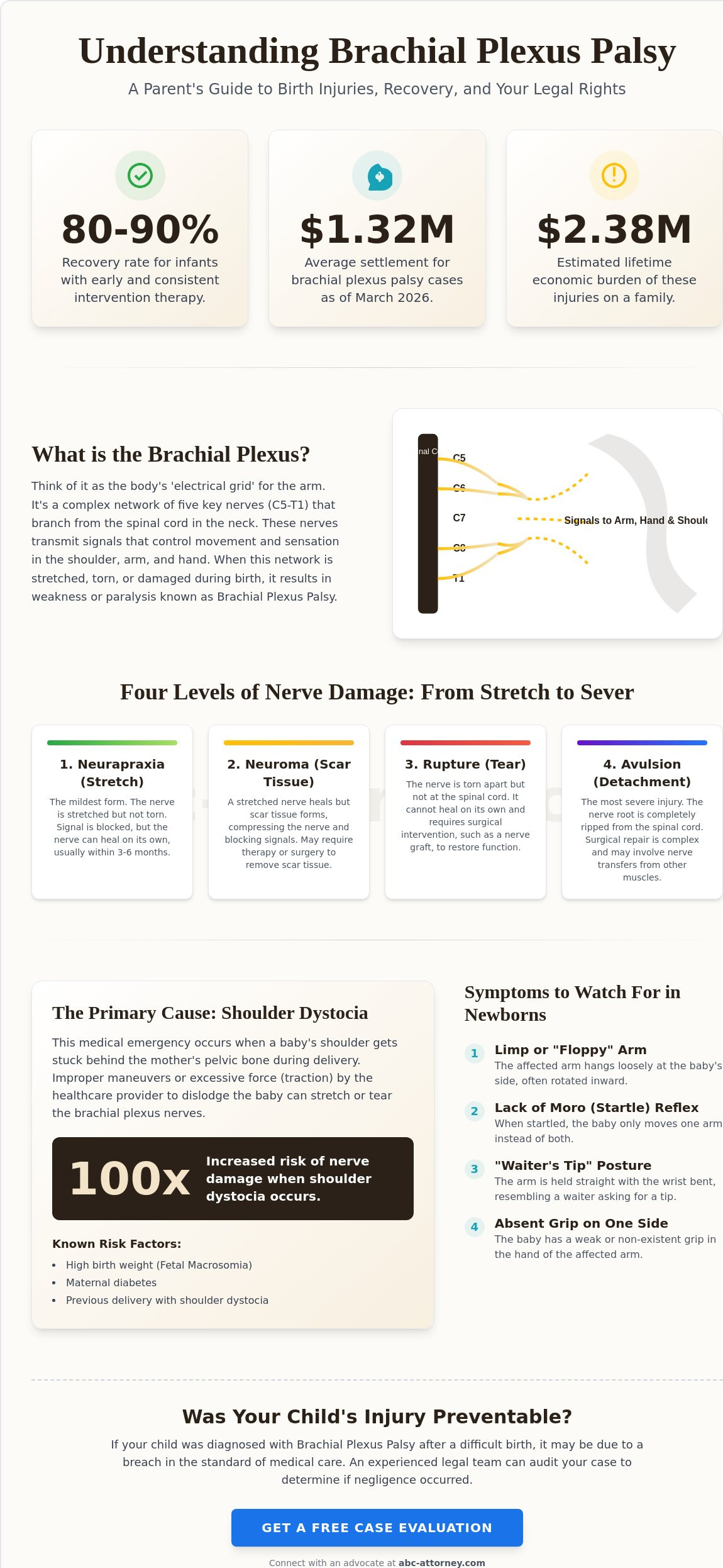
Think of your body’s control center as a high-performance electrical grid. The brachial plexus is the primary junction box. It's a complex network of nerves that sends signals from your spinal cord to your shoulder, arm, and hand. When this grid fails due to trauma or medical error, the result is brachial plexus palsy. This condition is a disruption in the signals between the spinal cord and the upper extremities. It isn't just a minor birth complication; it's a catastrophic breakdown in the body's communication system. Palsy refers to the weakness or paralysis that occurs when these specific nerve pathways are stretched, compressed, or torn. Symptoms can range from a limp arm or "waiter's tip" posture to a total loss of sensation in the limb.
Anatomy of the Brachial Plexus
The nerve network originates from five primary nerve roots, labeled C5 through T1. Each root has a specific assignment. C5 and C6 generally handle the shoulder and biceps, while T1 controls the fine motor skills in the hand and wrist. A Brachial plexus injury is categorized by which circuit is broken. Erb’s Palsy affects the upper plexus and accounts for 45% to 50% of all cases. This typically results in the arm hanging limp and rotating inward. Klumpke’s Palsy targets the lower plexus, impacting the hand's ability to grasp. Total plexus involvement occurs in about 35% of cases, leading to complete paralysis. Whether the damage is sensory or motor, it fundamentally alters a patient's ability to interact with the world.
Common Symptoms in Newborns and Adults
In newborns, the signs are often immediate and stark. You might notice a lack of the Moro reflex in just one arm. This is the natural startle response where a baby flings their arms outward. If one side remains motionless, it indicates a failure in the nerve network. Parents should also watch for a "floppy" arm or a lack of grip strength. In adult trauma cases, the experience is different. Patients often report "stingers" or intense burning sensations that radiate down the arm. Severe nerve root involvement can lead to muscle atrophy or Horner’s syndrome, which is marked by a drooping eyelid and constricted pupil. These symptoms aren't just medical markers; they're evidence that demands technical scrutiny and aggressive advocacy to ensure your rights are protected.
Types and Causes of Brachial Plexus Nerve Damage
Determining the severity of a nerve injury requires the same level of scrutiny a CPA brings to a complex financial audit. You can't fix what you haven't properly measured. There are four distinct categories of damage that define the path for recovery or litigation. Accuracy in diagnosis is the first step toward securing justice.
Neurapraxia: This is the most common and least severe type. It involves a stretch injury where the nerve remains intact but stops sending signals. Most cases of brachial plexus palsy involving neurapraxia resolve within three to six months as the nerve sheath heals.
Neuroma: This occurs when scar tissue grows around the injury site during the healing process. This scar tissue creates a physical barrier that blocks or distorts nerve impulses, often requiring specialized therapy to manage.
Rupture: This is a more violent injury where the nerve actually tears apart. It doesn't happen at the spinal cord, but the gap between the torn ends prevents any signal transmission.
Avulsion: This is a total system failure. The nerve root is ripped directly from the spinal cord. According to the National Institute of Neurological Disorders and Stroke, these severe injuries often require complex surgical intervention to restore even partial function.
Birth Trauma and Shoulder Dystocia
Birth injuries are rarely random accidents. They're often the result of excessive lateral traction. When a baby’s shoulder becomes wedged behind the mother’s pelvic bone, a condition known as shoulder dystocia, the risk of nerve damage increases by over 100 times. Medical providers must recognize risk factors like fetal macrosomia (high birth weight) or maternal diabetes before delivery begins. While 55% of children with this condition had no identifiable risk factors, the failure to perform a necessary Cesarean section when red flags are present is a breach of the standard of care. If you suspect a medical error caused your child's injury, you should speak with a legal advocate to review the delivery records for negligence.
Traumatic Injuries in Adults
Adults face different but equally devastating risks. High-impact motorcycle and auto collisions are the leading causes of traumatic nerve damage. The force of an impact can jerk the shoulder away from the neck, mimicking the stretching seen in birth trauma but at much higher speeds. Athletes also face "burners" or "stingers" in contact sports, which are often neurapraxia injuries that cause temporary numbness. In the most violent cases, gunshot or knife wounds can sever the nerve bundle entirely. These traumatic incidents often result in an estimated $2.38 million lifetime economic burden per person. This figure accounts for direct healthcare charges and the massive loss of productivity that follows a permanent disability. Every detail of the trauma must be meticulously documented to secure a victory in the courtroom.
The Line Between Birth Complication and Medical Negligence
Many medical professionals will tell you that a brachial plexus palsy diagnosis is an unavoidable risk of childbirth. They're often wrong. While some complications arise naturally, many injuries are the direct result of auditable failures in the delivery room. A true birth complication is an unforeseen event that occurs despite following every safety protocol. Medical negligence is different. It happens when a healthcare provider fails to recognize established risk factors or uses excessive force during a difficult delivery. Understanding the Symptoms and causes of brachial plexus injuries is only the first step toward justice. You must also understand when a doctor’s choice becomes a legal liability.
Negligence often begins long before the first contraction. Providers have a duty to screen for fetal macrosomia, which is a birth weight over 8 pounds 13 ounces, and maternal diabetes. These factors significantly increase the risk of shoulder dystocia. When a baby’s shoulder becomes stuck, the standard of care requires specific, gentle maneuvers to resolve the impaction. If a doctor panics and applies excessive lateral traction, or pulling, they risk tearing the delicate nerve fibers. The inappropriate use of tools like forceps or vacuum extractors can also apply unnatural pressure to the infant’s neck. Medical negligence occurs when a provider deviates from accepted obstetrical maneuvers.
Auditing the Medical Record
We approach medical records with the same technical scrutiny a CPA applies to a high-stakes financial audit. I look for the truth hidden between the lines of fetal monitoring strips and delivery room notes. Precision matters here. For example, we examine exactly how many minutes passed between the delivery of the head and the rest of the body. A delay of more than 60 seconds often triggers a series of emergency protocols. We search for "omissions" in the record. If a nurse’s notes suddenly stop or become vague during a crisis, it often suggests a cover up of excessive force or a failure to perform a timely C-section despite clear indicators of fetal distress.
Preventable vs. Unavoidable Injuries
The claim that "it just happens" is rarely a sufficient explanation for a permanent nerve avulsion. Hospital protocols exist specifically to prevent these outcomes. When a facility fails to follow its own safety checklists, the resulting trauma is preventable. We fight relentlessly to prove that your child's injury wasn't a random act of fate. It was a failure of the system. With the average settlement for these cases reaching $1.32 million in 2026, it's clear that the legal system recognizes the profound impact of these medical errors. We don't just settle for what insurance companies offer. We demand a victory that covers the lifetime of care your child deserves.
Treatment Paths and Long-Term Care for Nerve Injuries
Recovery from brachial plexus palsy is a marathon, not a sprint. The first three to six months of a child’s life represent a critical window for intervention. During this time, physical therapy is essential to prevent joint contractures. These are permanent stiffenings of the muscles and joints that occur when an arm remains immobile. If the nerve doesn't show signs of natural recovery within this timeframe, surgical intervention becomes the next logical step in the treatment audit. We monitor these milestones with the same diligence we apply to a financial ledger, ensuring no opportunity for healing is missed.
Surgeons often utilize nerve grafts or nerve transfers to bridge the gap between damaged pathways. In a nerve transfer, a healthy "donor" nerve is rerouted to the injured muscle. This process relies on a slow but steady biological timeline. Nerves typically regenerate at a rate of approximately one inch per month. This means functional improvements in the hand or wrist may not appear for a year or more after the initial procedure. For chronic cases where nerve repair is no longer viable, tendon transfers can repurpose existing muscle to restore basic movements like gripping or lifting. We fight to ensure these advanced options are available to every client we represent.
Nerve Reconstruction and Muscle Transfers
Advanced surgical techniques have transformed the outlook for severe injuries. Success rates for these procedures now reach up to 80% in specialized centers. Occupational therapy works in tandem with surgery to help patients adapt to their physical limitations. This includes learning to perform daily tasks with one hand or using specialized equipment to navigate the world. We don't just look at the medical outcome; we analyze the total impact on the individual’s quality of life. The psychological toll on the family is significant, requiring emotional support and steady advocacy throughout the years of rehabilitation.
Calculating the Lifetime Cost of Care
As a CPA and Auditor, I look at your case through a lens of extreme financial precision. A settlement must cover more than just the initial hospital bill. The total economic burden of an adult traumatic brachial plexus injury is estimated to be $2.38 million per person. This figure includes direct healthcare charges, specialized equipment, and decades of lost productivity. We utilize life care planners to estimate these future medical expenses with unwavering accuracy. If your family is facing these rising costs, you should request a comprehensive case audit to ensure your settlement covers every future need. We fight relentlessly to ensure your financial safety is never compromised by a medical provider's mistake.
Pursuing Justice: How the Dedric Brown Law Firm Audits Your Case
Justice for a brachial plexus palsy injury requires more than just a legal degree. It demands a level of technical scrutiny that most personal injury firms simply cannot provide. I approach every case with the precision of a Certified Public Accountant and the tenacity of an Internal Auditor. We don't just file paperwork. We audit the medical providers, the hospital protocols, and the insurance company’s tactics to expose the truth behind the trauma. My background as a Certified Information Systems Auditor allows me to dig into electronic medical records to find the omissions and alterations that others miss. We fight relentlessly because your family's future isn't just a file number; it's a commitment to integrity and professionalism.
Our firm operates on a principle of combativeness. We are not a settlement mill that takes the first lowball offer from an insurance company. If the defense refuses to offer a fair value for your child's lifelong care, we are ready to take the case to trial. This nothing-to-lose emotional appeal is backed by a concrete promise. You pay zero legal fees unless we win your case. This contingency-fee structure ensures that high-quality, sophisticated legal representation is accessible to every family, regardless of their current financial situation. We provide the steady, professional reassurance you need while engaging in high-stakes litigation on your behalf.
A Tailored Approach to Malpractice Litigation
Every injury is unique. We don't use cookie-cutter strategies. Instead, we build a formidable case by leveraging a network of elite expert witnesses. We collaborate with top-tier neurologists, OB-GYNs, and life care planners to prove exactly where the standard of care was breached. This tailored approach ensures that the specific mechanics of your child's brachial plexus palsy are clearly explained to a jury. You’ll receive personalized service that reflects my roots as a community leader and approachable mentor. We transform complex medical data into a compelling narrative of accountability, expertise, and results.
Your Path to a Victory
The journey to a victory begins with a comprehensive investigation. We search for every piece of evidence, from fetal monitoring strips to hospital staffing logs. Once we’ve built an airtight case, we enter negotiations from a position of strength. Whether we reach a settlement or pursue a verdict in court, our goal is unwavering. We protect your family’s financial future so you can focus on your child's healing and therapy. It’s time to move from confusion to clarity. Contact The Dedric Brown Law Firm for a free, comprehensive case evaluation.
Take the First Step Toward Your Family’s Victory
A diagnosis of brachial plexus palsy shouldn't leave you feeling powerless or financially vulnerable. You've learned that 80% to 90% of infants can recover with the right intervention, but you also know that the lifetime economic burden of these injuries can exceed $2.38 million. Whether your case involves a birth complication or an auditable failure in medical care, you deserve a champion who applies technical scrutiny to every medical record and insurance claim. We don't just search for answers; we fight relentlessly for the justice your child is owed.
My unique background as a Certified Public Accountant and Auditor provides the precision needed to win high-stakes medical malpractice cases. We offer a nothing-to-lose emotional appeal through our contingency fee promise. You pay nothing unless we win your case. Don't let a medical provider’s mistake dictate your child's quality of life or your family's financial security. Fight for your rights with a CPA-Attorney: Get your free consultation now. We are ready to transform your trauma into a proven path for recovery and long-term stability.
Frequently Asked Questions
Is brachial plexus palsy always the result of medical malpractice?
No, but it is often a preventable outcome of medical error. While some cases occur without identifiable risk factors, many result from a failure to perform a necessary C-section or the application of excessive force during delivery. We audit your medical records to determine if a provider breached the standard of care during a difficult birth.
How long do I have to file a lawsuit for a birth injury?
Deadlines vary by state, but you generally have 2 to 3 years from the date of the injury to take action. For example, the statute of limitations in Texas is two years. Some states allow this clock to pause for minors until they reach age 18 or 21, but acting quickly is essential to preserve evidence.
What is the difference between Erb's palsy and brachial plexus palsy?
Erb's palsy is a specific type of brachial plexus palsy that only affects the upper nerves (C5-C6). This type is the most common, accounting for 45% to 50% of all cases. Brachial plexus palsy is the broader medical term used to describe any paralysis or weakness resulting from damage to the entire nerve network.
Can an adult recover from a brachial plexus injury caused by a car accident?
Recovery is possible, though adult traumatic injuries often involve a $2.38 million lifetime economic burden. Success depends on the severity of the nerve damage and the timing of the intervention. Nerve transfers and grafts show success rates of up to 80% when performed by specialists within the recommended surgical window.
What kind of compensation can I expect in a brachial plexus lawsuit?
Settlement amounts are based on the severity of the injury and the cost of lifelong care. As of March 17, 2026, the average settlement for these lawsuits is approximately $1.32 million. This compensation is designed to cover medical bills, specialized therapy, and the loss of future productivity caused by the disability.
Will my child need surgery for their brachial plexus injury?
Most children recover without surgical intervention. Statistics show that 80% to 90% of infants with brachial plexus palsy recover fully or almost fully with early physical therapy. If significant improvement isn't seen within 2 to 6 months, a surgeon may recommend nerve reconstruction to prevent permanent disability.
How do I know if my doctor used excessive force during delivery?
We look for auditable red flags like fractured bones or severe nerve avulsions that suggest improper traction. If a doctor panics during shoulder dystocia and pulls on the baby's head instead of using approved maneuvers, they have likely used excessive force. Our technical scrutiny reveals these failures in the delivery room notes.
Does the Dedric Brown Law Firm handle cases outside of birth injuries?
Yes, we apply our auditor's precision to all catastrophic injury cases, including auto accidents and traumatic brain injuries. Our firm utilizes CPA and internal auditor credentials to ensure every financial and medical detail is scrutinized. We fight relentlessly for any victim whose life has been transformed by someone else's negligence.


Comments